The quiet luxury of eating alone in a restaurant
The best meal I had last year, I ate alone on a Tuesday. On the sympathetic head tilt, ordering the pudding anyway, and why a room is better watched than joined.
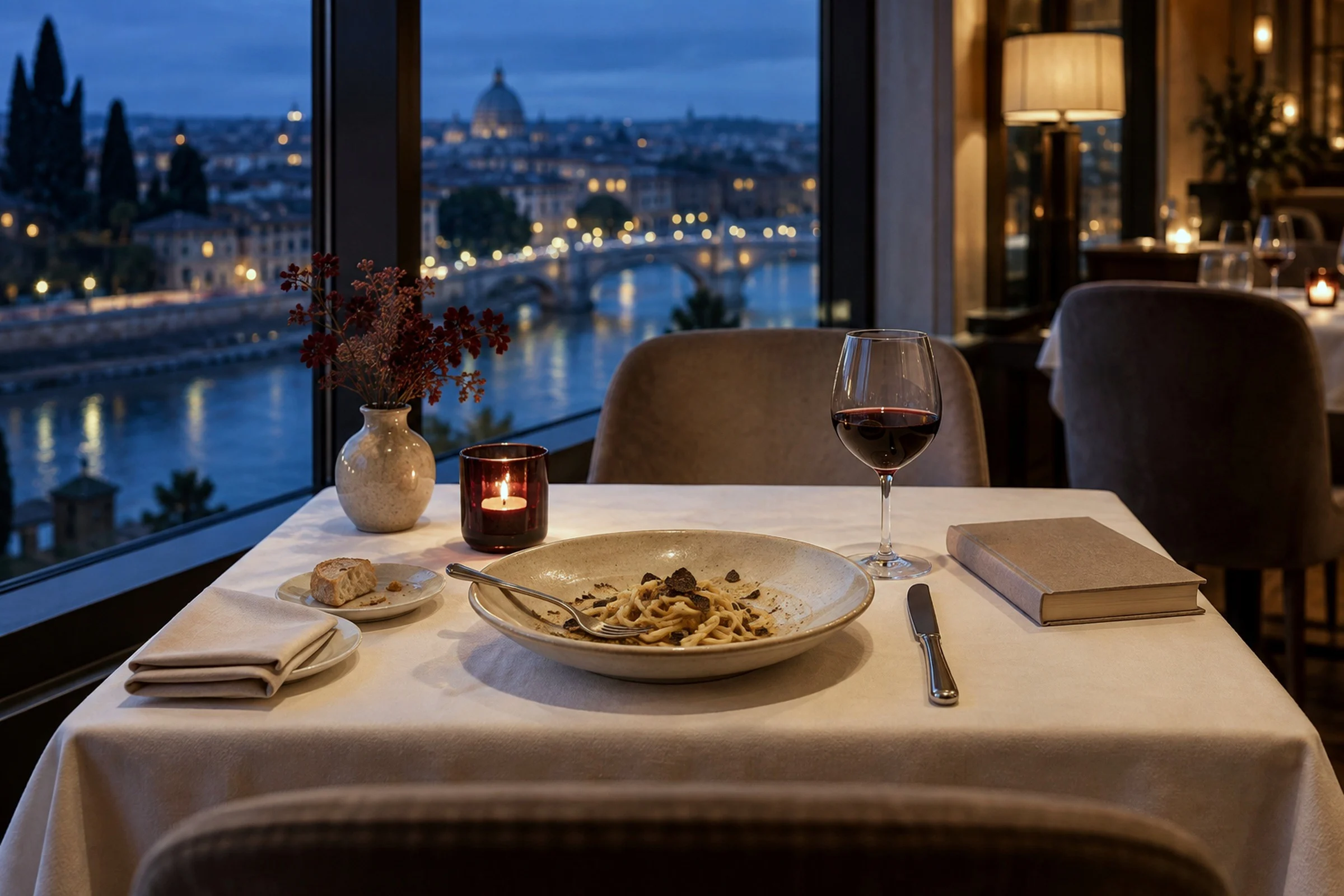
The best meal I had last year, I ate by myself on a Tuesday.
Proper restaurant. Not a counter, not a quick thing standing up. A table, a waiter who took me seriously, three courses and a glass of something I’d never have ordered for a table of six because somebody would have had an opinion about it.
I was there for two hours and I spoke maybe forty words the entire time. It was one of the great evenings of my year and I’ve been slightly evangelical about it ever since.
The assumption you have to get past
People think a woman alone at a good restaurant is either waiting for someone or has been let down by someone.
You can watch the calculation happen. There’s a particular sympathetic tilt of the head from the host when you say one. I’ve had a waiter clear the second place setting with the sort of discretion normally reserved for a bereavement.
None of it is malicious. It’s just that the culture has decided restaurants are social infrastructure, and a person dining alone must therefore be a social arrangement that has failed. Nobody thinks this about a woman alone in a gallery, or a woman alone at the cinema, both of which involve considerably less conversation.
The first few times, I brought a book as a shield. Not to read. To hold. Visible evidence that I had a plan, that this was intentional, that I wasn’t simply a woman nobody had turned up for.
I don’t bring the book anymore. I bring nothing. It took a while.
The additional arithmetic, if you’re fat
I’d be leaving something out if I skipped this, though I don’t want to make it the whole essay, because it isn’t the whole experience.
A larger woman eating in public is doing a small amount of extra work. Not always. Not everywhere. But there’s an awareness, particularly around dessert, particularly if the room is the sort where people look. The sense that your plate is being read as a document.
I used to order strategically because of it. Something modest to start. Skip the bread. Order the fish and then eat something at home later, which is a genuinely absurd way to spend an evening and money.
I also used to check the chairs before booking. That one is practical rather than psychological — narrow armchairs at a fixed table are a real problem and I’d rather know in advance than perform cheerfulness through two hours of discomfort. I still check. That’s not insecurity, that’s logistics, and I’d recommend it.
What I stopped doing was editing the order. I have the bread. I have the pudding if I want the pudding. If somebody across the room has a view about it, they can take it home with them, because I’m not going to be the woman who paid restaurant prices for a performance of restraint.
How I got over it
Slowly, and by accident, which is how most of my useful changes have arrived.
I was travelling for work and had a free evening in a city where I knew nobody. The choice was room service or going out. I’d done room service on enough trips to know exactly how that evening ends: eating something lukewarm off a tray while a television talks at you, feeling faintly sorry for yourself at half past eight.
So I went out, entirely because the alternative was worse, and not out of any confidence whatsoever.
The thing that surprised me was how little happened. Nobody looked. Nobody’s evening was affected in any way by my presence. The waiter was pleasant and slightly indifferent, which was exactly right. I had been braced for an ordeal and what I got was dinner.
That’s the discovery, really. The scrutiny I’d been dreading was largely a production of my own, running at considerable expense, for an audience of one.
Not entirely. I stand by what I said about the head tilt, and about the pudding. But the ratio was wildly off. I’d been budgeting for a hostile room and the room was, overwhelmingly, busy with itself.
Why it’s better alone
And it is better, at least sometimes, which is the part people find hardest to believe.
You choose the restaurant. Entirely. No negotiating around someone’s dislike of spice or someone’s parking preferences or the fact that two people in the group have decided they’re not drinking and would rather go somewhere cheaper.
You order what you actually want rather than what coordinates socially. Nobody’s suggesting you share, which I have always found faintly outrageous as a concept when I’ve spent twenty minutes deciding.
You eat at your own pace. This is the underrated one. Group meals run on a committee tempo — you’re fast when others are fast, you’re waiting when someone’s telling a story with their fork down. Alone, the food arrives hot and you eat it hot.
And you actually taste it. I hadn’t understood how much attention conversation takes until I removed it. Good food deserves more notice than it gets while you’re being a good dinner companion.
How to do it well, if you haven’t
A few things I’ve worked out, offered without any suggestion that you need instructions to eat a meal.
Book, don’t walk in. A reservation for one is a statement of intent and it gets you a proper table rather than whatever’s left by the service station. When they ask, say one, clearly, with no apologetic upward inflection at the end. The tone you use sets the tone they use.
Go early in the week. Tuesday and Wednesday rooms are calmer, the kitchen is less pressed, and staff have time to actually talk to you if you want that. Saturday at eight is the worst possible introduction to eating alone.
Sit at the bar if there is one and you’re nervous. It’s the gentlest entry point — there’s a natural person to talk to, the pacing is easier, and nobody has ever thought twice about a woman alone at a bar with a menu.
Talk to the staff. Ask what’s good tonight and mean it. I’ve had some of my best meals from a waiter who could tell I was actually interested and steered me somewhere I’d never have gone myself. This is much easier alone than in a group, where ordering becomes a committee process conducted at speed.
And tip properly. A single diner occupies a table for two and spends less than two people would. The floor staff know this. Behave accordingly and you’ll find you’re welcome back.
The room becomes the entertainment
This is the bit I genuinely didn’t expect to enjoy as much as I do.
A restaurant is an extraordinary place to watch people when you’re not busy being one of them. The couple on their third date, doing that slightly over-attentive listening. The table of colleagues where one person is clearly senior and everyone’s laughing a beat too fast. The pair who’ve been married a long time and don’t speak for twenty minutes and are obviously perfectly happy.
The staff, too. Watching a good floor team work is like watching decent choreography. Nothing is rushed, nothing collides, plates land at the right moment.
You see none of this in company. You’re looking at the person opposite you, as you should be.
I’m not making an argument against eating with people. Most of my best evenings have other people in them, and a long dinner with friends who make you laugh is one of the genuinely great things available to a person.
But it isn’t the only version, and treating it as the only version means a lot of women are staying home rather than going out alone, eating something indifferent standing at the counter, because a table for one feels like an admission.
It isn’t an admission. It’s a Tuesday, and a very good glass of wine, and nobody asking you what you’re thinking about.
Book the table. Take the window if they offer it.