I refuse to turn every meal into a punishment
Somewhere between the commentary and the compensating, eating stopped being a pleasure and became an administrative task. On getting the table back.
I once spent an entire dinner party mentally drafting what I would eat the following day. Good company, food someone had gone to trouble over, and I was somewhere else entirely, doing arithmetic.
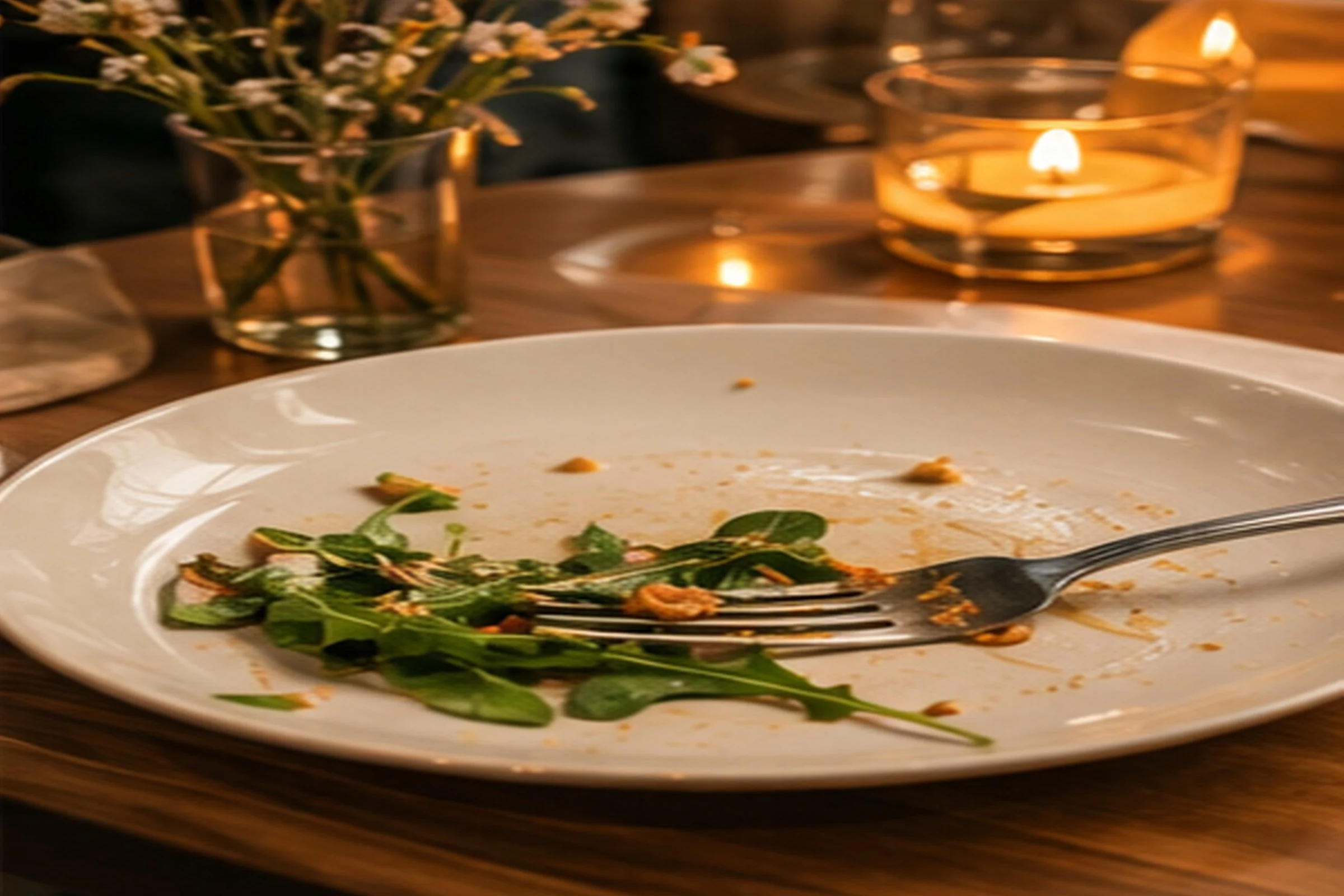
I did not taste that meal. I attended it.
The compensating
This is the mechanism I want to name, because I think it is nearly universal among women and almost never described plainly.
You eat something. Immediately, a settling-up begins. What will be skipped. What will be walked off. What tomorrow will have to look like to bring the ledger back to zero.
It runs during the meal. That is the cost. You are not present at your own dinner because part of you is already in the following day, doing corrections.
I was not eating meals. I was processing them.
What it cost
Ten years of meals I did not really taste, in the sense that I could not tell you much about any of them.
Occasions I remember as logistics — birthdays, holidays, a very good restaurant I saved for and can recall almost nothing about except that I ordered carefully.
And the wider thing: I became slightly worse company. It is difficult to be fully present at a table when a portion of your attention is permanently allocated to a private audit.
How it eased
Not through a decision. Through a very ordinary discovery: the arithmetic was not accurate.
The days I compensated and the days I did not produced no difference I could detect, in how I felt, how I looked, or anything else. I had been running a ledger for a decade that, on inspection, was not measuring anything.
That was more effective than any amount of self-acceptance work, because it was not asking me to feel differently. It was asking me to look at the results, and the results were nothing.
Eating in front of people
There is a specific scrutiny that attaches to a larger woman eating in public, and I have never found a graceful way to describe it without sounding paranoid.
It is not usually a comment. It is a glance at the plate, or a pause in a conversation, or the particular enthusiasm with which someone announces they are also having the pudding. Small enough to be deniable. Frequent enough to be shaping.
What it produced in me was a habit of ordering strategically — something that would not attract attention, rather than something I wanted. And then, reliably, eating properly later, alone, which is how a small social pressure turns into a private pattern.
The mechanism is worth naming plainly, because the people applying the pressure would be horrified to learn what it actually causes. Nobody watching my plate was hoping I would eat in secret afterwards. That is nonetheless the reliable output.
What I do now
I order what I came for. Not defiantly — I have no interest in making a point at a restaurant table. Just first, before the calculation gets going, because the calculation only has power in the gap between reading the menu and deciding.
And I have stopped narrating my own eating. No announcements about being good, no jokes about how bad this is, no pre-emptive commentary to establish that I know what I am doing. That running commentary was never for me; it was a small ongoing apology, and stopping it was one of the quieter improvements of the last few years.
The table
What I have wanted back, more than any particular food, is the table.
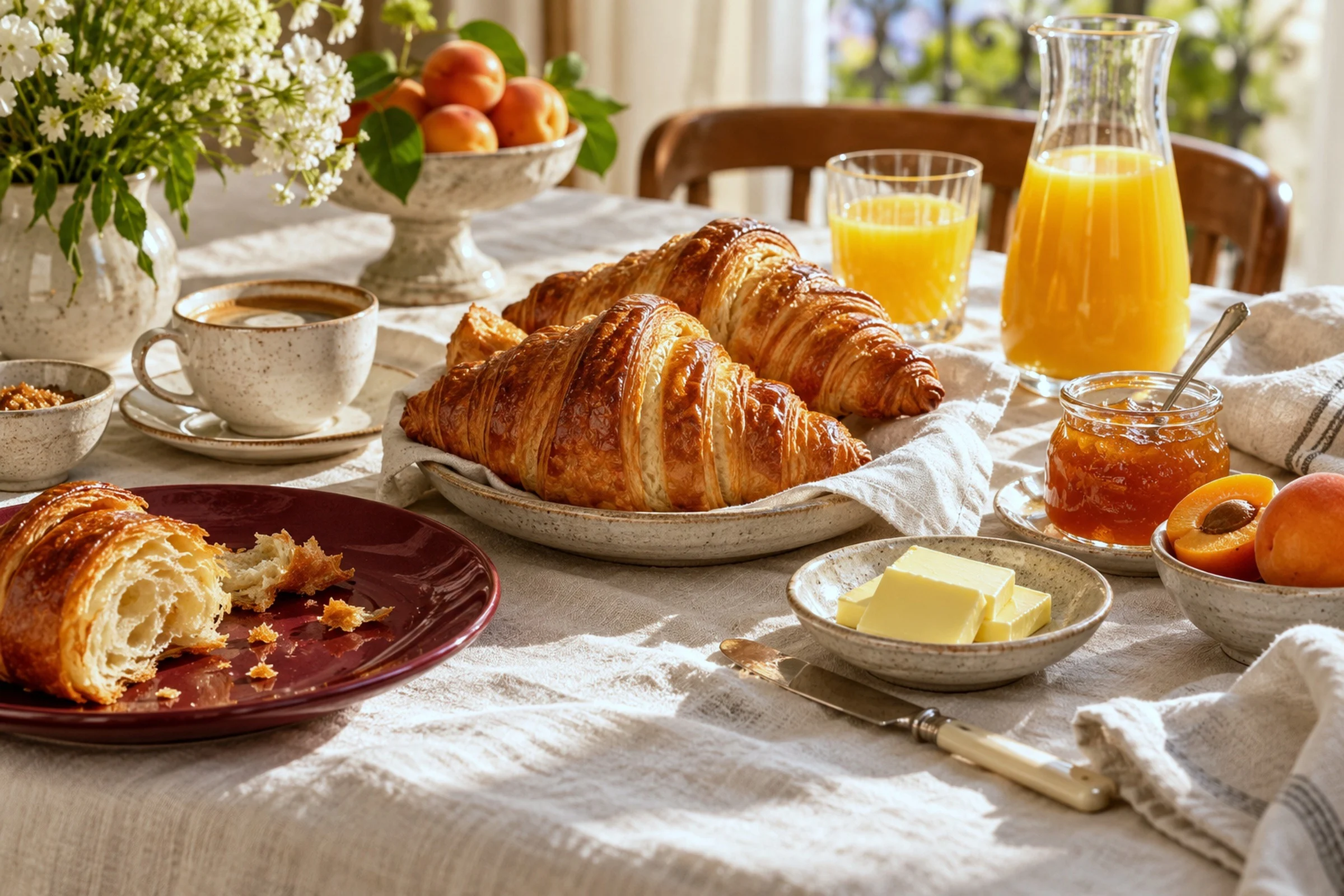
The long meal. The one that goes on past the point of eating, where the plates are still there and nobody has moved, and the conversation has gone somewhere it would not have gone in a living room. That is the thing I was quietly opting out of by turning up already braced.
I cook for people more now. Simply, usually one thing done properly rather than a production. Fewer courses, more time.
Cooking as an ordinary skill
Something I lost during the years of scrutiny, and did not expect to miss: I stopped being any good at cooking.
When food is primarily a compliance problem, cooking becomes preparation rather than craft. You assemble what is permitted. You do not develop a hand for seasoning, or a sense of when something is done, because those come from tasting repeatedly and from caring how it turns out.
Getting it back took a while and was more enjoyable than I anticipated. Not elaborate — a few things done properly and repeated until they are reliable. A roast chicken. A dressing made without measuring. Bread, occasionally, badly.
There is something quietly restorative about being competent at feeding yourself. It is the opposite of the anxious version, and it uses the same ingredients.
Feeding people
There is something particular about being the one who feeds people. I resisted it for years, on the reasoning — which I can now see was ridiculous — that a larger woman who enjoys cooking is confirming something.
I have no interest in that calculation any more. I like feeding people. It is one of the few completely unambiguous ways to make someone’s evening better, and it requires no explanation.
Where I am
Not resolved. The commentary still starts occasionally, particularly when I am tired or somewhere unfamiliar.
The difference is that I notice it now, and noticing is usually enough to interrupt it. I put my attention back on the table — the actual table, the people at it, the food someone made — and it recedes.
Meals are not a test you can pass or fail. They are one of the small reliable pleasures available most days, and I lost about a decade of them to an audit that was not even measuring anything. I would rather not lose another.