Is it rude to not finish your food?
Leaving food on your plate is not an insult. What is rude at someone's home, at a restaurant and as a host, and why the clean plate rule deserves a rethink.
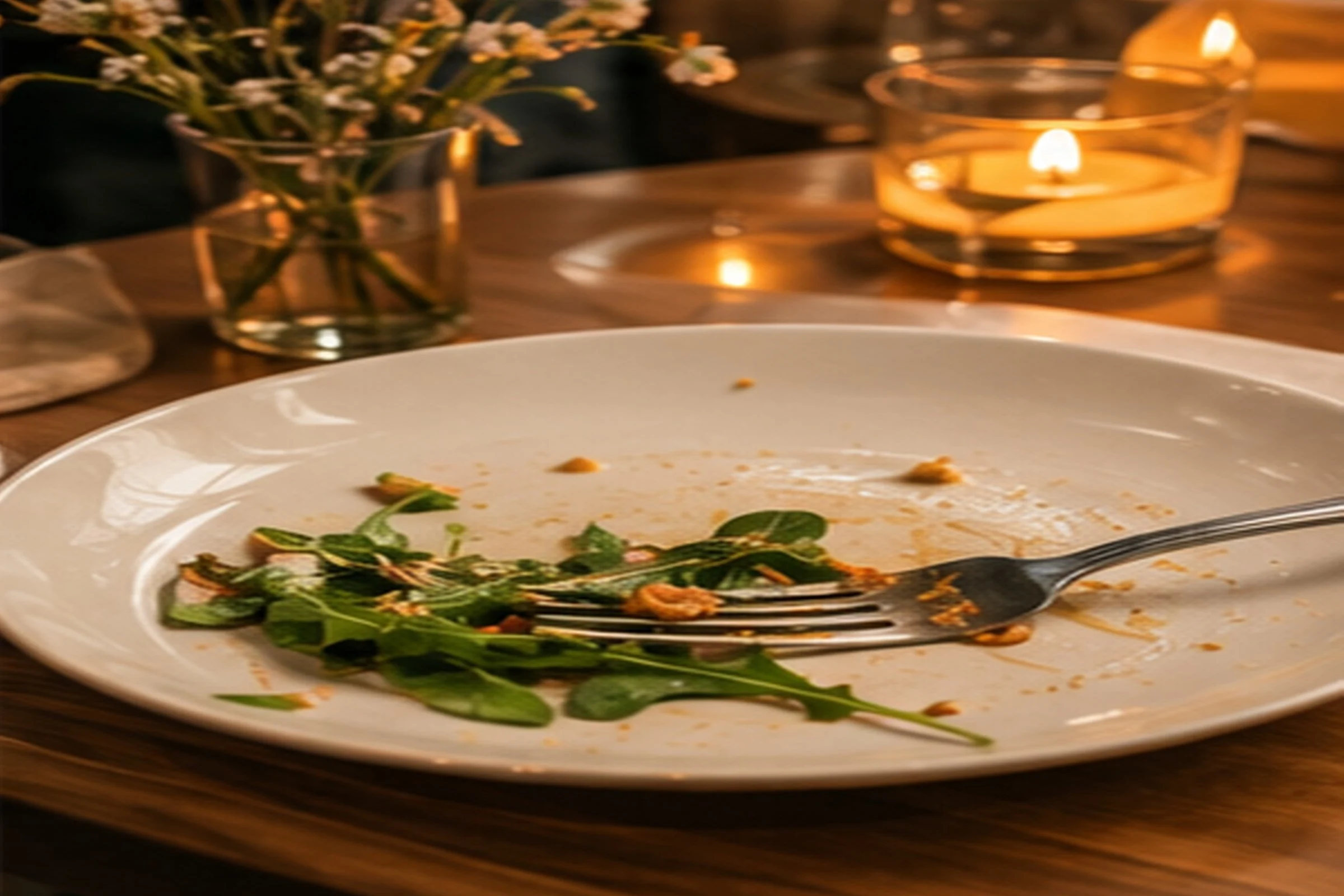
Is it rude to not finish your food? Not in itself. Leaving food on your plate is not an insult, a character flaw or a waste you are personally obliged to prevent. What can be rude is how you leave it, where you are, and what you say about the food. A guest who quietly eats what they want and stops is behaving well. A host who keeps pressing more food on someone who has clearly finished is not.
Many people carry a rule from childhood about clearing the plate, and some carry it for life, finishing meals long after they stopped enjoying them because leaving anything feels like misbehaving. It is worth separating that habit from actual manners.
At someone’s home
This is where the question matters most, because a person has cooked for you.
- Take modest portions when you can serve yourself. It is far easier to go back for more than to leave a mountain behind.
- Try a little of everything if you reasonably can. Skipping a whole dish without explanation is more noticeable than leaving a few bites.
- Stop when you are full. A small amount left on the plate is normal. Put your cutlery together if that is the custom where you are, so the host knows you have finished.
- Say something warm and specific. “That was lovely, I’m completely full” lands better than any amount of plate-clearing.
- If you dislike something, eat what you can of the rest, and say nothing negative about it. Moving food around the plate is fine. Commenting on it is not.
- If you have an allergy or dietary need, tell the host when you accept the invitation, not when the plate arrives. That is the considerate moment.
What is rude is refusing food with a face, making a show of not eating, criticising the cooking, or leaving a full plate without a word. The difference between those and simply not finishing is enormous.
If you are the host
The duty runs both ways. Hosts should not treat an unfinished plate as a verdict on their cooking or as a debt to be settled.
- Let guests serve themselves wherever possible, from dishes on the table. It removes almost every problem in this article. It is also the easiest way to run a relaxed dinner party.
- Offer seconds once, perhaps twice. After that, a “no, thank you” means no.
- Do not comment on how much or how little anyone has eaten.
- Do not insist. Pressing more food on a guest who has said they are full only puts them in the uncomfortable position of either overeating or appearing to refuse you.
At a restaurant
In a restaurant, leaving food is simply leaving food. The kitchen has been paid; nobody’s feelings are on the line. If you leave a lot, a server may ask whether everything was all right, and the honest answer is useful to them. If the dish was fine and you were full, say so, and ask to take the rest home if that is offered and you would actually eat it.
Ordering sensibly is the only real etiquette here: if you know portions are large, share a first course, skip a side, or ask about sizes.
Cultural differences
Customs around the plate really do vary. In some households and cultures, a completely clean plate tells the host you were satisfied; in others, it can suggest you were not given enough, and leaving a little is the polite signal that you have had plenty. Many families have their own version of the rule, quite apart from where they live.
Because these customs vary between regions, generations and individual families, it is unwise to assume that everyone from a particular country does the same thing. If you are a guest somewhere unfamiliar, watch what others do, follow the host’s lead, and when in doubt, ask. “I’m so full, is it all right if I leave this?” is a perfectly gracious question almost anywhere.
The clean plate habit
Many of us were raised to finish everything, sometimes with a lecture about waste or about people who had nothing. Reducing food waste matters, but the place to do it is in the shopping, the cooking and the portion size, not by forcing the last few mouthfuls into a full stomach. Eating past fullness to satisfy a rule does nobody any good.
The habit also tangles food up with guilt and virtue, as if an empty plate made you good and a full one made you ungrateful. Nina Noir has argued before that food is not a moral test, and the clean plate is one of the earliest places that test gets set.
The verdict
You do not owe anyone an empty plate. Take what you want, eat what you enjoy, stop when you have had enough, and thank the person who cooked. That is good manners in almost any home. The rudeness, when there is any, is in how food is refused or pressed on people, never in a few bites left behind.