What to bring to a dinner party (and what to leave at home)
The best gift for a host creates no extra work. Wine or not, flowers or not, what to do when they say bring nothing, and the gifts that land well almost anywhere.
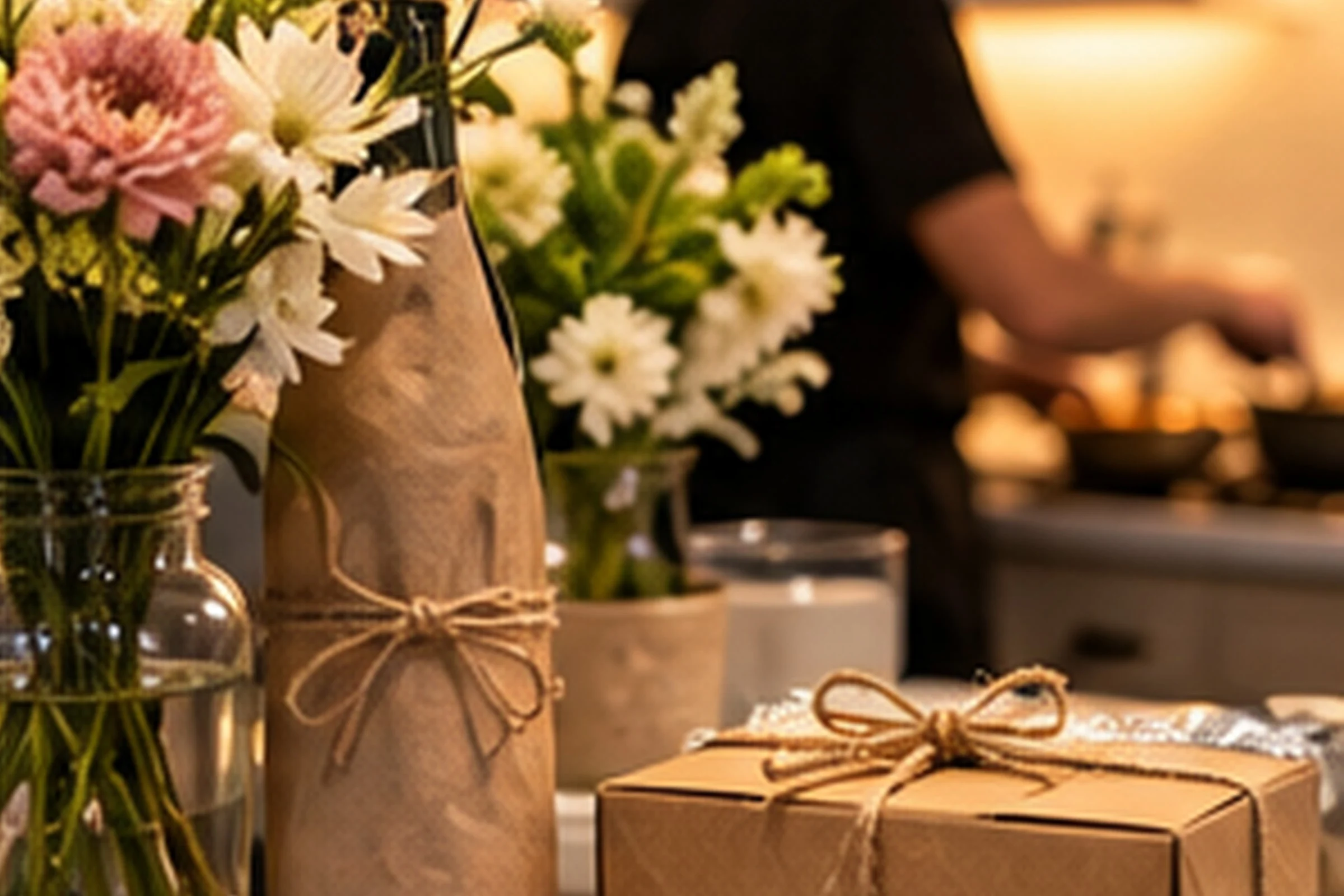
What should you bring to a dinner party? Something small that creates no work for the host. A good bottle, if you know they drink; chocolates or something from a good bakery; flowers already in a vase or a jar; or a little treat for their kitchen. Hand it over with no expectation that it appears on the table that night. And if the host has asked you to bring a specific dish, bring exactly that, on time, ready to serve.
That one principle, no extra work, answers most of the questions people have about being a guest.
Do you have to bring something to a dinner party?
In many places and circles, arriving empty-handed at someone’s home for dinner feels wrong, and a small gift is the norm. In others, it is less expected, and a sincere thank-you is enough. Customs vary widely around the world, from households where a gift is close to obligatory to those where too lavish a gift would embarrass the host.
If you are unsure, bring something modest. A small gift is almost never wrong; turning up empty-handed occasionally is. The point is a gesture of thanks, not a payment for the meal.
What to bring if the host says “don’t bring anything”
Take it seriously, but not literally. “Don’t bring anything” usually means: do not bring a dish, do not bring something I have to deal with, do not feel you owe me. It rarely means the host will be offended by a small box of chocolates or a bottle they can put away for another day.
What it does mean is: do not turn up with an unexpected salad, a dessert that clashes with the one they made, or a dish that needs oven space at the busiest moment of the evening. Bring something that can be put aside and enjoyed later.
If the host has said it twice, or has explained why (they are trying not to drink, their kitchen is tiny, they genuinely do not want gifts), then believe them, bring nothing, and send a warm thank-you the next day instead.
Should you bring wine to a dinner party?
Wine is the classic choice, and in many households it is a good one. But it is only a good gift if the host drinks it.
Before you reach for a bottle, think about who you are visiting. Plenty of people do not drink alcohol, for reasons of faith, health, recovery, preference or simply because they have stopped. Bringing alcohol into a home where nobody drinks can range from slightly awkward to genuinely unwelcome. If you do not know, ask, or choose something else.
Good alternatives for an alcohol-free household, or when you are unsure:
- a good non-alcoholic sparkling drink, cordial or juice;
- excellent coffee or loose-leaf tea;
- chocolates, cookies or sweets from somewhere good;
- something from a bakery: a loaf, pastries, a cake for their breakfast tomorrow.
Should the host open the wine you bring?
No, not unless they want to. A bottle you bring is a gift, not a contribution to the meal. The host has usually chosen what to serve with the food, and they are free to put yours away for another time. A guest who hands over a bottle and then asks when it will be opened has turned a present into a claim.
If you want the host to serve it, the only polite way is to arrange it in advance: “I’d love to bring a bottle to go with dinner, what are you cooking?”
Flowers: arranged, not loose
Flowers are lovely, and a hidden burden. A bunch handed over at the door forces a busy host to stop cooking, find a vase, trim stems and fill it with water just as the evening starts. The kinder version is flowers already in a vase or jar, or a small potted plant, or flowers sent the next day as a thank-you.
Food to bring, and food to avoid
Bring food only if you have been asked, or if it is clearly a treat for later. Good choices:
- a box of chocolates or sweets;
- a cake, cookies or pastries for the host to keep;
- something from a local speciality shop;
- a jar of good honey, preserves, olive oil or spices, if they love to cook.
Avoid bringing:
- an unplanned dish that competes with their menu;
- anything that needs oven space, a fridge shelf or last-minute attention;
- strong-smelling or highly perishable food that has to be eaten that night;
- a dessert, unless you have checked they have not made one.
If the host asks you to bring a dish, ask what and how much, bring it fully prepared in a dish you do not need back that evening, with serving spoons if needed, and arrive on time so it fits into their plan.
How much should you spend?
Not much. A dinner-party gift is a token of thanks, and there is no need to match the cost of the meal. An expensive gift can make a host feel awkward. Something you chose with a little thought, at a modest price, is right almost everywhere. If you are splitting the cost of a gift with friends, keep it simple and fair, which is the same instinct behind splitting a bill.
Small, thoughtful gifts
The best gifts often show you know the host a little: their favourite chocolate, a candle in a scent they like, a book you think they would enjoy, a jar of something from your own kitchen, a good linen kitchen towel for someone who cooks a lot. None of these needs to be used that evening, which is exactly the point.
What not to bring
- Uninvited guests. Ask first, always.
- A dish nobody asked for.
- Alcohol to a home where nobody drinks.
- Loose flowers that need immediate attention.
- Anything that comes with instructions or a demand to be served.
The guest’s real gift
A gift at the door is the easy part. The more valuable things a guest brings are harder to wrap: replying to the invitation promptly, so the host can plan (far too many people don’t); mentioning any dietary needs in good time; arriving roughly when asked; and being good company. Then, the next day, a message to say thank you.
The host has done the work of feeding you, as anyone who has tried to host a relaxed dinner party knows. Your job as a guest is to make their evening a little easier, never harder.