Why do people stand up the second the plane lands?
It rarely gets anyone off sooner. Why passengers leap up the moment the seatbelt sign goes off, when it's fine to stand, and why the aisle is not a race.
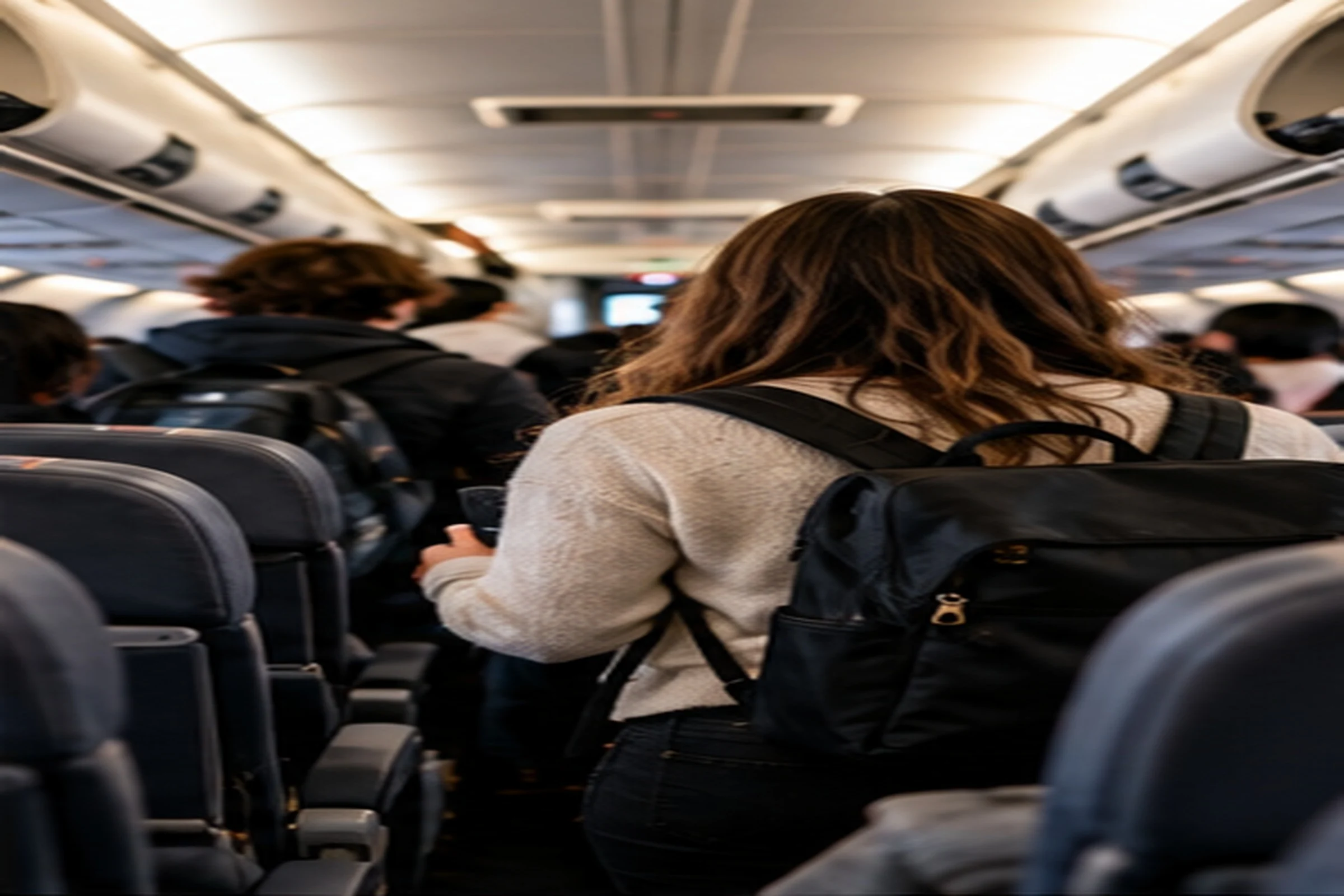
The wheels touch, the plane slows, and before it has even left the runway there is a sound like a small round of applause: dozens of seatbelt buckles snapping open at once. By the time the aircraft reaches the gate, half the cabin is on its feet, heads bent under the overhead lockers, bags half out, coats on, waiting. And waiting. So why do people stand up as soon as the plane lands, when the door is still closed and nobody is going anywhere for another ten minutes?
Mostly because sitting still at that point feels impossible. But the people who stand are rarely getting off any sooner, and the habit deserves a clearer verdict than it usually gets.
First, the rule that isn’t up for debate
Stay seated, with your belt fastened, until the aircraft has stopped at the gate and the seatbelt sign has been switched off. Taxiing aircraft can brake suddenly, and a person standing in the aisle or fiddling with an overhead locker is at risk, and a risk to others. Cabin crew ask you to stay seated for safety reasons, not for tidiness. Everything below is about what happens after that sign goes off.
Why people stand up the moment they can
The body has had enough
A few hours in a narrow seat, knees against the seat in front, is uncomfortable for almost everyone, and painful for some. Standing up is relief. For tall passengers, people with stiff backs or bad knees, and anyone who has been wedged into a window seat, getting upright quickly is the first chance in hours to straighten out, and has little to do with impatience.
The feeling of progress
The flight is over. Your mind has already moved on to the taxi, the train, the person waiting at arrivals. Sitting down while the cabin fills with movement feels like falling behind. Standing feels like doing something, even when there is nothing to do.
Connections and deadlines
Some passengers genuinely are in a hurry: a tight connection, a last train, a meeting. Their anxiety is understandable, and it tends to spread through a cabin. When a few people stand, others follow, partly in case they miss something and partly so they do not feel left behind.
Wanting to get the bag down before the scrum
Many people stand early to retrieve their bag from the overhead locker while the aisle is still clear, before everyone else does the same. In a full cabin, this can actually make sense, as long as it is done quickly and with care.
Does standing up get you off the plane faster?
Usually not. Passengers leave a plane in order, front to back, through a door that has not opened yet. Until the jet bridge or stairs are in place and the door is open, nobody moves, however keen they are. Once people start leaving, your turn comes when the rows ahead of you have cleared, not when you stood up.
What standing does is make the next few minutes more comfortable for some people and less comfortable for others. The person in the aisle seat who stands has more room. The person in the middle seat who stands is bent double under the locker, often with a stranger’s elbow in their face. Very few people are better off.
There is one small exception. A passenger who has their bag down, coat on and belongings gathered before the door opens will move off promptly when their row’s turn comes, which helps everyone behind them. That can be done just as well sitting down.
Standing is fine. Pushing is not.
This is the distinction that matters. Standing up to stretch, once the seatbelt sign is off, in your own row, without blocking anyone, is perfectly reasonable. Nobody should be glared at for wanting to straighten their back.
What is not reasonable:
- Rushing forward into rows that have not yet emptied, as if the queue were optional.
- Climbing over seats or reaching across people to get a bag.
- Opening lockers and swinging bags down above other passengers’ heads.
- Standing in the aisle with your back to everyone, blocking the people who are actually leaving.
- Ignoring requests from cabin crew to let passengers with tight connections go first.
The polite system is simple. Rows leave in order. You wait for the row in front of you to clear, then go. If someone has a genuinely tight connection and asks to go ahead, let them; if you are that person, ask, and thank people when they make room.
What to do instead
- Get ready while seated. Put your phone, book and headphones away, find your passport, and have your coat on your lap before landing.
- Know where your bag is. If it is in a locker a few rows away, wait until your row moves rather than fighting the flow to reach it.
- Stand if you need to, in your own space. Stretch, then wait. There is no prize for being upright first.
- Help if you can. A tall passenger lifting a bag down for someone who cannot reach is the best thing that happens in a plane aisle.
The verdict
Standing up the second the plane lands is a harmless habit that rarely achieves what people think it does. It is tolerable when it is about comfort and irritating when it becomes a race. The aisle is not a queue you can jump. Wait for the seatbelt sign, stand if your body needs to, keep out of other people’s way, and leave when your row’s turn comes.
The final minutes of a flight bring out odd little rituals, from this one to the round of applause on touchdown that so many people roll their eyes at, which we have written about in why do people clap when the plane lands. Both say something about how much people want a flight to be over. Packing light helps with the exit as well: a single bag you can lift easily, as in our guide to packing a carry-on for a week, makes the last few minutes easier for you and everyone around you.