How to keep bread fresh for longer
Crusty loaves, sourdough and sliced bread each want something different. Where to keep them, why the fridge is a mistake, and how to freeze and revive bread.
Bread goes stale in two different ways, and knowing which one you are fighting is most of the answer. A crusty loaf left out uncovered dries from the outside in. A soft sliced loaf kept in a sealed bag in a warm kitchen stays soft but grows mould. So the short answer to how to keep bread fresh is: keep crusty bread in paper or a bread bin at room temperature for a day or two, keep soft sliced bread in its bag, and freeze anything you will not eat within a few days. Never the fridge, unless you have no other way to stop mould.
The longer answer depends on the bread.
Why bread goes stale
Fresh bread is soft because the starch in it is full of water. As it cools and sits, that starch slowly recrystallises and pushes the water out, which is why a loaf turns firm and crumbly even when it has not dried out much. At the same time, moisture moves from the soft inside to the crust, which is why a crisp crust goes leathery.
Two things follow. You cannot stop staling, only slow it. And temperature matters more than most people expect.
Should you keep bread in the fridge?
Usually not. That recrystallisation happens fastest at fridge temperatures, so refrigerated bread goes stale noticeably quicker than bread left on the counter, even though it stays free of mould for longer. A loaf that would have been fine on day three at room temperature can be dry and dense after a day in the fridge.
The exception is a very hot, humid kitchen where bread goes mouldy within a day or two. There, the fridge trades texture for time, and toasting brings much of it back. But for most kitchens, the freezer does the fridge’s job far better.
How to store a crusty loaf or sourdough
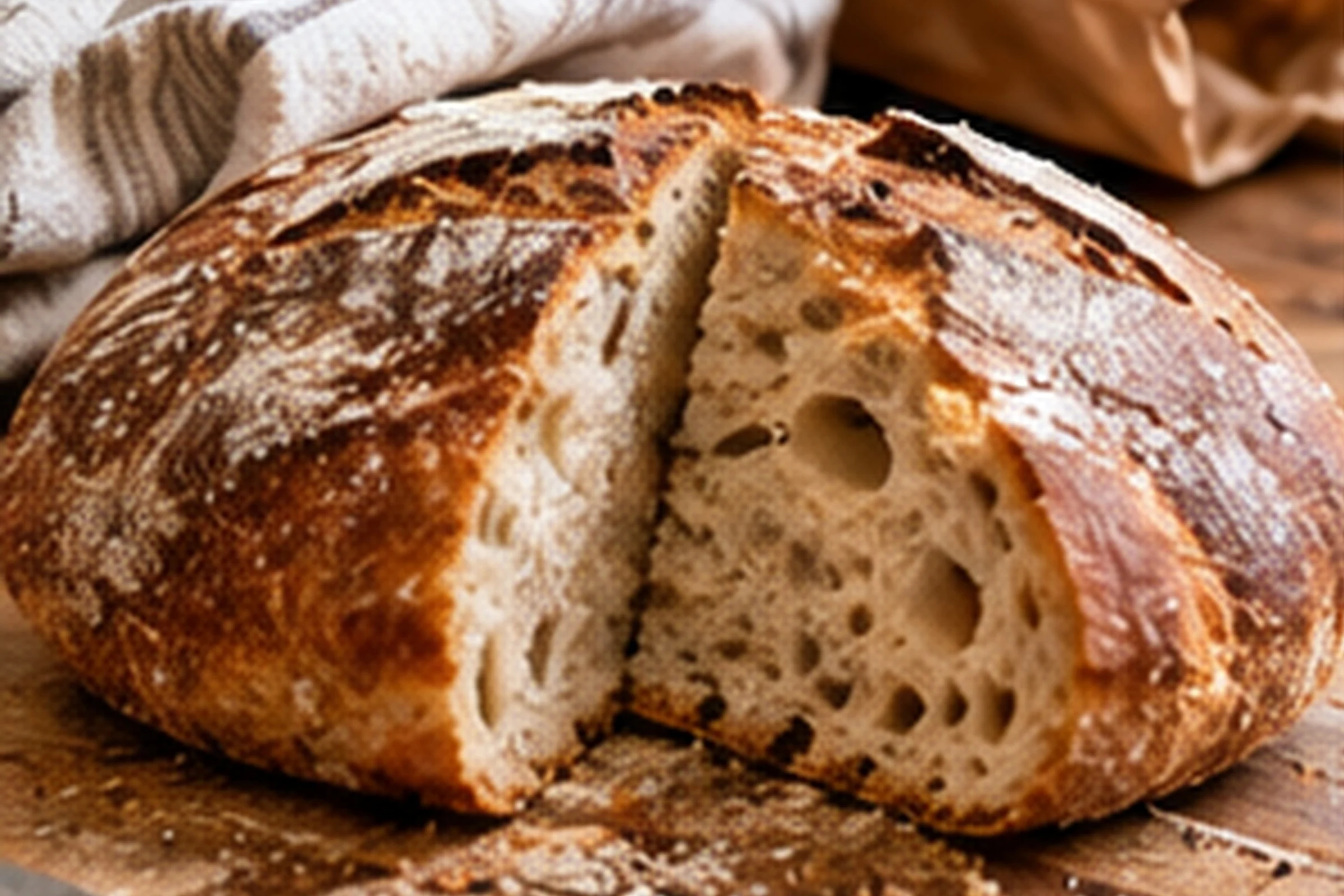
Crusty breads, including sourdough, baguettes and country loaves, are at their best on the day they are baked and keep reasonably for two or three days.
- On the first day, stand the loaf cut side down on a board. The crumb seals itself against the wood and the crust stays crisp. No bag needed.
- After that, use a paper bag, a cotton or linen bread bag, or a bread bin (a bread box, in some kitchens). Each lets a little air move, so the crust does not turn soft and damp.
- Cut from the middle if you like: slice from the centre, then push the two halves back together so the crumb is protected on both sides.
- Avoid plastic for crusty bread. It keeps the inside softer for longer, but the crust goes rubbery and the trapped moisture encourages mould.
Baguettes are the exception to all this. They have so much crust for their size that they are best eaten the day they are bought, and frozen if not.
How to store sliced sandwich bread
Soft sliced bread is made to last longer than a crusty loaf, and its plastic bag is the right place for it. Keep it closed with a clip, squeeze out the air, and store it somewhere cool and dark, away from the oven, the kettle and sunny windows. It will generally keep for several days, often up to a week, before mould appears.
Bread bin or paper bag?
Both work, and they work best together. A paper bag on its own suits a loaf you will finish in a day or two. A bread bin evens out the air around the bread and suits households that always have a loaf on the go. Wooden, enamel and ceramic bins all do the job; what matters is that the bin is not airtight, is kept clean and dry, and is not crammed so full that bread sweats.
Wipe out the bin every week or two and give it a proper clean if anything inside ever goes mouldy, because spores linger.
Flatbreads, wraps and rolls
Pitta, naan, tortillas and wraps dry out quickly once opened. Keep them sealed in their packet or a food bag at room temperature and use them within a couple of days, or freeze them flat with baking paper between the pieces so they come apart easily. Soft rolls behave like sliced bread; crusty rolls behave like baguettes.
Can you freeze bread?
Yes, and it is the single best way to keep bread fresh for longer. Freezing stops staling almost entirely, and good bread frozen on the day it is bought comes back very close to how it went in.
- Freeze it fresh. Bread that is already stale will come out stale.
- Slice it first. A whole frozen loaf is hard to cut; slices can go straight into the toaster.
- Wrap it well. Use a freezer bag with the air pressed out, or wrap the loaf tightly. Bread left exposed in the freezer dries out and picks up other smells.
- Use it within a few months. It will be safe for longer, but the texture gradually suffers.
Sliced sandwich bread can go into the freezer in its own bag. Take out what you need and toast it from frozen.
How to defrost bread
Slices can go straight into the toaster. For a whole or half loaf, leave it wrapped at room temperature for a few hours so the moisture that forms stays in the bread, then unwrap it and refresh it in a hot oven for a few minutes to crisp the crust.
How to revive stale bread
A loaf that has gone firm but is not mouldy can often be brought back, at least for a meal. Run the crust quickly under the tap or brush it with water, then put it in a hot oven for five to ten minutes. The heat temporarily reverses some of the staling and the water steams the crumb. Eat it soon after, because it will go stale again quickly.
Bread past saving at the table is still useful: breadcrumbs, croutons, toast, bread and butter pudding, a thick slice under soup. Bread and leftovers are where cooking for one without wasting food gets easiest.
Stale or mouldy?
Staling is a texture change and nothing more; stale bread is fine to eat. Mould is different. If you see fuzzy spots of green, white, grey or black, throw the bread away. Cutting off the visible patch is not enough, because mould in soft bread can spread well beyond what you can see. If bread smells sour, musty or simply wrong when it should not, that is another reason to bin it.
Buy for how you eat
The easiest fix happens before the bread comes home. A household that gets through a loaf in two days can keep it on the counter in a bag. A household of one, or anyone who only eats bread at weekends, will waste less by buying smaller loaves, slicing and freezing half straight away, and treating the freezer as the bread bin. And when people are coming round, buy it on the day: warm bread on the table is one of the easiest pleasures of a relaxed dinner party.