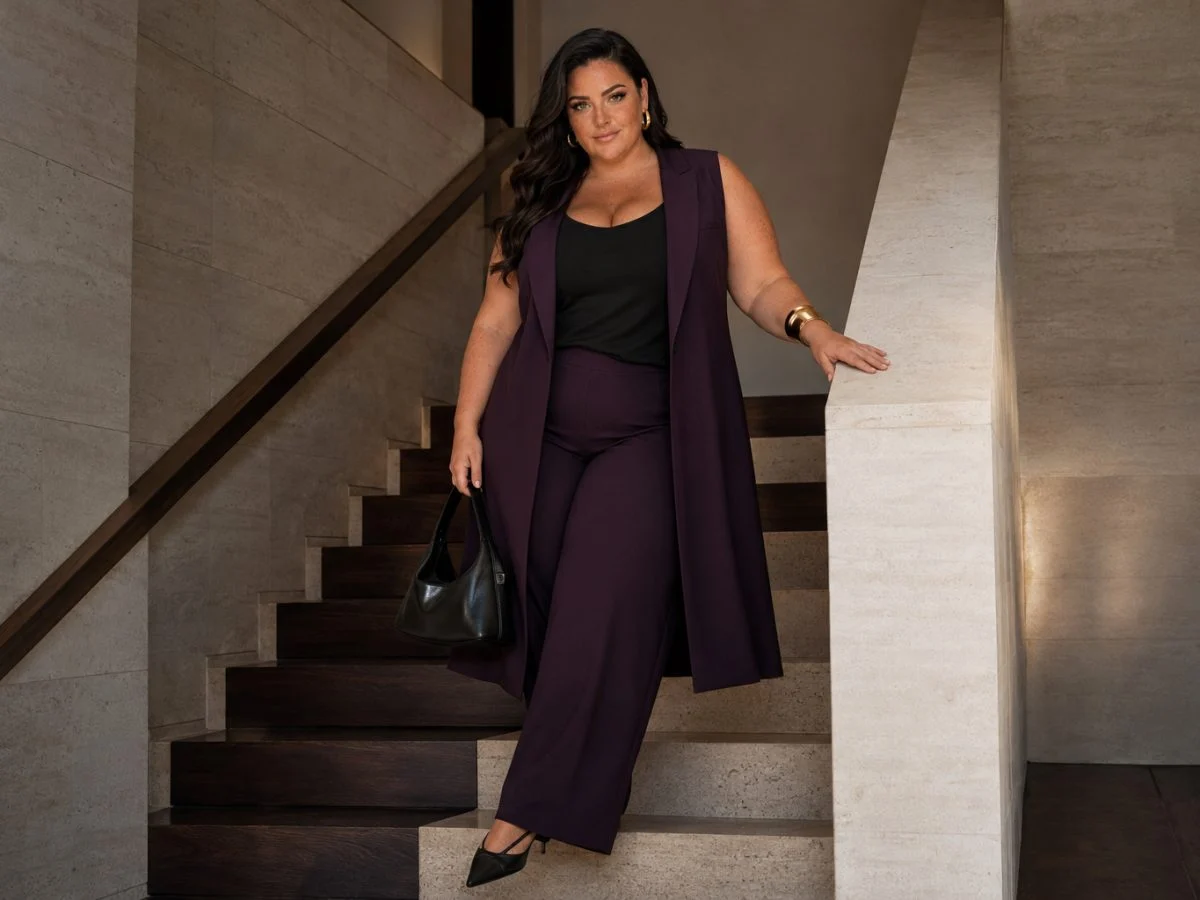
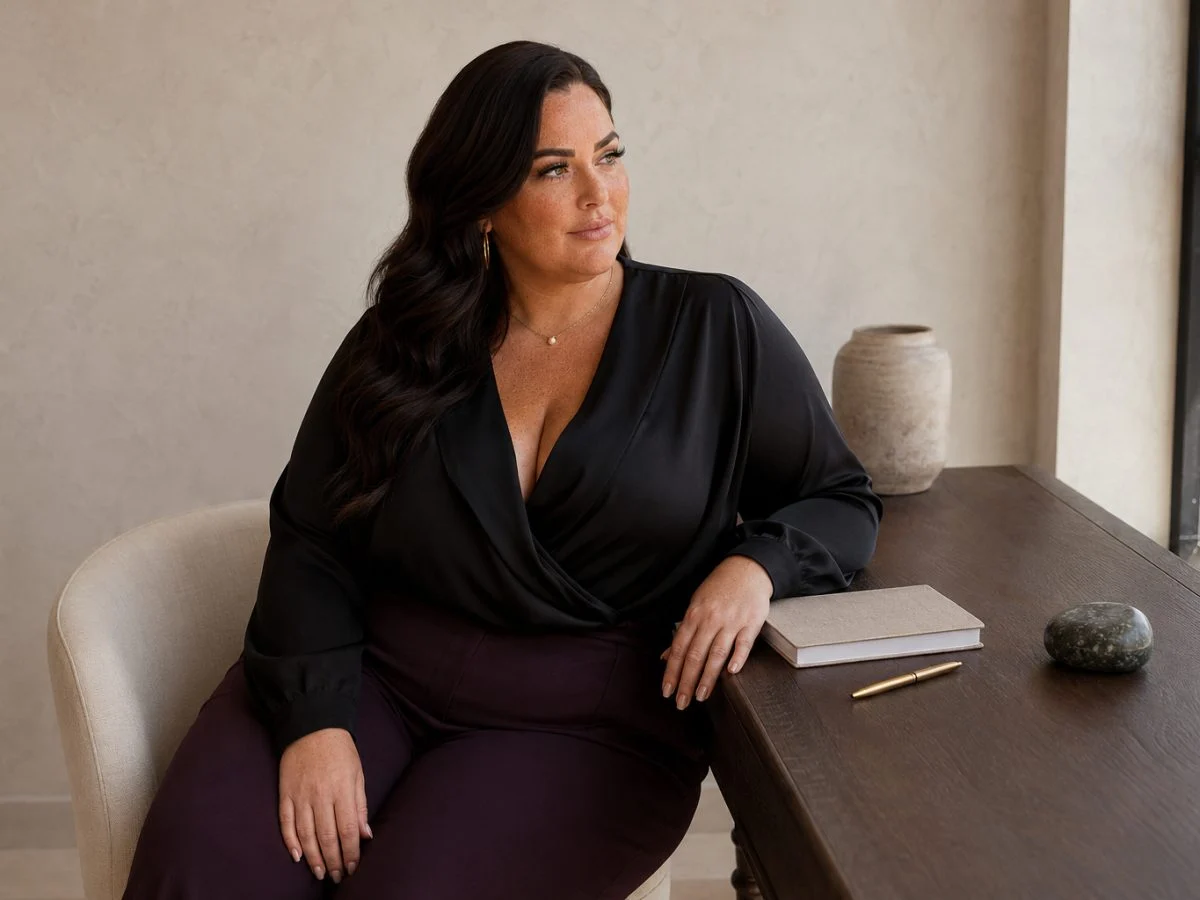
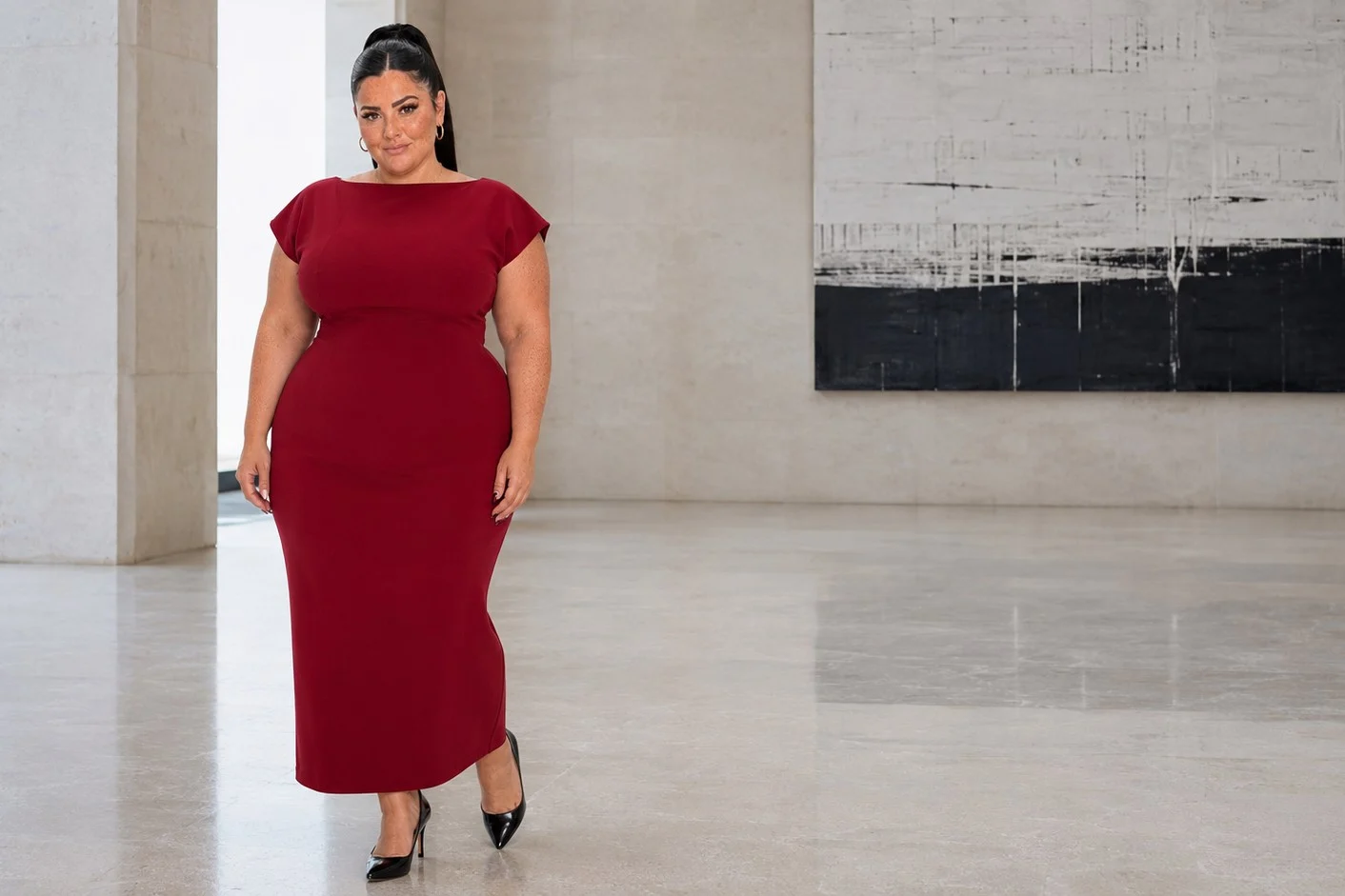
The mirror in the fitting room is not the final word
Three sizes of the same trousers, one afternoon, one body. What that taught me about lighting, sizing charts and the word flattering, and why the cubicle mirror gets no vote.
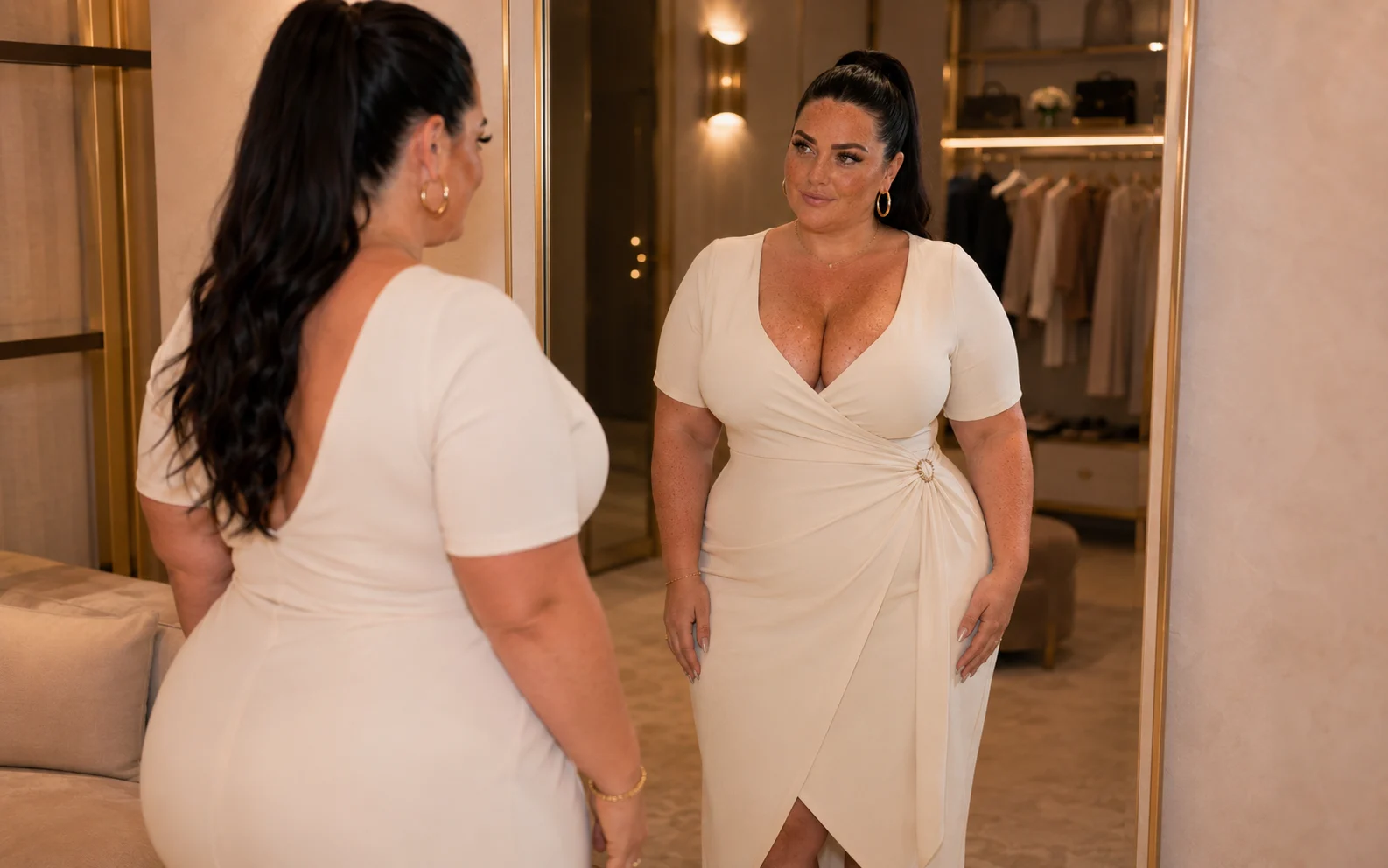
Three pairs of the same trousers. Same shop, same afternoon, three different sizes on the label. The first wouldn’t clear my thighs. The second fastened but sat wrong across the front in a way that made me look like I was being slowly digested. The third fit beautifully, and the number printed inside it was one I’d have found personally insulting ten years ago.
My body did not change between those three pairs of trousers. Only the cutting did.
I think about that afternoon whenever I hear a woman come out of a fitting room with that particular flatness in her voice. The one that says she’s decided something about herself. Not about the garment. About herself.
Nobody designs that room to be kind to you
Start with the light. Overhead, usually. Often slightly cool, occasionally fluorescent, almost always positioned so it falls straight down from above your head. That angle does something specific to a human face and body: it drops shadow into every hollow and under every curve. Photographers spend their careers avoiding it. Retailers install it by the hundred because it’s cheap, it’s bright, and it makes the merchandise look crisp.
Then the mirror. Rarely flat, in my experience. A large sheet of glass on a slightly warped backing will pull and compress your reflection, and you will read every distortion as new information about your thighs.
Then the tiny bench, the hook that holds four heavy garments until it doesn’t, the curtain with the permanent two-inch gap, and the specific indignity of getting a dress stuck over your shoulders while a stranger asks brightly through the fabric how you’re getting on.
You are hot. You are half-undressed. You’re doing arithmetic about your own body under a light designed for a warehouse. And this is the environment in which women have been quietly trained to make a judgement about their worth.
The number on the label is not a measurement
Here is something that took me an embarrassingly long time to properly absorb: clothing sizes are not standardised. Not between countries, not between brands, and frequently not between two ranges inside the same brand. There is no external body enforcing what a 16 means. A size label is a manufacturer’s internal decision, and it moves.
It has also moved over time. If you’ve ever picked up genuine vintage and found the sizing bewildering, you weren’t imagining it. The numbers have drifted for decades, generally downward, so that a garment sold under one number in the 1960s corresponds to a considerably smaller number now. The industry has an unofficial name for it. The garment didn’t change shape. The flattery did.
Once you know that, the fitting room stops being a courtroom and starts being what it actually is: a place where you find out whether one company’s guess about bodies happens to resemble yours.
It usually doesn’t. Most mass-market patterns are still graded up from a base size, which means the proportions get stretched outward mathematically rather than redrawn for how larger bodies are actually built. That’s why a top can fit your bust and gape at the neck. Why a jacket fits your shoulders and strains at the arm. Why sleeves on plus-size ranges are so often cut for someone with the same arm as a size 10 and a completely different torso. The maths is being done on a body that doesn’t exist.
Which brings me to a word I’ve come to distrust.
Flattering.
I used to accept it as neutral, technical advice. A wrap dress is flattering. A dark colour is flattering. A structured shoulder is flattering. It sounds like a stylist being helpful.
Then I noticed that almost every time the word was applied to me, it meant the same thing: this makes you look smaller. Not more elegant. Not more like myself. Smaller. An entire vocabulary of fashion advice for larger women turns out to be, underneath the gloss, a set of strategies for taking up less visual room. Vertical lines. Dark colours. Nothing at the widest point. A hint of structure to suggest a body more disciplined than the one you brought in.
I still wear black. I love a strong shoulder. I’m not going to pretend I’ve never used a good seam to my advantage, because I have, and I will again. The difference is that I now do it because I like the look, not because I’m apologising in advance.
The question I ask in a fitting room is no longer does this make me look thinner. It’s much simpler. Does this feel good when I move. Does the fabric behave. Do I want to keep it on.
Shopping at home solved one problem and created another
A lot of women I know have simply stopped going into shops. Order six things, try them on in your own bedroom in your own light, send back what doesn’t work. No cubicle, no curtain gap, no assistant asking how you’re getting on.
I did this for about two years and I understand the appeal completely. Your own mirror is a known quantity. You can see what a dress looks like with shoes you actually own. Nobody is waiting.
But something curdled in it for me, and it took a while to identify. When you order six sizes of the same garment, you receive a parcel containing five rejections. Five items that were, in some sense, addressed to you and turned out not to be. Doing that alone in a bedroom on a Wednesday evening is not obviously better for the spirit than doing it in a shop. It’s just quieter.
There’s also the matter of what’s available. The selection of genuinely good clothing above a certain size remains narrower online than the marketing suggests, and a great deal of what exists is drop-shipped from the same handful of factories under a dozen different brand names. You learn to recognise the same badly graded sleeve appearing under new labels.
So I go back into shops now, selectively, to the places that have earned it. Small labels with a real fit model above a size 18. Anywhere that will let me hold the fabric before committing. It’s a shorter list than it should be in 2026, and I’ve made my peace with spending more at fewer places.
What actually helps
I’ve become deeply, unglamorously practical about shopping, and it has improved my life more than any amount of positive self-talk in a badly lit cubicle.
I take three sizes in. Always. Not as a concession, as a method. Trying one size and treating the result as a verdict is how you end up crying next to a hook.
I know my measurements in centimetres and I check them against the brand’s own chart rather than the number on the hanger. It takes ninety seconds and it removes an entire category of disappointment.
I budget for alterations. This is the one I’d press hardest. A good tailor is not a luxury reserved for men buying suits. Taking in a waist, shortening a sleeve, moving a button — small, cheap adjustments turn a garment that nearly works into one that looks like it was made for you. Larger bodies vary enormously in how they’re proportioned, and off-the-peg clothing cannot possibly account for that. Being fat is not the reason nothing fits. Industrial production is.
And I’ve stopped shopping when I’m tired, hungry or already unhappy with myself. Nothing looks good on you at half past five when you’ve had a difficult day. That isn’t the clothes and it isn’t your body. It’s you, needing to sit down.
Some days I still walk out of a shop with nothing and feel that old flatness settle in behind my ribs. I’m not going to tell you I’ve transcended it. I haven’t. What’s changed is how long it lasts, and what I do with it. It used to become a fact about me that I carried around for a week. Now it’s usually just information about a shop’s grading, and I’m already thinking about lunch.
The mirror in that room is a piece of glass in a badly built cubicle under a light chosen by an accountant. It’s showing you one garment, made by one company, according to a guess. It can tell you whether you want to buy the dress.
It doesn’t get to tell you anything else.