How to store fresh herbs so they don’t wilt
Soft herbs like a drink, woody herbs like a damp wrap, and basil hates the cold. How to keep a bunch fresh for days longer, and freeze what you can't use.
A bunch of fresh herbs has a short and sorry life in most kitchens. It comes home in a plastic sleeve, goes into the fridge, gets used once, and is found a week later as a dark, damp slump at the back of the salad drawer. Knowing how to store fresh herbs properly can add days, sometimes a couple of weeks, to that life, and it costs nothing but a jar and a few minutes.
The trick is to stop treating all herbs the same. They fall into two broad families, plus one awkward exception, and each wants something different.
Soft herbs and woody herbs
Soft herbs have tender stems and leaves: parsley, coriander (cilantro), mint, dill, chervil, tarragon, chives. They wilt because they lose water, and they keep best treated a little like cut flowers.
Woody herbs have firm, almost twiggy stems: rosemary, thyme, sage, oregano, bay. They are hardier and drier by nature. Too much water makes them go black and slimy; too little and they dry out. They keep best wrapped and chilled.
Basil is the exception. It is soft, but it dislikes cold, and the fridge turns its leaves black. It needs its own rules.
First, trim and sort
Whatever you bought, give it a minute when you get home rather than putting it straight away in its packaging.
- Take off any bands or ties, which crush the stems.
- Pick out yellowing, slimy or bruised leaves. One rotten sprig spreads quickly to the rest.
- For soft herbs, trim a centimetre or so off the stem ends with scissors or a sharp knife, so they can take up water again, the same as you would for flowers.
Should you wash herbs before storing them?
Usually not. Water sitting on leaves is the main reason herbs go slimy in the fridge. It is better to store them unwashed and rinse just what you need before you use it.
If a bunch is visibly sandy or muddy, wash it, then dry it thoroughly: spin it in a salad spinner, or lay it on a clean kitchen towel and pat it dry until there is no water left on the leaves. Only then put it away.
How to store soft herbs
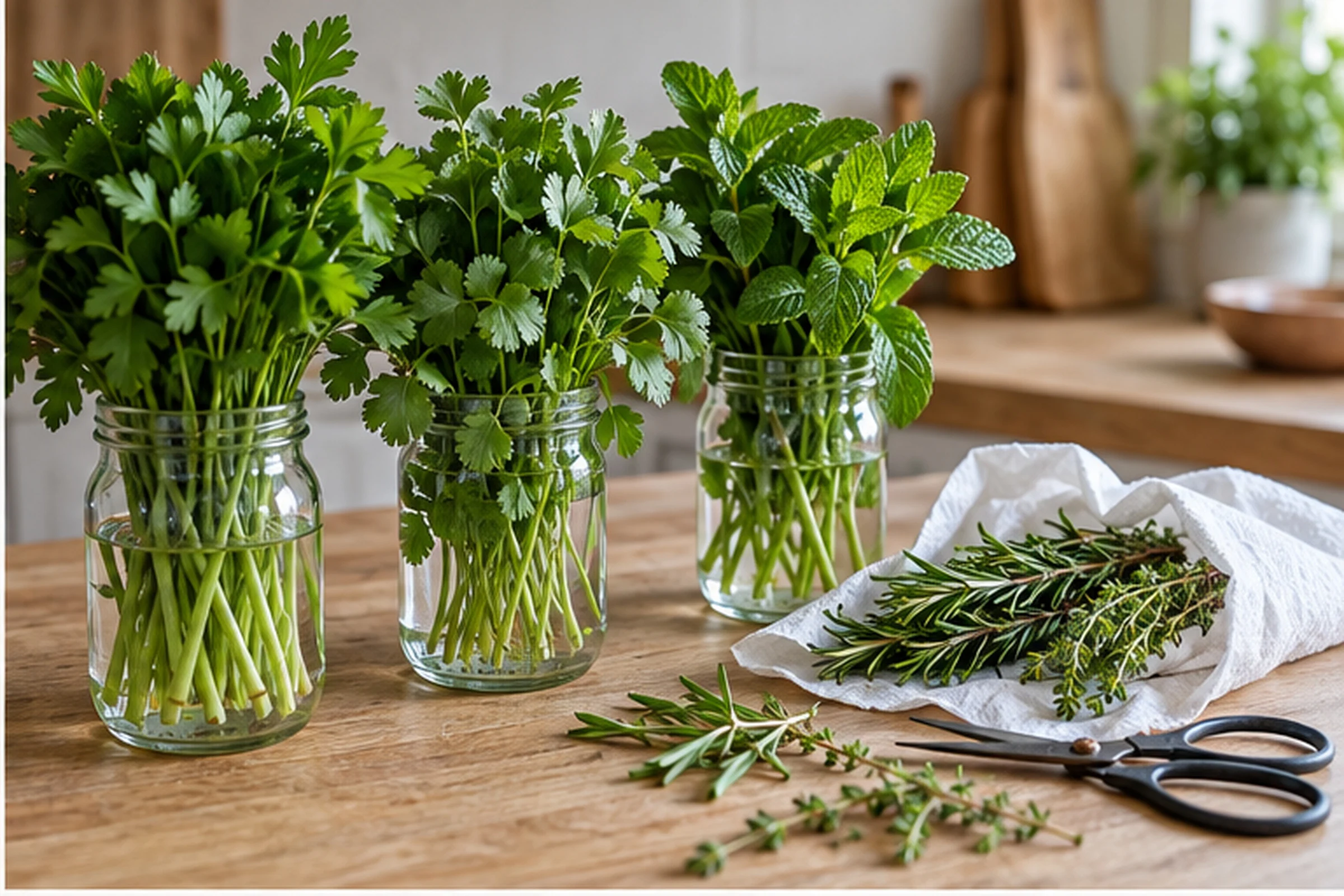
Stand them in a jar or glass with two or three centimetres of cold water, like a small bouquet. Make sure no leaves sit below the waterline.
Then cover them loosely. A clean plastic bag or a reusable food bag draped over the top, not sealed tight, holds in a little humidity without trapping condensation. Put the jar in the fridge, on a shelf where it will not be knocked over.
Change the water every couple of days, or whenever it looks cloudy, and trim the stems again if they start to look tired. Parsley and coriander kept like this often last a week or more. Mint is happy this way too.
The damp paper towel method
If you do not have room in the fridge for jars, this works almost as well. Lay the herbs on a sheet of paper towel that is damp, not wet: wring it out until it feels barely moist. Roll the herbs up loosely in it and put the bundle in a container or a loosely closed bag in the fridge. Check it every few days and replace the paper if it has dried out or become soggy.
How to store basil
Basil prefers the counter. Trim the stems, stand them in a jar of water as you would parsley, and keep it at room temperature, out of direct sun and away from the stove. A loose bag over the top helps in a dry room. Change the water often.
Kept this way, a bunch of cut basil lasts several days. A potted basil plant on a sunny windowsill lasts much longer, as long as it gets watered and you pick from the top so it keeps growing.
How to store woody herbs
Wrap rosemary, thyme, sage and their cousins loosely in a slightly damp paper towel and put them in a container or a loosely closed bag in the fridge. They do not need a jar of water. Stored like this they keep well for a week or two, sometimes longer.
Woody herbs also dry beautifully. Tie a small bunch together and hang it upside down somewhere warm, dry and airy, out of direct sunlight, until the leaves crumble. Store the dried leaves in a closed jar.
Fridge or counter?
A short version to remember:
- Fridge, in a jar of water: parsley, coriander, mint, dill, tarragon.
- Fridge, wrapped in damp paper: rosemary, thyme, sage, oregano, chives.
- Counter, in a jar of water: basil.
Wherever they are, keep herbs away from the coldest part of the fridge, often near the back, where delicate leaves can freeze and turn dark.
How to freeze fresh herbs
When you know you will not get through a bunch in time, freeze it rather than waste it. Frozen herbs lose their crispness, so they suit cooking more than garnishing, but the flavour holds well.
- Chopped, in oil or water: chop the herbs, pack them into an ice cube tray, top up with olive oil or water, and freeze. Pop the cubes into a bag once solid, and drop them straight into soups, sauces and stews.
- Whole, for woody herbs: rosemary and thyme sprigs can go into a freezer bag as they are. The leaves strip off easily from frozen.
- As a paste: blend soft herbs with a little oil and freeze in small portions.
Label the bag. Frozen green things look surprisingly alike.
Avoid too much moisture
If there is one rule that runs through all of this, it is that herbs want to stay hydrated but not wet. Water in the jar is good; water on the leaves is not. Damp paper is good; dripping paper is not. A loose cover keeps the air humid; a tightly sealed bag fills with condensation and turns soft herbs to slime within days.
Buy what you will use
The other half of keeping herbs fresh happens before they come home. Buy the size of bunch you will actually use, and plan one or two meals that need it. For a household of one, that matters even more, and it is part of cooking for one without wasting food. When you have people coming, a handful of herbs scattered at the last minute is one of the easiest ways to make a plain dish look generous, which is half the art of a relaxed dinner party.
Stored with a little care, a bunch of parsley stops being something you throw away and becomes something you reach for all week.