Cooking for one without wasting half of it
Food is sold for households of four. How to shop, store and cook for one so that most of what you buy gets eaten.
Food is sold for households of four. Cooking for one therefore starts with a small, daily problem: a bag of spinach you will not finish, half a tin of tomatoes, a loaf that goes stale before you reach the end of it. Multiply that by a year and it becomes a real cost.
Households throw away a remarkable amount of good food, and most of it is the fresh kind: fruit, vegetables, bread, dairy and leftovers. Those are exactly the things a person cooking for one struggles to finish.
What follows is less about recipes than about habits: how to shop, store and cook so that most of what you buy gets eaten.
Shop for the next three days, not the week
A big weekly shop works well for a family because a family eats through perishables fast. For one person, it usually means the second half of the week is spent racing a fridge full of food towards its dates.
Buying fresh food little and often, for the next two or three days, is the single most effective change most people living alone can make. It suits a walk home past a shop better than a car and a supermarket, but it works either way. The weekly shop can then be the long-lasting things: tins, grains, frozen vegetables, eggs.
Loose fruit and vegetables help too. Two carrots and one onion cost less than a bag you throw half of away.
Treat the freezer as a larder
For someone cooking for one, the freezer is the most useful appliance in the kitchen, and most people underuse it.
- Bread. Slice a loaf, freeze it, and toast slices from frozen. The end-of-loaf problem disappears.
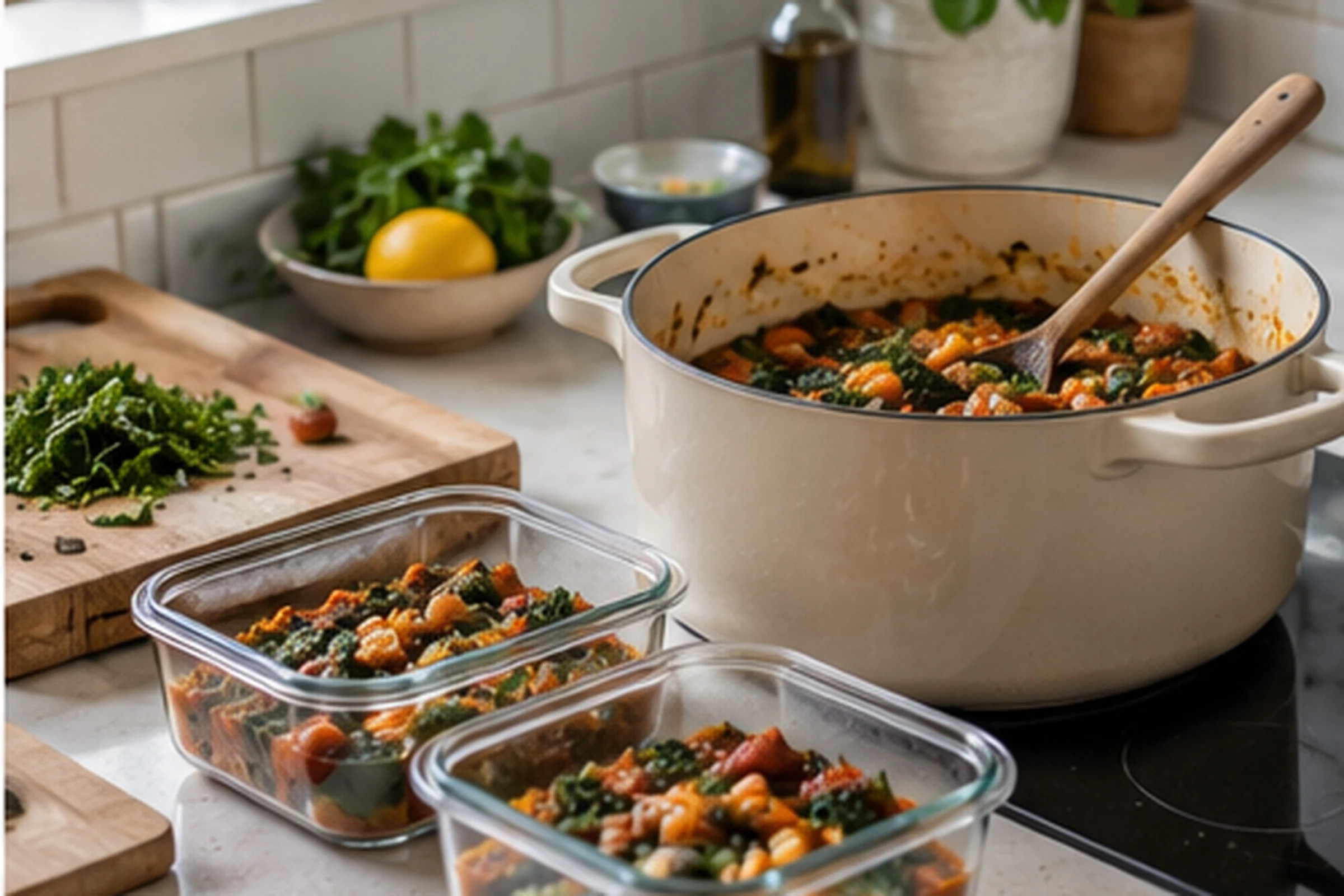
- Portions. Cook a four-portion pot of soup, stew or ragù, eat one and freeze three flat in bags or small tubs. Label them with what and when. A freezer of unlabelled brown tubs is how food gets forgotten.
- Ingredients in small amounts. Chopped herbs in a little oil, grated ginger, chopped chillies, spoonfuls of tomato purée and pesto can be frozen in an ice-cube tray and used a cube at a time.
- Meat and fish bought in packs. Divide them into single portions before freezing.
Food safety agencies generally agree that freezing stops bacteria growing, so food can be frozen right up to its use-by date. Defrost it in the fridge, and eat it within a day or so of defrosting, following the guidance where you live. That rule alone rescues a great deal of food bought with good intentions.
Know which date matters
Date labels vary between countries, but many use two kinds that mean very different things. A use-by date is about safety: after it, do not eat, cook or freeze the food, even if it looks and smells fine. A best-before date is about quality: after it, the food is still safe but may not be at its best. Bread, dry crackers, canned food, pasta and many other foods are often perfectly good after their best-before date. If the labels where you live use other wording, your national food safety agency explains what each one means.
Keeping your fridge at 5°C (about 40°F) or below, as food safety agencies advise, also helps chilled food last as long as it should.
Plan around the awkward ingredient
Most waste in a one-person kitchen comes from ingredients that only come in amounts too big for one meal. The fix is to plan two or three meals around the same thing, deliberately.
A bunch of coriander can go into a curry on Monday, a salad on Tuesday and a salsa for eggs on Wednesday. Half a tin of coconut milk can become soup the next day. A tub of crème fraîche can finish a pasta sauce, then go into a dressing. The trick is to decide the second use when you buy the ingredient, rather than finding it at the back of the fridge a week later.
Keep a short list on the fridge door of what needs using first. It sounds fussy. It works.
Cook once, eat differently
Eating the same stew four nights running is how many people come to hate batch cooking. Cooking a base that can become different meals is more pleasant:
- A tray of roasted vegetables can be a side on the first night, blitzed into soup on the second and folded into a frittata on the third.
- A pot of plain lentils or beans can become a curry, a salad and something on toast.
- A roast chicken thigh or two can give you dinner, a sandwich and stock.
There is also real pleasure in cooking properly for one. Eating alone can be a small luxury rather than a compromise, and a single good plate made from things that would otherwise have been wasted is not a lesser meal. Some of the slowest kitchen habits suit one person best: a pot of beans that feeds you three ways, or a stock made from a chicken carcass that gets better the longer you leave it alone.
A realistic standard
You will still throw some food away. Everyone does. The aim is not a perfect record but a kitchen where most of what you buy gets eaten, where the freezer does quiet work, and where you are not paying every week for a family-sized bag of salad you never wanted.