How to clean your makeup brushes
Lukewarm water, a gentle cleanser, bristles pointing down and patience while they dry: how to wash brushes and sponges properly, and how often.
Makeup brushes do a lot of quiet work. They pick up product, hold it, and set it down on skin, every day, until the bristles are stiff with old foundation and a blush brush leaves a faint stripe of last week’s colour. Learning how to clean makeup brushes properly is one of the simplest things you can do for the way your makeup looks, and for the brushes themselves, which last far longer when they are looked after.
Why it is worth doing
The first reason is application. A brush clogged with dried product does not blend; it drags. Powder goes on patchy, foundation streaks, and colours muddy into one another because the brush is still carrying the last shade you used. Clean bristles move freely and pick up only what you give them.
The second is hygiene. Brushes touch your face and then sit in a pot in a warm bathroom, collecting oil, dead skin, dust and whatever was in the product. Washing them regularly keeps that build-up away from your skin. It is good, ordinary housekeeping, in the same category as changing a pillowcase, not a cure for anything.
The third is the brushes. Product left to dry in the bristles makes them brittle and splayed. A brush that is washed gently and dried properly keeps its shape for years.
How often to clean them
There is no single rule, but these are sensible rhythms:
- Brushes for liquid and cream products (foundation, concealer, cream blush): about once a week, because wet product builds up quickly and holds on to oil.
- Powder brushes (powder, bronzer, blush): every two weeks or so.
- Eye brushes: about once a week, and more often if you use them for a liner or a cream shadow.
- Sponges: ideally after every use, or at least every few days.
If you use a brush only now and then, wash it when it looks or feels dirty. Between washes, wiping a brush on a clean tissue after use helps.
What you need
- Lukewarm water. Hot water can loosen the glue that holds the bristles in, and cold water does not shift oil.
- A gentle cleanser: a mild, unscented liquid soap, a gentle shampoo, or a brush cleanser made for the purpose. Avoid harsh detergents and anything heavily fragranced.
- A clean towel, and somewhere for the brushes to dry.
How to clean makeup brushes, step by step
1. Wet the bristles, pointing down
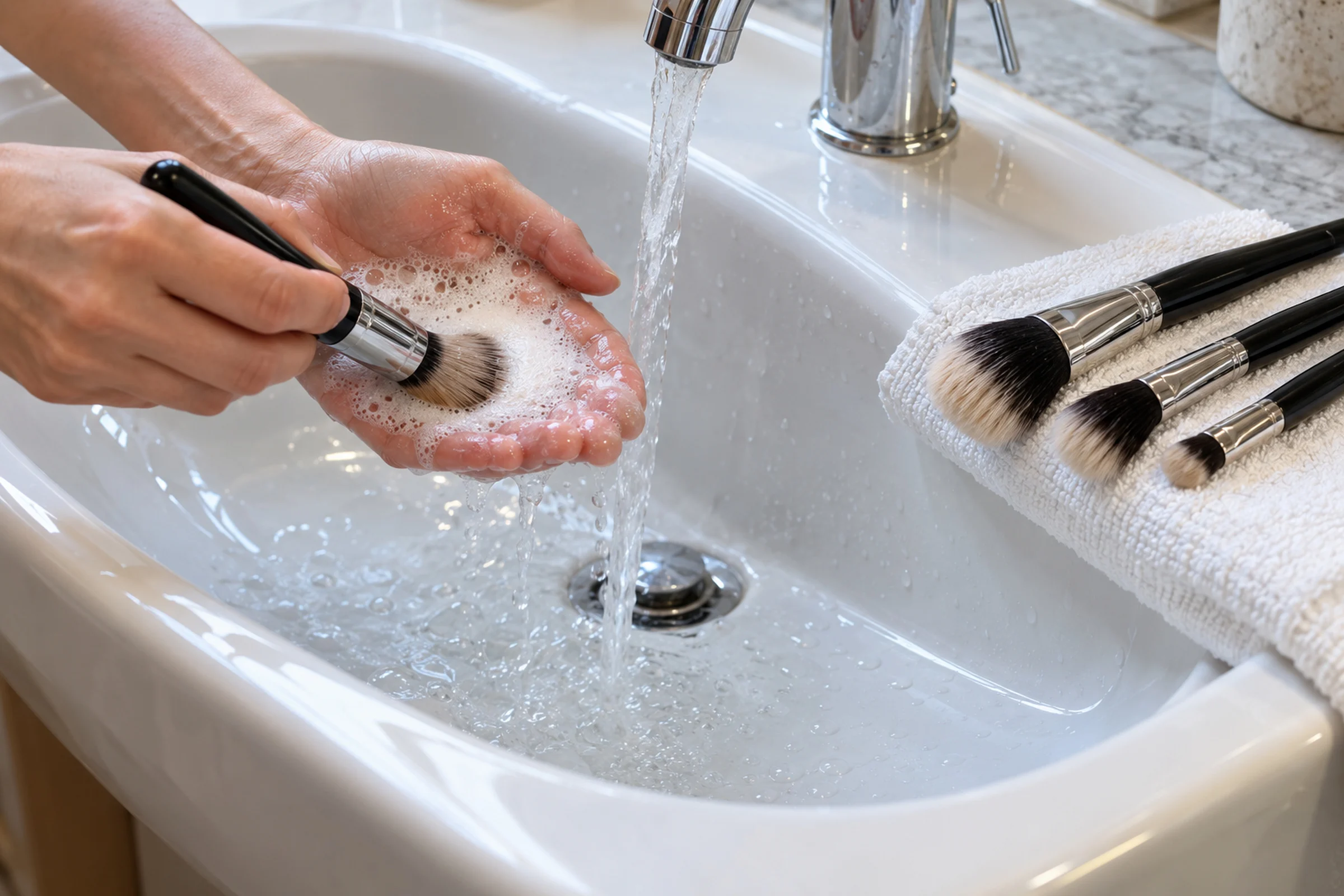
Hold the brush with the bristles facing downwards and run them under lukewarm water. Wet only the bristles. The point where the bristles meet the handle (the metal band, called the ferrule) is where the glue sits, and water that runs up into it is what eventually makes brushes shed and handles come loose.
2. Lather gently
Put a small drop of cleanser in your palm, or on a textured cleaning mat, and swirl the bristles through it in small circles. You will see product coming out into the lather. Work from the base of the bristles to the tip without pushing the brush hard into your hand, which splays it.
3. Rinse until the water runs clear
Keep the bristles pointed down under the tap and rinse, squeezing gently along the bristles towards the tip. Repeat the lather and rinse until the water and the foam come away clear. A foundation brush may need three or four rounds; a powder brush often needs one.
Cleanser left in the bristles makes them stiff and can leave a film, so rinse more than you think you need to.
4. Press out the water
Squeeze the bristles gently in a clean towel, from the base towards the tip. Do not wring or twist them. Then reshape the head with your fingers into its original form: domed, flat, pointed or fanned.
5. Dry flat or angled down
This step matters more than people think. Never dry brushes standing upright in a pot, because water runs down into the ferrule and sits there. Lay them flat on a towel with the bristles hanging just over the edge of a counter, or angle them slightly downwards so water runs away from the handle. Let them dry completely, usually overnight, before you use them or put them away. A damp brush in a closed bag or case can develop a musty smell.
Dense brushes and fine brushes
Not every brush washes the same way.
Dense foundation and buffing brushes hold a lot of product deep in the bristles. Give them more lather and more patience, and work the cleanser down into the base of the head without forcing the brush against your palm. They take longest to dry, so wash them in the evening.
Fluffy powder brushes release product easily. A light lather and a good rinse is usually enough, and they should be reshaped carefully, because a domed brush that dries squashed tends to stay that way.
Small eye brushes are delicate. Use a tiny amount of cleanser, swirl them lightly on your fingertip rather than in your palm, and keep the water well away from the ferrule. Fine liner brushes are best smoothed back into a point while damp.
Sponges are a separate case
Makeup sponges absorb product, water and oil right through, so they need washing more often than brushes and more thoroughly. Wet the sponge until it swells, work a little gentle cleanser into it, and squeeze it repeatedly under running water until the water is clear. Squeeze out as much as you can, then let it dry in open air, not in a closed container.
Sponges do not last for ever, however carefully they are washed. Most makers suggest replacing them every few months.
When to replace a brush
A good brush can last many years. It is time to let one go when:
- it sheds steadily, wash after wash;
- the bristles stay splayed or bent however you reshape them;
- the head has come loose from the handle;
- it smells musty even when clean and dry;
- it has become rough or scratchy against your skin.
Keeping them clean for longer
Store clean brushes where they can breathe, upright in a pot once they are completely dry, or in a case that lets air in. Avoid sharing brushes, especially eye brushes. And if you only have the energy to wash a few, start with the foundation brush and the sponge: they gather the most and make the biggest difference.
Clean brushes are part of the same small care as the rest of a routine you enjoy. If makeup is something you do for yourself, not an apology, the tools you use every morning are worth ten minutes on a Sunday evening. Like good perfume kept for best, good brushes are meant to be used, and they only stay good if someone looks after them.