The little treat is doing a lot of work
Nothing is wrong with the pastry. What bothers me is the job it has been given.
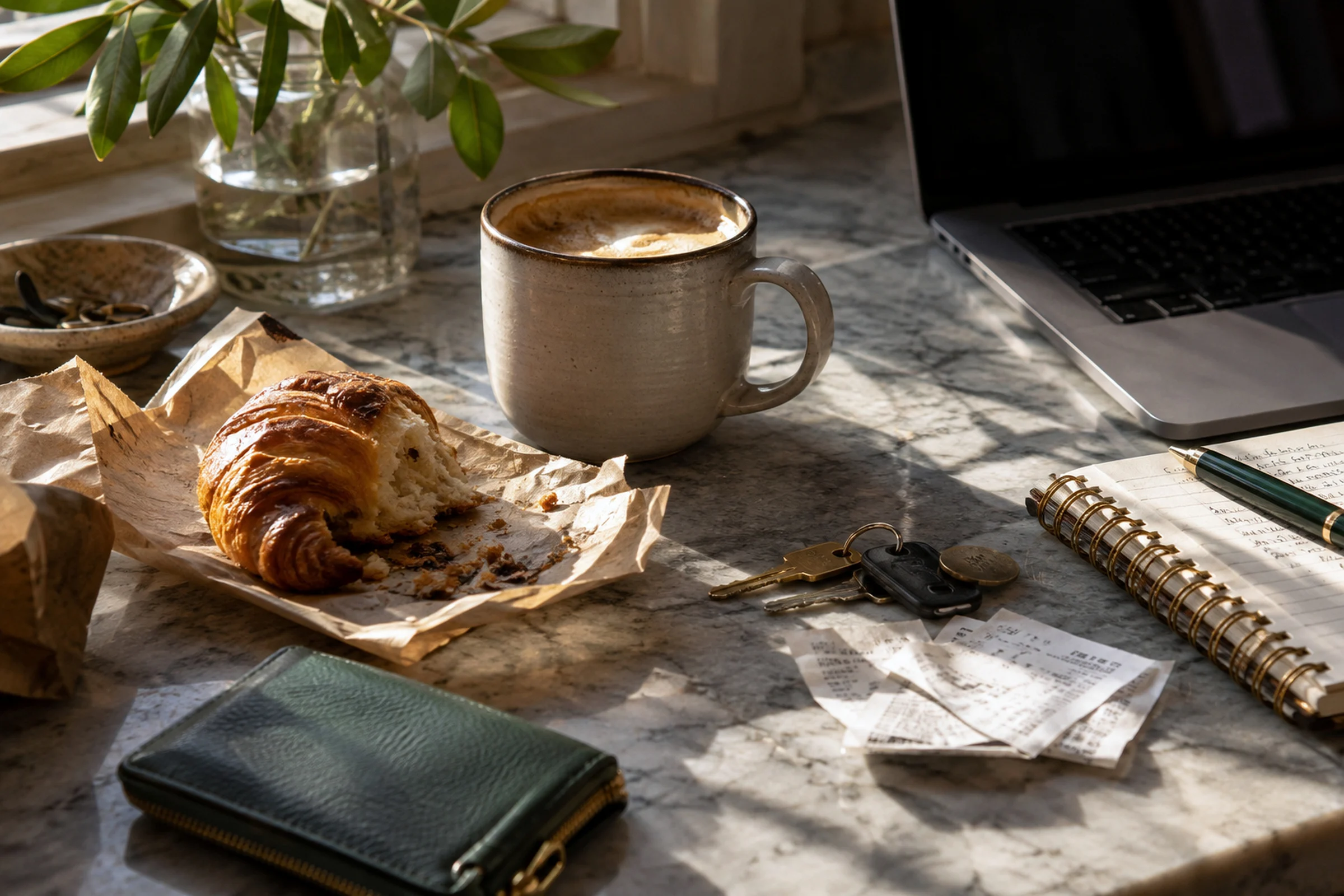
Somewhere in the last few years the small consolation acquired a name. The iced coffee after the dentist, the bath oil after the difficult meeting, the pastry bought on the walk home because the day went on too long: a little treat. It is usually said with a half-shrug, as a joke at one’s own expense, and it is a good phrase. I use it. I have also started to notice how much it is being asked to carry.
I am not against pleasure, and I am certainly not against spending a little money on something lovely. I have argued for wearing the good perfume to answer emails rather than saving it for an occasion that never comes, and I stand by every word. A day with a small, chosen pleasure in it is better than a day without one.
What bothers me is the job the treat has been given.
Look at when it appears. Almost never on a good day, for no reason. It arrives at the end of something: after the shift, after the commute, after the appointment, after the week. It is framed as a reward for having endured, which means it is measured against the enduring. And it asks nothing of the thing endured. The meeting stays difficult. The commute stays long. The week will be the same next week. The treat sits on top of all of it like a plaster on a wound it has no interest in closing.
Then look at its size. The little treat is small by design, and the smallness is part of its appeal. You can buy a four-pound coffee without asking anybody’s permission. You cannot buy an afternoon off, or a fairer division of the washing-up, or a salary that matches the job you are actually doing, or a night’s sleep that nobody interrupts. The things many women are most short of do not come in a paper bag. The treat is the pleasure available at the scale we are permitted, and I suspect that is precisely why it has become so popular: it is the one kind of relief that requires no conversation with anyone.
The word gives something away, too. A treat, in its childhood sense, is granted by somebody else for good behaviour. It is earned, rationed and conditional. We are very good at treating ourselves the way we were once treated: you may have the biscuit if you finish your homework; you may have the bath if you get through Thursday. The same logic runs through the way we talk about food, where one thing is “being good” and another is “being naughty”, as if food is a moral test we sit every day and occasionally reward ourselves for passing.
None of this makes the pastry wrong. It makes it worth looking at.
Two questions
There are two things worth asking before reaching for one.
The first is whether this is a pleasure or a compensation. A pleasure is something I would want on a good day as much as on a bad one: the perfume, the flowers, a proper lunch eaten slowly. A compensation only makes sense measured against something I did not want to do. Both are allowed. But a life with a great many compensations in it is telling me something that a life with a great many pleasures is not.
The second question is what, exactly, made me need it, and whether any of that is movable. Often it is not. Some weeks are simply hard, and a hard week deserves its consolations without an audit. But sometimes the honest answer is a meeting that could have been two lines in an email, a favour that has quietly hardened into an obligation, or an evening every week handed over to someone else’s convenience. Those are not things a pastry can fix. They are things a sentence can, if you are willing to say it.
The larger treats
The treats that change a life are usually bigger and more awkward than the little ones. They are rarely bought at a till.
Some of them do cost money: the good chair, the proper coat, the thing you walked past four times and could not justify because it was only for you. But most are paid for in a different currency. Asking for the pay rise. Saying no to the committee. Leaving the group chat that makes you anxious. Keeping Sunday afternoons for yourself and letting someone else be mildly disappointed about it. These are treats in the older sense of the word, the sense in which it means how you are dealt with, by yourself as much as by anyone.
So have the pastry. But if it is the third time this week that you have reached for one against the same thing, the pastry is no longer the interesting part. The thing you keep needing it for is.