How to tell if a coat is good quality before you buy it
Price is an unreliable guide. Ten minutes in the shop, spent in the right order, tells you far more.
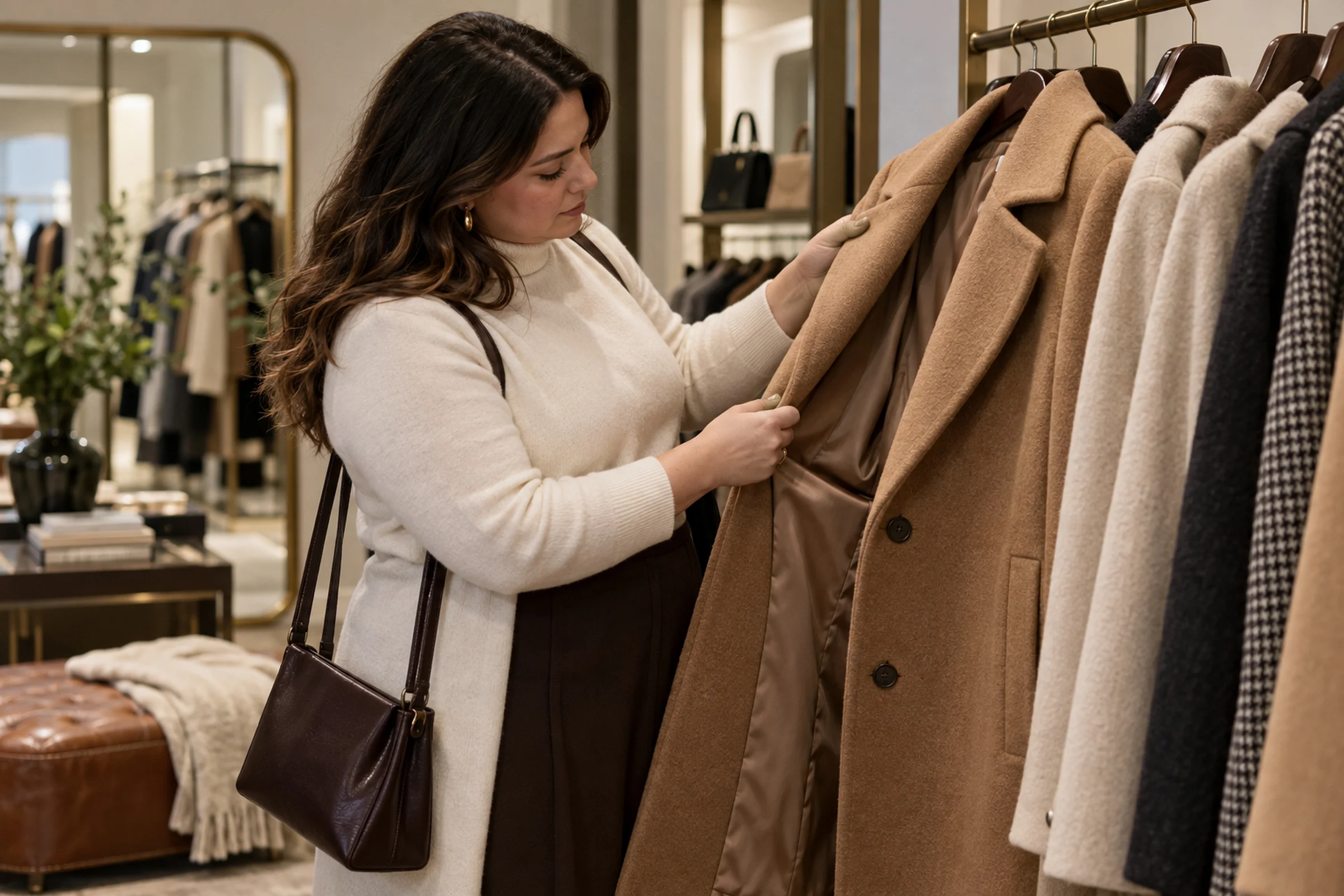
A winter coat is the one piece of clothing most of us wear nearly every day from October to March. It is seen more than anything else we own, and it takes more rain, more rucksack straps and more bus seats than anything else too. Price is an unreliable guide to whether it will survive that. Ten minutes in the shop, spent in the right order, tells you far more.
Read the label first, and then the other label
In many countries, including the UK, the European Union and the United States, clothing must carry a label stating what fibres it is made of. On a well-labelled coat, the outer fabric and the lining each have their own line. It is the most useful piece of information in the shop, and most people never turn the coat inside out to find it.
What to look for:
- Percentages, not adjectives. A swing tag that says “wool” or “wool blend” tells you almost nothing. The care label tells you whether that means 90% wool or 30%. Once wool is the minority, a coat tends to behave more like whatever it is blended with.
- A little nylon is not a warning sign. Coating fabrics often include a small share of polyamide for strength and resistance to rubbing. A coat that is 80% wool and 20% polyamide is a sensible cloth. A coat that is 20% wool and 80% polyester is a polyester coat.
- “Cashmere blend” deserves arithmetic. Five per cent cashmere in a wool coat is a wool coat with a good sentence on the tag.
- Look at the lining separately. Viscose and cupro linings feel smoother and less clammy than polyester, which is cheaper and very hard-wearing. Neither is wrong; it depends whether you run hot on a crowded train.
Handle the cloth properly
Pick the coat up. A good coating fabric has weight for its size, and a thin cloth disguised by a padded lining will feel light and slightly hollow.
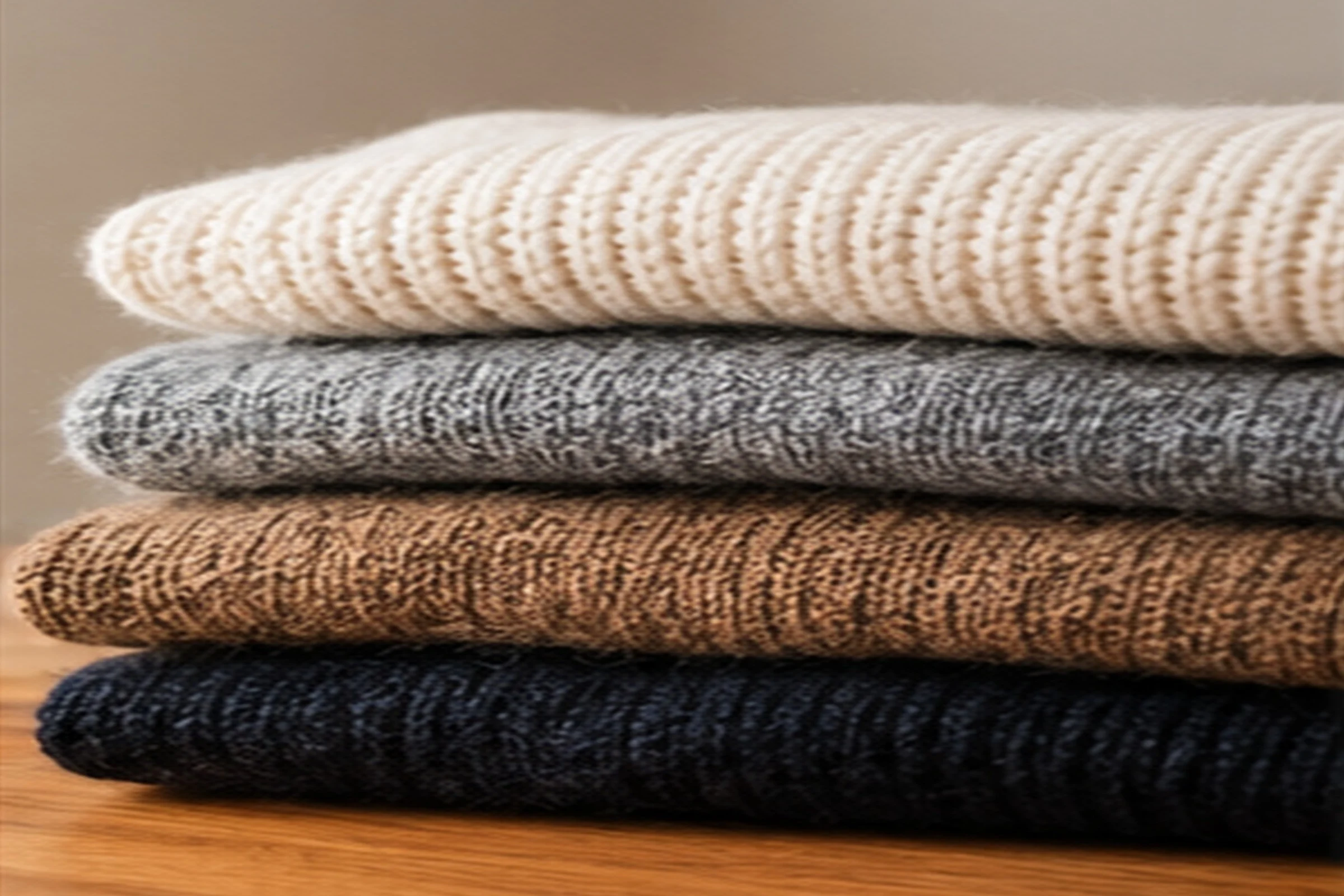
Press a fold of the outer fabric between your finger and thumb, then hold a single layer up to the shop lights. A dense, tightly woven or tightly milled cloth lets very little light through. Squeeze a handful of the skirt of the coat for a few seconds and let go: good wool springs back, and creases that stay put in the shop will stay put on the train.
Then rub the cloth against itself somewhere discreet, such as inside a hem. If it has already begun to fuzz after a few seconds, it will pill badly under a bag strap. Pills on strong synthetic fibres tend to cling on rather than wear away, which is why cheap blends can look tired by January.
Turn it inside out
This is where money shows, or does not.
- Seams should lie flat and straight, with small, even stitches and no puckering. Look closely where the sleeve joins the body, which is the hardest seam to sew well.
- Checks and stripes should line up across the seams at the front, the pockets and the back. Matching a pattern uses more cloth and more time, so it is one of the most reliable signs that someone cared.
- Buttons on a heavy coat should be sewn with a shank, a short stem of thread that lets the button sit above the thick cloth, and ideally with a small backing button on the inside to stop them tearing through. A spare button in a little bag is a good sign too.
- Buttonholes should be densely stitched with no loose ends. They are the first thing to fray.
- The lining should have a little ease, often a soft fold at the hem or down the centre back, so that it does not pull the coat out of shape when you move.
- Pockets are worth putting your hands into. Pocket bags made of sturdy cotton last longer than ones cut from the thin lining fabric, and they will hold your keys.
- The hem should have enough fabric turned up to be let down if you ever need to.
Try it on the way you will wear it
Wear or borrow your thickest jumper in the fitting room. A coat that fits over a T-shirt in September will not button over knitwear in January.
The shoulders matter most, because they are the hardest and most expensive thing to alter. The seam should end at the edge of your shoulder bone, not halfway down your upper arm and not pulling in towards your neck. Then move. Reach forward as if for a steering wheel or a pram. Lift your arms. Sit down, which is where a coat without a back vent or enough width at the hem shows itself. With your arms bent, the sleeves should still cover your wrist bone.
Do the coat up and look for horizontal creases pulling towards the buttons across the chest, stomach or hips. That strain means it is too small there, whatever the size on the label says. Clothes are supposed to fit you, and a coat is a garment where the rule matters most, because you will spend five months doing it up. Many ranges are cut for a narrow frame and simply scaled up. If you are fuller in the bust or hips than the pattern assumed, a wrap coat, a swing or A-line cut, or a range designed for larger sizes from the start will usually sit better than going up a size and swimming in the shoulders. And judge the fit in daylight if you can, not only in the mirror in the fitting room.
Choose the colour and cut you will still want in five winters
The coats people keep for years tend to be the ones whose shape and cloth are plain enough to go with most of what they own. That does not mean the coat has to be grey. A strong colour worn every day stops being a statement and becomes simply yours, as anyone who has worn red for long enough can tell you. The test is whether you would reach for it on an ordinary Tuesday, not whether it looks striking on the rail.
Keep it going
A coat that lasts is better value however you count it, and it is kinder too: keeping clothes in use for longer is one of the simplest ways to cut the carbon, water and waste that go into them.
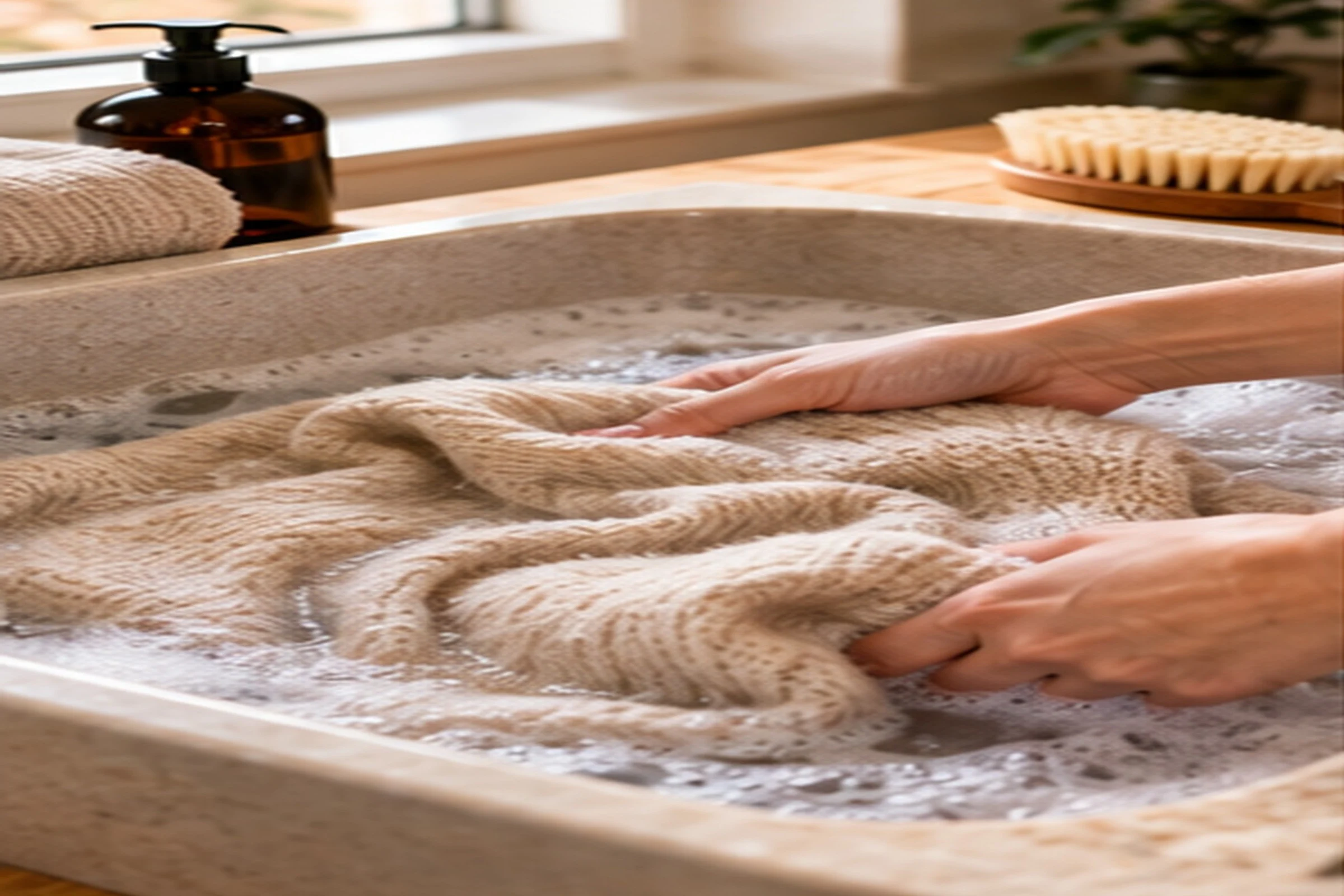
Most of the care is simple. Hang it on a wide, shaped hanger rather than a hook. Let it air after a wet day before it goes into a wardrobe. Brush wool with a clothes brush rather than cleaning it at the first mark, and follow the care label when it does need cleaning. Replace a loose button the week it comes loose, not the week it falls off.