Why I still read when life gets loud
Reading is the first thing I drop when things get busy, and the thing whose absence I feel most. On protecting a quiet that has no output.

When I am overwhelmed, reading is the first thing to go. Not the least important thing — the first thing. I have never fully understood why the quiet, restorative activity is the one that gets cut, while things I actively dislike survive the same week untouched.
I think it is because reading has no output. Nothing to show. No one notices it did not happen, including, for a surprisingly long time, me.
The productivity trap
I went through a phase of trying to fix this by making reading count. Tracking it. Setting a number of books for the year. Choosing the improving option over the one I actually wanted.
It worked in the sense that I read more, and failed in the sense that I stopped enjoying it. I had taken the one part of the day with no metric attached and attached a metric.
By the end of that year I was reading to finish rather than to read, which is a distinction anyone who has done it will recognise instantly. I could tell you the count. I could not tell you much about the books.
I took the one thing in my day that nobody was measuring, and measured it.
What it is actually for
For me, reading is the only activity that reliably slows my thinking down.
A screen speeds me up. Even good things on a screen speed me up — the format is built for it. A book has a fixed pace set by sentences, and my attention has to match it or nothing happens. There is no way to skim a novel and still receive it.
Twenty minutes of that changes the texture of an evening in a way that twenty minutes of anything else does not.
What it is competing with
It is worth being honest about the actual competition, which is not other books. It is a phone.
The phone wins on every measure that matters in the moment. It requires no setup, no attention span, no commitment, and it delivers something immediately. A book asks for a run-up. On a tired evening that is not a fair fight, and I lost it most nights for about two years.
What worked was not discipline. It was friction. The book near the chair; the phone charging in another room. I did not become more virtuous. I made one option four seconds more expensive than the other, and four seconds turned out to be enough.
I am slightly embarrassed by how effective that was, given the amount of time I had previously spent thinking about it as a failure of character.
The quiet is the point
When I have gone weeks without reading, the thing I notice is not that I know less. It is that my thinking has got faster and shallower — more reactive, more inclined to have an immediate opinion about everything.
A long piece of writing forces you to hold something incomplete for hours. You cannot resolve it early. You have to stay with a person you do not yet understand and let the understanding arrive at the pace the writer chose.
That is an unusual demand now, and I think it is most of the benefit. Not the information. The practice of not resolving things immediately.
Permission to abandon
The single most useful change: I stopped finishing books I was not enjoying.
I had an idea that abandoning a book was a failure of seriousness. So I would stall a third of the way into something joyless, stop reading altogether for six weeks, and blame my concentration.
It was not my concentration. It was the book.
Now I give it around fifty pages and put it down without ceremony. My reading roughly doubled and I did not become a less serious person.
Where it fits
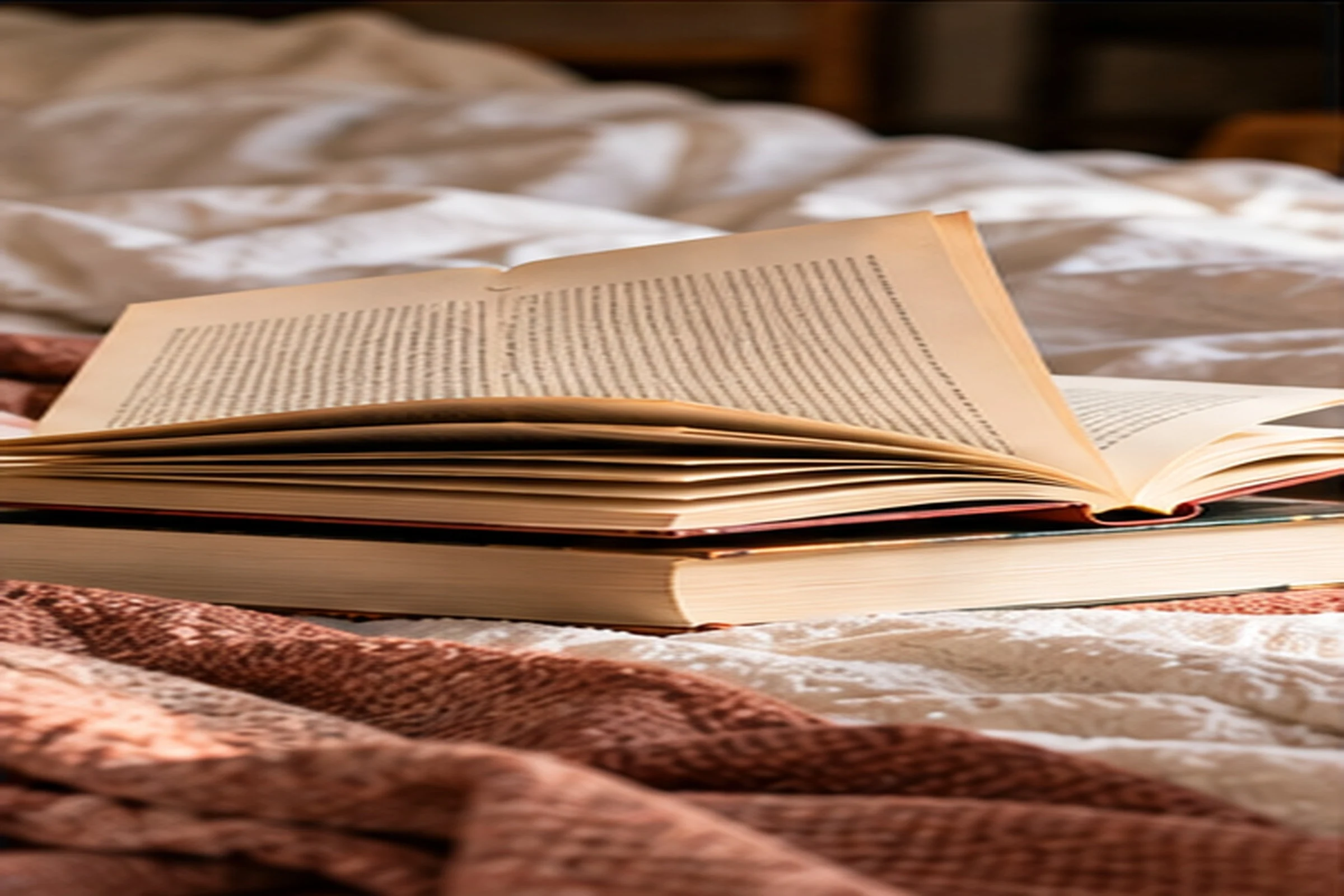
Not in bed, mostly — I fall asleep and it becomes a very slow way to read four pages a week.
It works better as an early evening thing, in a chair, with a lamp, before the point where the day has fully closed. Sometimes ten minutes. The ten-minute version still counts, which took me a shamefully long time to accept: I had a rule that if I could not have an hour it was not worth starting, and that rule cost me hundreds of hours.
Rereading
I reread far more than I used to, and I no longer treat it as a lack of ambition.
A book you loved at twenty-two is a different object at forty. Nothing on the page has moved. You have — and rereading is one of the very few reliable ways to measure that, because there is no other fixed point to check yourself against.
The first time, I read for what happens. The second time, for how it is made. The third, usually, for a single character I had no sympathy for at twenty-two and now understand completely, which tells me more about the intervening years than anything I could have written down at the time.
It is also simply easier. On a week with nothing spare, a book you already know does not demand the run-up, and I would rather reread something good than read nothing at all while waiting to be the sort of person who tackles something new.
The loud weeks
I still lose it sometimes. There are weeks when the same book sits open at the same page and I look at it with mild guilt.
What I have stopped doing is treating that as evidence of decline. It is a busy fortnight. Reading is not a streak and it is not a discipline, and building a scoring system around it is how I ruined it the first time.
It is just a quiet thing I like, that produces nothing, that I notice the absence of. Protecting it does not need a better justification than that.