How to tell if a sweater is good quality
Price and labels tell you less than your hands do. Seven checks, from knit density to the neckline, for spotting knitwear that will last.
Knowing how to tell if a sweater is good quality saves more money than any sale. A good one keeps its shape, softens with wear and lasts for years; a poor one bobbles, sags and stretches out of shape before the season is over, whatever it cost. The label and the price tag tell you less than you think. Your hands and eyes tell you more. Here is what to check, in the shop or the moment a parcel arrives, before you cut off the tags.
Price is a clue, not a guarantee
Expensive knitwear is not automatically well made, and cheap knitwear is not automatically bad. A designer sweater can be knitted loosely from short, low-grade fibre and sold on the strength of its name. A plain sweater from a sensible brand can be dense, well finished and made from good wool. Fibre prices set a floor: genuinely good cashmere is never very cheap. But above that floor, the difference between a sweater that lasts and one that does not is mostly visible, if you know where to look.
1. Read the fibre composition, then look past it
The label tells you what the sweater is made of, which is only the start of the inspection.
- Wool, merino, cashmere, alpaca, camel and other animal fibres are warm, breathable, resist smells and recover their shape well. They also vary hugely in grade.
- Cotton and linen knits are cool and easy to wash but can stretch and lose shape, especially when loosely knitted.
- Acrylic, polyester and nylon are cheaper, often softer at first touch, and less breathable. They tend to pill stubbornly and can look shiny under indoor light.
- Blends can be sensible: a little nylon adds strength to sock yarn or to a fine wool. But a sweater that is “cashmere blend” with only a few per cent cashmere is mostly something else.
“100% cashmere” or “100% merino” does not mean good cashmere or good merino. Fibre length and fineness matter more than the name. Long fibres make stronger, smoother yarn that pills less; short fibres make fluffy yarn that sheds and bobbles quickly. The label will not tell you which you have. The next checks will.
2. Check the knit density
Hold the sweater up to the light. A good knit is reasonably dense: you see light through the stitches but not big gaps between them. Stretch a small section gently between your hands, then let go. Good knitwear springs back. Loose, thin knitting stretches easily and stays stretched, and that is exactly where sagging elbows and droopy hems come from.
There is a place for light, open knits in summer. But for an everyday sweater, a dense, even knit is the clearest single sign of quality.
3. Touch and look at the surface
Run your hand over the fabric. Good wool and cashmere feel soft but substantial, with a slight springiness. A surface that feels very fluffy, with fibres coming away on your fingers, is likely to pill. Rub a small hidden area gently between finger and thumb for a few seconds: if it fuzzes up immediately, it will bobble in wear.
Look at it under ordinary indoor light, too. Low-quality synthetics often have a flat, slightly plasticky sheen. Good natural fibres look softer and more matte, with some depth to the colour.
4. Look at the seams and construction
Turn the sweater inside out.
- Fully fashioned knitwear is shaped as it is knitted: the pieces are knitted to the right shape, and you can see small marks where stitches were increased or decreased along the raglan or shoulder lines. It holds its shape well and wastes less fibre.
- Cut-and-sew knitwear is knitted as flat fabric, cut into pieces and sewn together, like a T-shirt. It can be perfectly good, but the cut edges are bulkier and can fray or stretch if the seams are poorly finished.
- Linked seams, where the pieces are joined stitch by stitch, lie flat and look neat from outside. Bulky, overlocked seams that pucker are a sign of a quicker, cheaper process.
Check that the seams are straight, the stitching is even, and there are no loose ends or pulled threads.
5. Check the neckline, cuffs and hem
These are the parts that take the most strain, and where cheap knitwear gives up first.
- The neckline should lie flat and spring back after you stretch it gently. A thin, floppy neck that ripples or curls will stretch further every time you pull the sweater on.
- The ribbing at cuffs and hem should be firm and elastic. Stretch it and let go: it should return almost immediately.
- The finishing should be neat on the inside: no loose yarn ends, no lumpy joins where the rib meets the body.
6. See how it hangs
Put it on, or hold it up by the shoulders. A well-made sweater hangs evenly, the shoulder seams sit where your shoulders are, and the hem lies straight. A poor one often twists slightly to one side (a sign of the fabric being cut off-grain), sags at the shoulders, or clings in odd places. If the sweater looks tired on the hanger, it will look worse after a month of wear.
7. Think about how it will wear
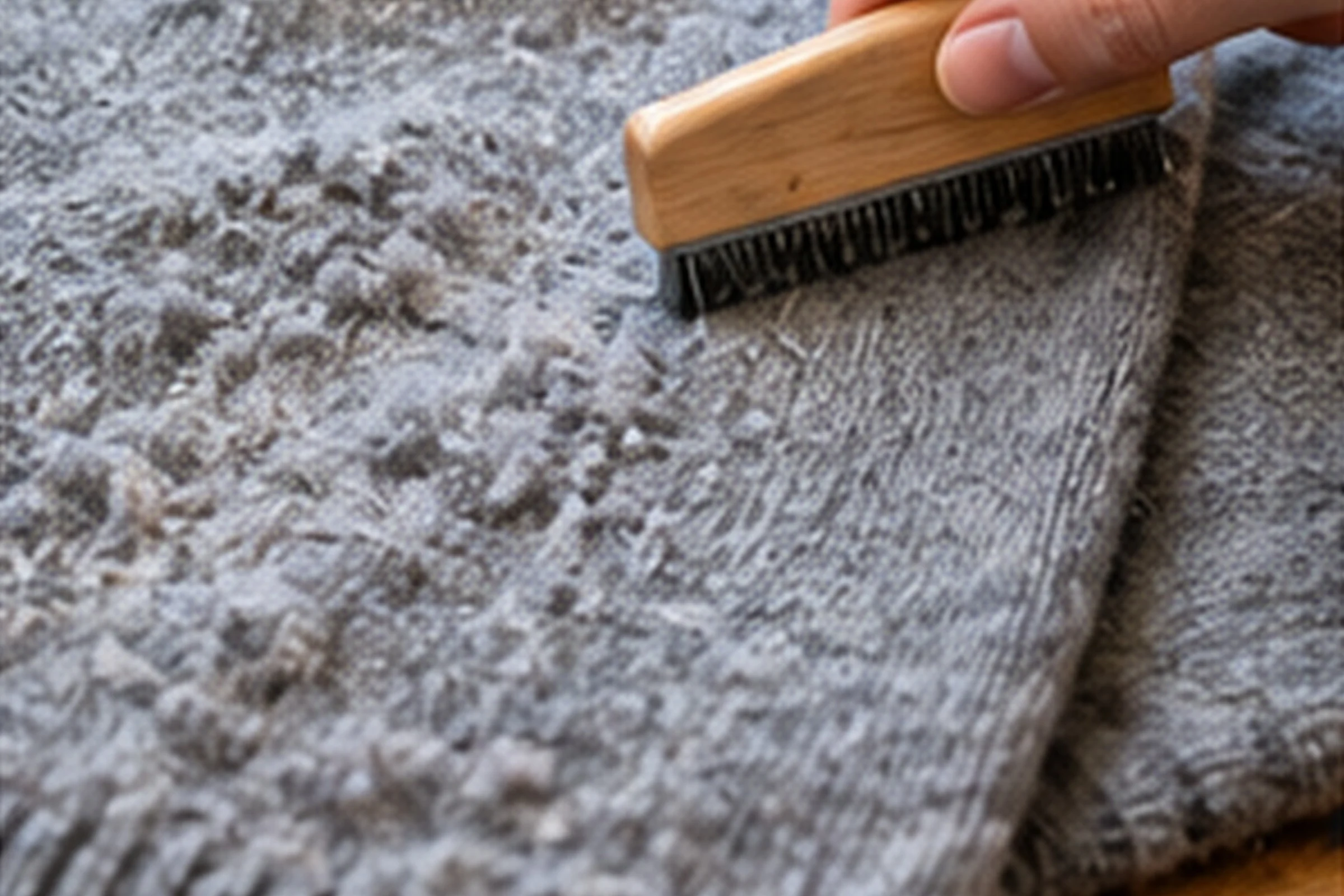
A little pilling under the arms in the first few wears is normal, even in good cashmere and merino. Heavy pilling all over after one or two wears is not. If you are unsure whether pilling means a garment is badly made, we have written about what pilling does and doesn’t say about quality, and how to keep it at bay.
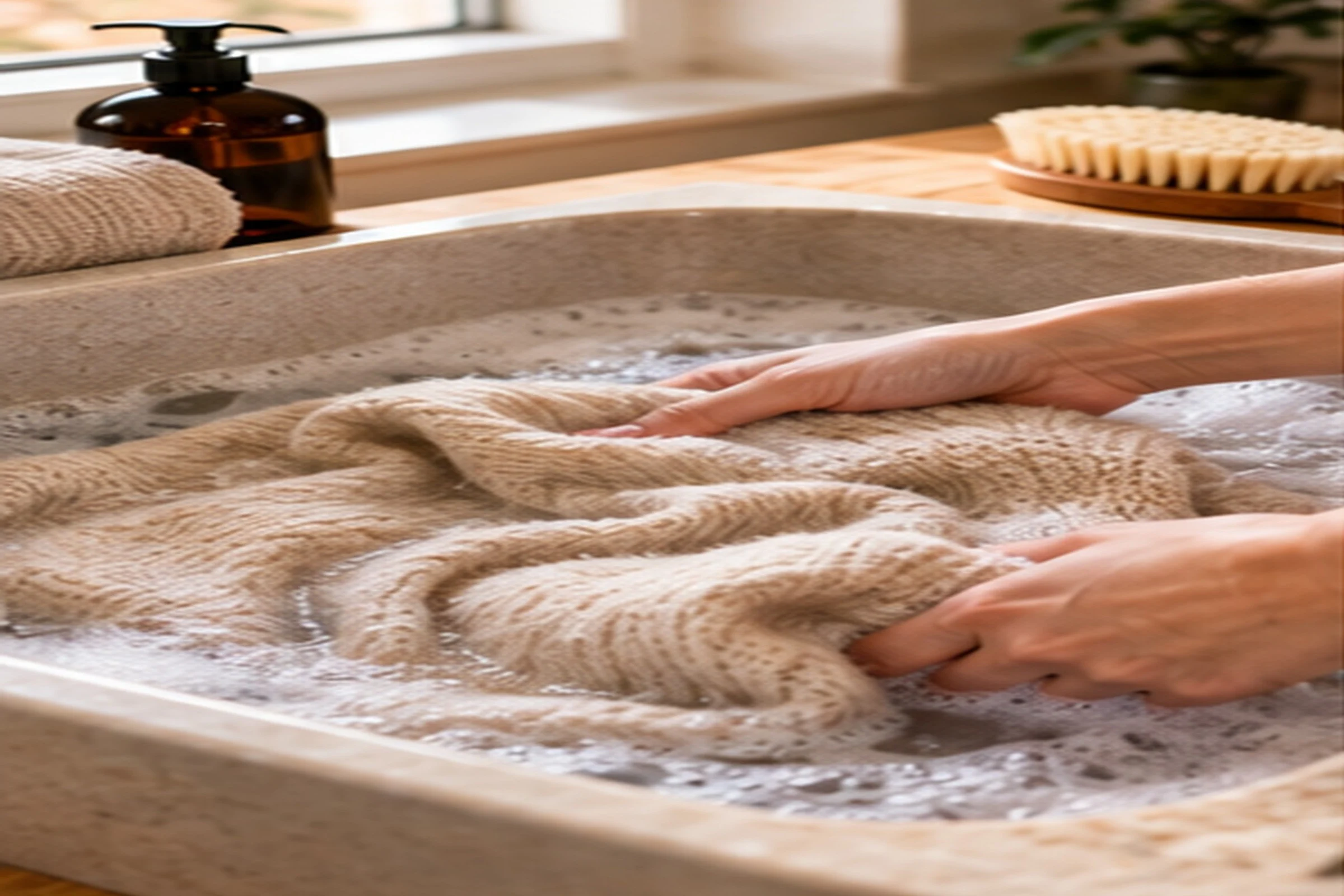
Good knitwear also needs looking after: gentle washing, drying flat, folding rather than hanging. A good sweater treated carelessly will not last much longer than a bad one.
A quick checklist in the shop
- Label: what is it actually made of?
- Light: can you see big gaps between the stitches?
- Stretch: does it spring back?
- Rub: does it fuzz up straight away?
- Inside: are the seams neat and the ends finished?
- Neck and cuffs: firm and elastic, or thin and floppy?
- Hang: even, or twisting and sagging?
The same habits of looking closely work for almost everything you buy to wear. We use a very similar approach for telling whether a coat is good quality: ignore the marketing, check the fabric, the seams and the finishing, and judge how it hangs. A sweater that passes all seven checks is worth buying even if it is not the most expensive one on the shelf. One that fails them is not worth having at any price.