Can you wear black to a wedding?
Usually, yes, but not at every wedding. Dress codes, daytime and evening, cultural traditions, how to make black festive, and the colours to avoid.
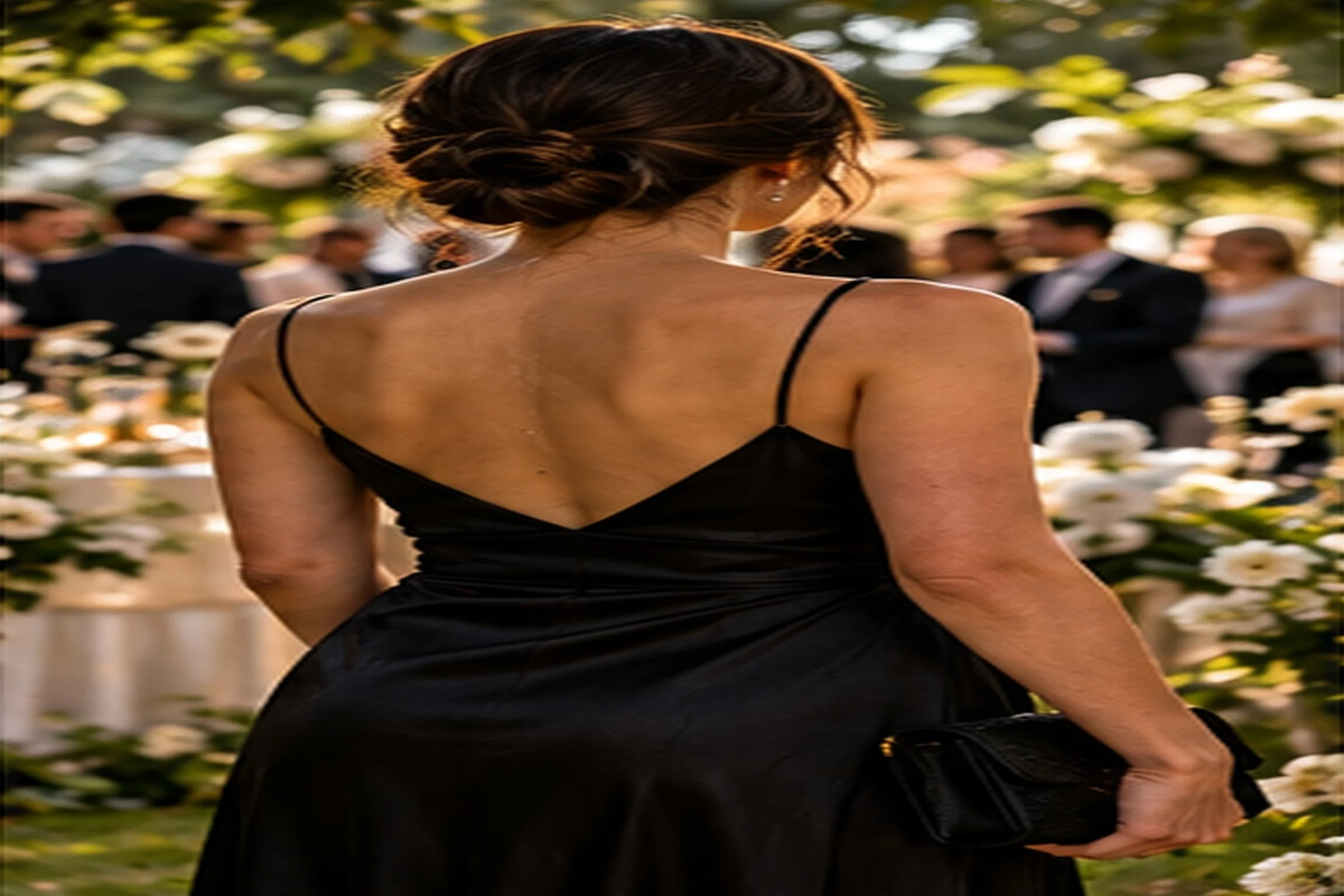
Can you wear black to a wedding as a guest? In most contemporary weddings, yes. Black is now one of the most popular colours for wedding guests, particularly for evening and formal celebrations, and the old idea that it signals mourning or disapproval has largely faded in many places. But “most” is not “all”. Wedding traditions differ widely between cultures, religions, families and regions, and in some of them black still carries a meaning you would not want to bring to someone’s wedding. So the answer is: usually yes, after a quick check.
Where the rule came from
In many Western traditions black was long associated with mourning, and wearing it to a wedding could be read as a silent comment on the marriage. Over the twentieth century, black became a staple of evening and formal dress, and the association gradually loosened. Today, a black dress or suit at an evening wedding in many places is unremarkable, and black is often listed in formal dress codes.
That history is specific, though. It does not describe every wedding.
Check before you choose black
- Read the invitation. A dress code, a colour palette or a note about traditional dress tells you a lot. If black is part of the wedding colours, it is clearly welcome.
- Think about the couple’s culture and religion. In some traditions black is associated with mourning, bad luck or solemn occasions and is avoided at celebrations, while bright or particular colours are expected. In others, specific colours are reserved for the couple or their families.
- Think about the families. Even where the couple would not mind, older relatives may hold strong views, and the day belongs to them too.
- When in doubt, ask. A message to the couple, a member of the wedding party or a friend who knows the families is never rude. “Is black all right, or would you rather guests wore colour?” takes ten seconds and saves embarrassment.
Daytime or evening?
- Evening and black-tie weddings: black is a natural choice and often the most elegant one, from a long dress or a sharp suit to a tuxedo.
- Daytime and summer weddings: black is usually acceptable, but it can look heavy in bright daylight and in photographs alongside pastel and floral outfits. Lighter fabrics, a less formal cut and colourful accessories help.
- Religious ceremonies: follow any guidance on modesty and colour. A black outfit that is perfectly appropriate at an evening reception may not suit a morning service in a place of worship.
- Outdoor and rustic weddings: black works, but think about fabric and heat as much as colour.
How to make black look celebratory
The real risk with black is looking solemn. A few touches make it festive:
- Choose interesting fabric: silk, satin, lace, velvet in colder months, or texture that catches the light.
- Add colour or metal through jewellery, a bag, shoes, a scarf or a tie.
- Pick a celebratory shape rather than a stern one: movement, a flattering neckline, something you would wear to a party rather than an office.
- Keep it polished. A black outfit at a wedding should look chosen for the occasion, not borrowed from a funeral.
Colour remains the joy of a wedding for many guests. If you usually reach for black, a wedding can be a good excuse to try something brighter; the case for colour is one Nina Noir has made before in what I learned from wearing red.
The colours worth avoiding
- White, ivory and very pale shades at weddings where the bride or couple wears white, unless the couple has asked for it. This remains the firmest guest rule in many traditions.
- Any colour the couple or family have reserved, such as the wedding party’s colour or a colour with a specific traditional meaning.
- Anything designed to compete with the couple: very dramatic, very bridal, or very attention-seeking outfits.
In some traditions, colours such as red carry special meaning at weddings, sometimes as the bride’s colour. Again, it is worth asking if you are unsure.
Black at other occasions
The confusion about black at weddings mirrors the confusion in the other direction: what to wear when an occasion really is solemn. Our guide to what to wear to a funeral covers that side of the same question. And if the wedding is one you are attending on your own, the outfit is the easy part; we have written about going to a wedding alone as well.
The verdict
Wear black if you love it, the invitation allows it and the couple’s traditions welcome it. Make it festive, avoid white, and if there is any chance black carries a different meaning for the families involved, ask first. A guest’s outfit is a small gesture of respect to the couple, and the right colour is whichever one honours the day they have planned.