How to remove pilling from clothes, and stop it coming back
Take the bobbles off gently with the right tool for the fabric, then deal with the friction that caused them. And what pilling really says about quality.
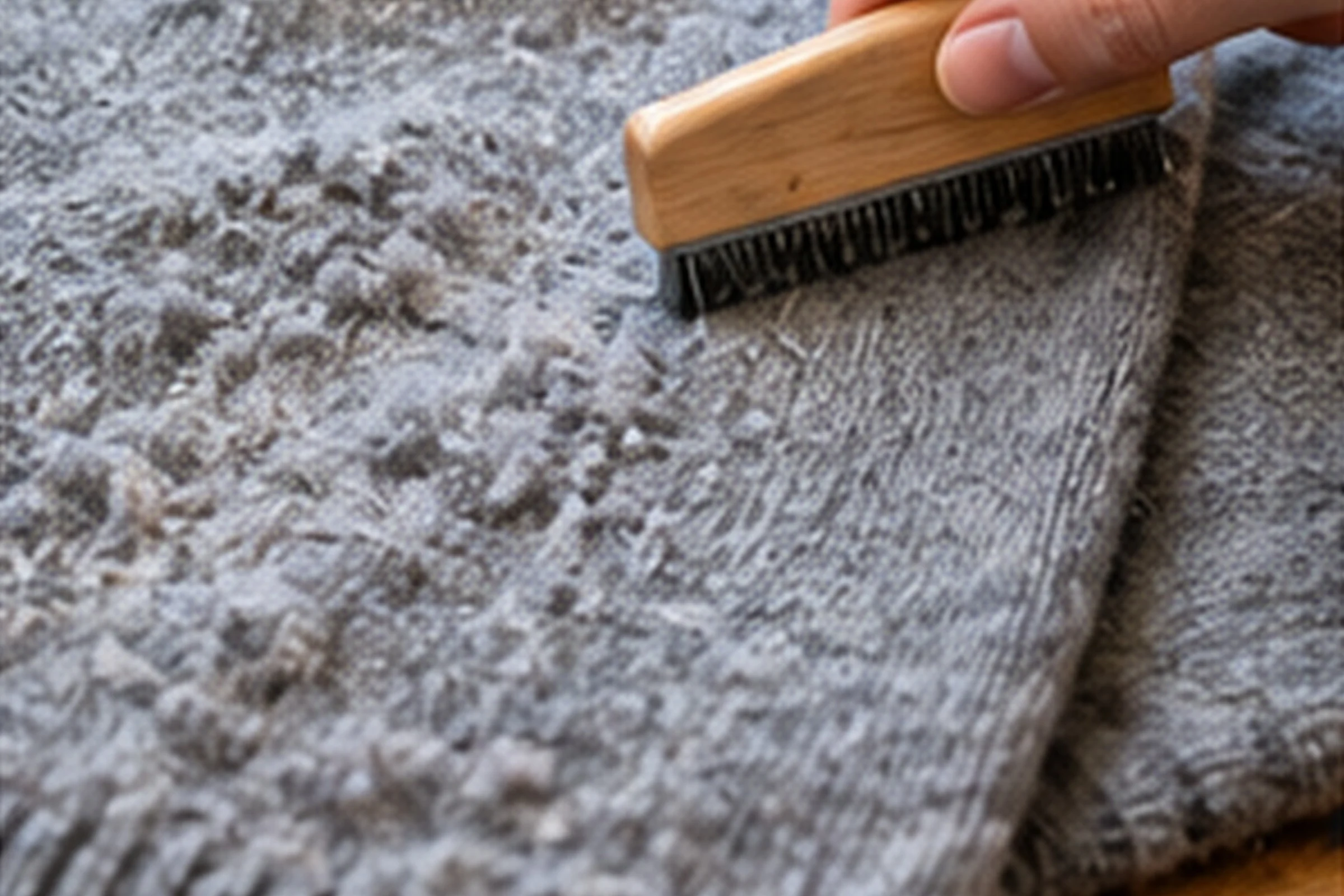
Pilling is the scatter of small, fuzzy balls that appears on knitwear, leggings, sheets and coats where the fabric rubs: under the arms, along the sides, on the elbows, across the seat. Here is how to remove pilling: lay the garment flat and take the bobbles off with a fabric comb for wool and cashmere or a fabric shaver for sturdier knits and synthetics, working gently over a small area at a time. Then deal with the reasons it happened, so it does not come straight back.
Removing pills is only half the job. The other half is understanding why a garment pills, and what that does and does not tell you about its quality.
Why do clothes pill?
Pilling starts with friction. Wherever fabric rubs against itself, against a bag strap, a sofa, a desk or the inside of a washing machine, short loose fibre ends work their way out of the yarn. Rubbing twists those ends together into tiny knots. If the fibres are weak, the pills snap off and fall away; if they are strong, the pills stay anchored to the surface and build up.
So the things that make pilling more likely are:
- Short fibres. Yarns spun from short fibres have more loose ends to escape.
- Loose, soft constructions. Fluffy, loosely spun yarns and loose knits let fibres move more freely. That softness is often exactly why the garment was appealing.
- Strong synthetic fibres. Polyester, nylon and acrylic pills tend to cling on rather than shedding, so they build up and look worse.
- Blends. A blend of a soft natural fibre with a strong synthetic can pill stubbornly, because the synthetic holds the knots of the softer fibre in place.
- Friction and washing. Rough wash cycles, tumble drying and rubbing in daily wear all speed it up.
Does pilling mean poor quality?
Not on its own. This is the part most guides leave out.
Some of the softest, most expensive knitwear pills, especially in the first few wears. Cashmere and merino are soft precisely because their fibres are fine, and fine fibres pill. A new cashmere jumper or sweater that bobbles a little under the arms is normal. With good fibre, the pilling usually settles down once the loose ends have worked out and been removed.
What pilling can tell you is more specific:
- Heavy pilling after a wear or two, all over, often points to short, low-grade fibres or a very loose construction.
- Pills that keep coming back for the life of the garment are typical of some synthetic blends.
- A garment that thins or develops holes where it pills is losing fibre faster than it should.
When you are judging something new, rub a hidden area gently between your fingers. Fibres that fluff up immediately are a warning sign. The same habits of looking closely apply to telling whether a coat is good quality: price is only a rough guide, and the fabric tells you more.
How to remove pilling
Whatever tool you use, work on a flat, firm surface in good light, with the fabric laid smooth and not stretched. Go gently, in light strokes, in one direction or in small circles. Too much pressure catches healthy fibres and thins the fabric.
Fabric comb or sweater comb
A fine-toothed comb or a wooden-handled comb with a short metal blade is the gentlest option, and the best for wool, cashmere, mohair and delicate knits. Draw it lightly across the surface; the pills catch and lift away. It takes a little longer than a machine, but you have more control.
Fabric shaver
An electric fabric shaver, or de-piller, has a guard over rotating blades that cuts pills off as they poke through. It is fast and efficient on sturdier knits, synthetics, fleece, upholstery and blankets. Use the lightest touch, keep the guard flat against the fabric, and do not press into loose or open knits, where the blades can catch the yarn itself. Test on a hidden area first.
Fabric shaver or sweater comb?
Use a comb for fine, loose, fluffy or precious knits. Use a shaver for robust, tightly made fabrics and large areas. If you only own one tool and your knitwear is mostly wool, buy the comb.
Scissors and razors
Small sharp scissors can be used to snip off a few large pills on a sturdy, tightly made fabric, cutting carefully at the base of each pill without pulling it. It is slow and only suits a handful of bobbles. A disposable razor run over fabric is a popular trick, but it is easy to cut or thin the fabric with it, so it is best avoided on anything you care about.
Afterwards, shake the garment out or run a lint roller over it to pick up the loose fluff.
Does cashmere pill?
Yes, cashmere pills, and so does fine merino. Early pilling is normal, especially where the arms rub the body. Remove it with a cashmere comb rather than a shaver, which can be too aggressive for fine fibres. Most good cashmere pills less as it is worn and washed carefully.
How to prevent pilling
You cannot make a garment pill-proof, but you can slow it down a great deal.
- Wash less. Knitwear rarely needs washing after every wear. Air it instead.
- Wash inside out. The surface you see rubs less against the drum and other clothes.
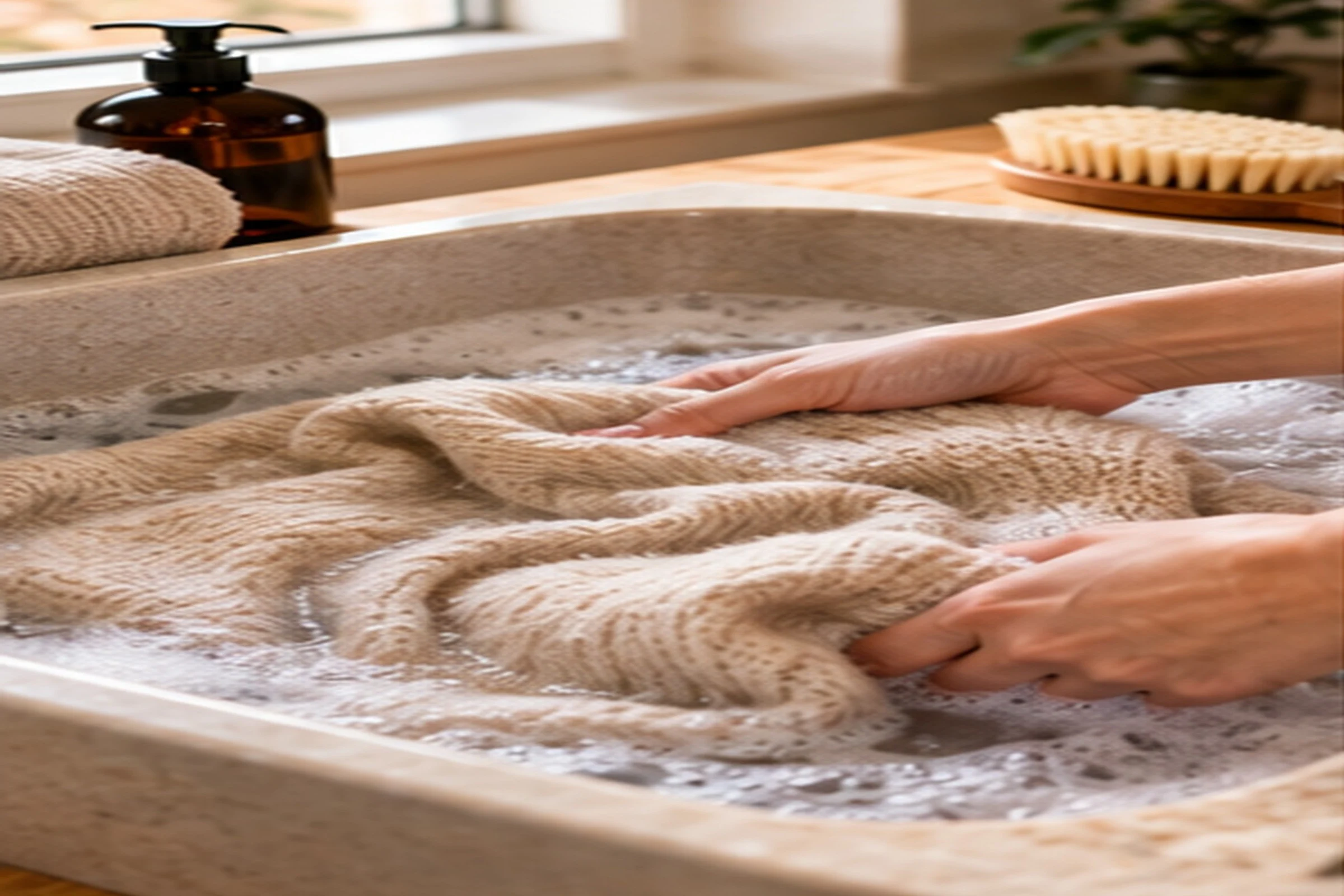
- Use a gentle cycle and cool water, or hand wash, with a detergent suited to wool for wool and cashmere.
- Wash like with like. Keep knitwear away from jeans, zips, towels and anything rough.
- Use a mesh laundry bag for delicate pieces.
- Skip the tumble dryer. Dry knits flat on a towel.
- Watch the friction points. A crossbody bag strap rubbing the same spot every day will pill that spot. Alternate bags and shoulders.
- Fold, do not hang, knitwear, and store it clean and dry with a little space around it; a crammed, damp drawer or a stale wardrobe does knitwear no favours.
- Rotate. Wearing the same favourite every day concentrates the wear.
Worth the ten minutes
A pilled garment looks tired long before it is worn out. Ten minutes with a comb on a Sunday afternoon can make a well-loved jumper look new again, and good knitwear, looked after like this, lasts for years. Buying fewer, better pieces only works if you care for them once they are home.