How to make perfume last longer
Why fragrance fades, and what actually helps: concentration, skin, where you spray, fabric, storage, and why you stop smelling your own perfume.
You spray your perfume at eight, and by eleven you cannot smell it at all. Sometimes the scent really has faded. Sometimes it has not, and you have simply stopped noticing it. Knowing which is happening, and why, is most of the answer to making a fragrance last.
Start with what is in the bottle
How long a perfume lasts depends first on how much fragrance oil it contains and what that oil is made of. The names on the bottle give a rough guide to concentration, though brands use them loosely:
- Parfum or extrait is the most concentrated, and usually the longest-lasting and the most expensive.
- Eau de parfum is a step lighter and is, for many people, the sensible middle.
- Eau de toilette is lighter again: brighter, quicker to fade.
- Eau de cologne and body mists are the lightest of all, made to be splashed on and reapplied.
The ingredients matter as much as the strength. Every fragrance unfolds in stages. The fresh, sparkling opening, often citrus or light herbs, is made of the most volatile materials and disappears first. The heart lasts longer, and the base, built from heavier materials such as woods, resins, amber, vanilla and musks, can stay on skin and clothes for many hours. A light citrus cologne and a dense amber eau de parfum will never behave the same, however carefully you apply them. If longevity matters to you, look for a fragrance with a substantial base, or a stronger concentration of the one you already love.
Apply it to skin that will hold it
Fragrance clings better to moisturised skin than to dry skin, which is one reason the same perfume can seem to vanish in winter or after a hot shower. A thin layer of unscented moisturiser where you plan to spray, applied a few minutes before, gives the scent something to hold on to. If the perfume comes with a matching body lotion or oil, layering the two does the same job and keeps the scent consistent.
Apply perfume after you have showered and dried off, and after your moisturiser has sunk in, but before you dress, so it settles on skin rather than being wiped onto fabric as you pull on clothes.
Where to put it
The traditional advice is to apply perfume to the pulse points: the inner wrists, the base of the throat, behind the ears, the inside of the elbows. These are warm places, and warmth helps a fragrance lift off the skin so that it can be noticed. The trade-off is that warmth also speeds up evaporation. For a scent that projects, use the warm spots. For one that lasts, add a spray somewhere a little cooler and more protected, such as the back of the neck under your hair, or the chest under a collar.
And do not rub your wrists together. It is one of the most common habits and one of the least useful: the friction and heat do nothing to “set” a fragrance and can blur its opening before you have had a chance to smell it. Spray, and let it dry on its own.
Let fabric do some of the work
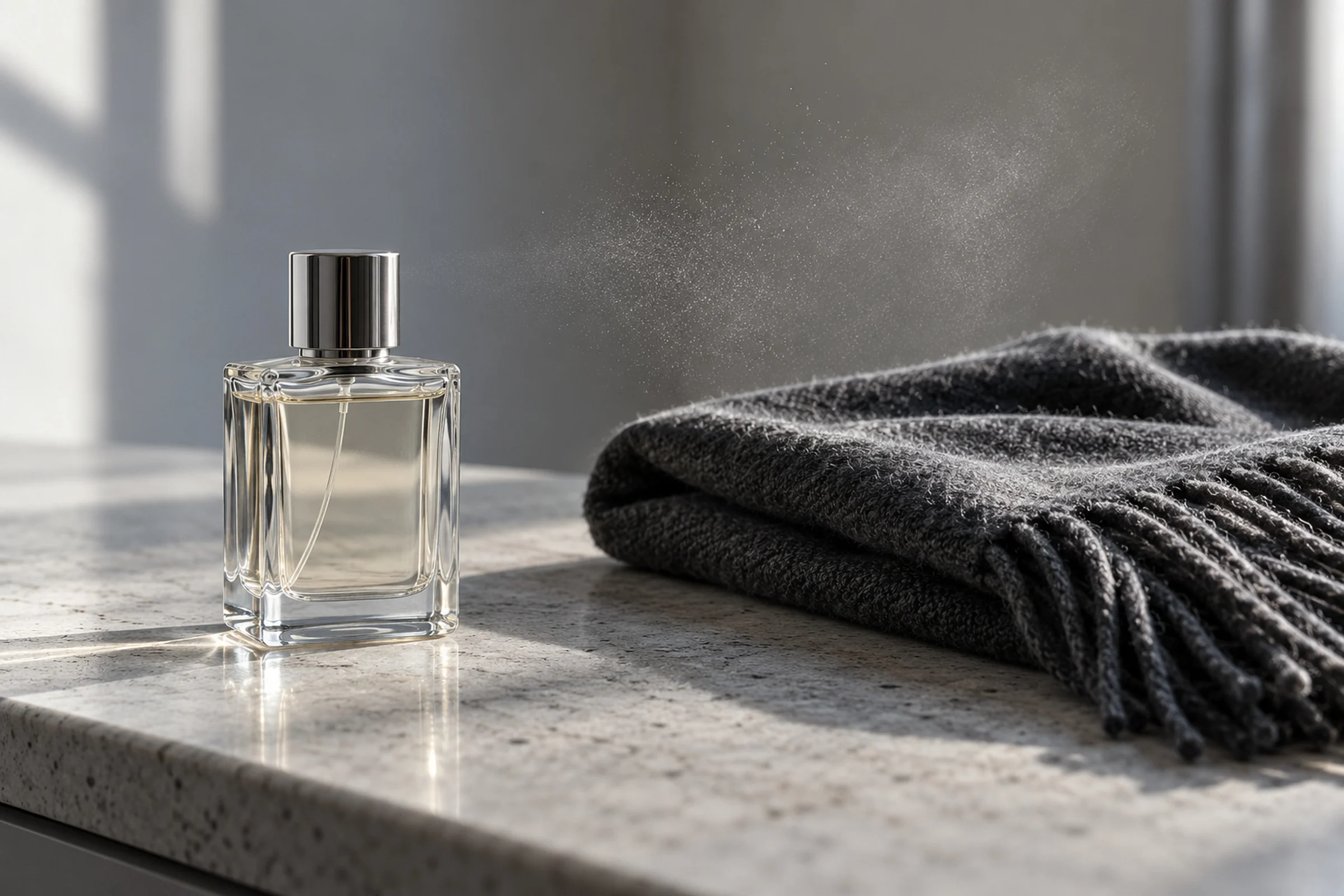
Fragrance usually lasts much longer on fabric than on skin, because cloth holds the scent without the warmth and oils of the body breaking it down. A light mist on a wool scarf, the lining of a coat or the collar of a jacket can carry a perfume all day, and often into the next.
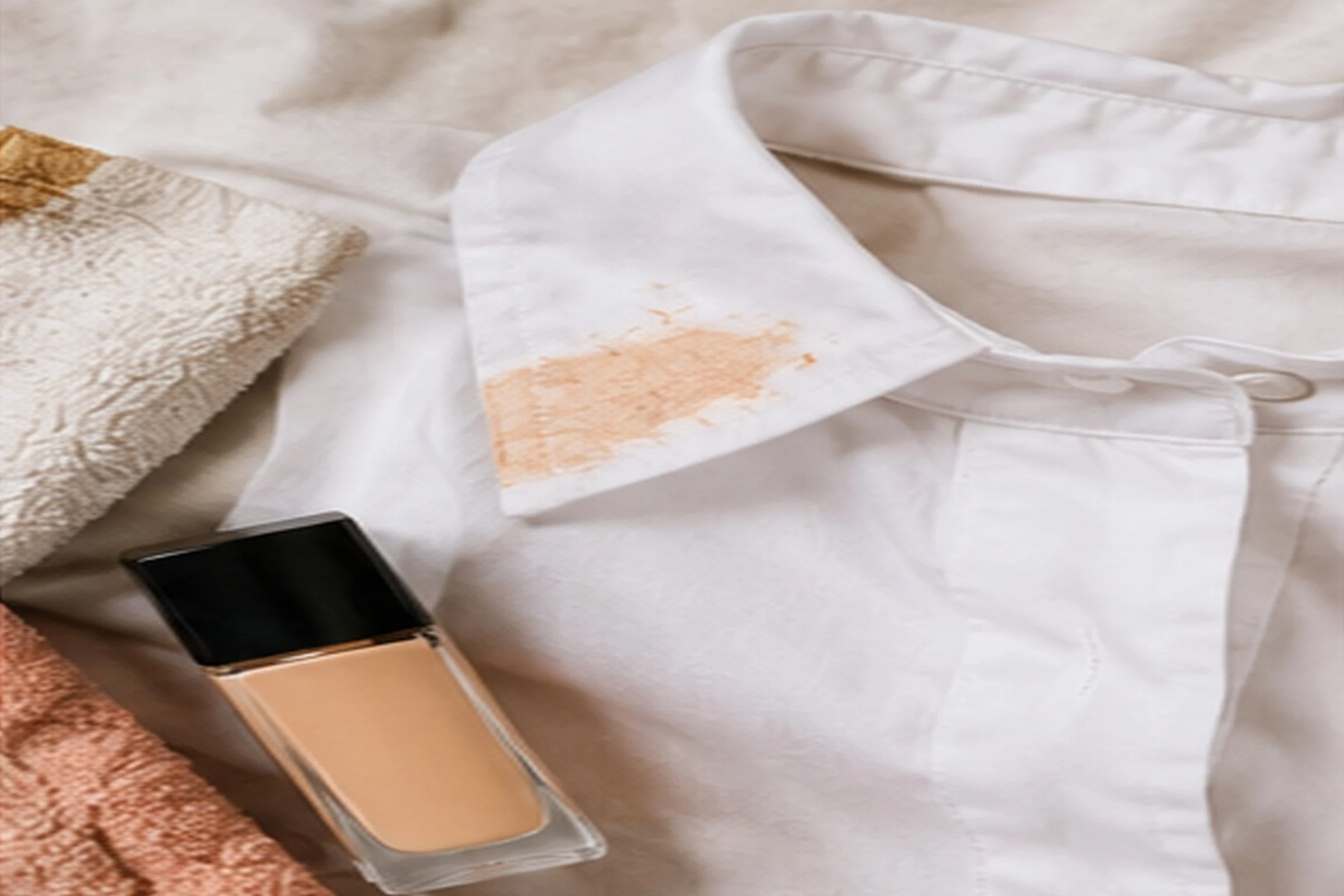
Two cautions. Some perfumes can mark delicate fabrics such as silk or pale cotton, so test a hidden spot first, and keep darker-coloured fragrances away from white clothes. And spraying hair can dry it out, because many perfumes are mostly alcohol; a spritz on a hairbrush, or a hair mist made for the purpose, is gentler.
Store it properly
Heat, light and air all break fragrance down over time, and the bathroom, with its steam and changing temperatures, is one of the worst places to keep it. A bottle on a sunny windowsill or a dressing table in the light will fade faster than one kept in its box in a cool, dark drawer or cupboard. Keep the cap on, and if a perfume has started to smell sharp, flat or sour, it may have turned.
If you love a fragrance and rarely finish a bottle, buying a smaller one is often the better choice. Perfume is meant to be worn, not saved for occasions that never come.
Why you stop smelling your own perfume
This is the part that catches most people out. The nose adapts to a constant smell: after a while of being surrounded by the same scent, you notice it less and less, so that your brain stays alert to new smells around you. It is the same reason you stop noticing the smell of your own home.
So a perfume that seems to have disappeared by mid-morning may still be perfectly noticeable to the people around you. Before you reach for the bottle again, ask someone you trust, or smell the scarf you sprayed earlier after stepping away from it. Reapplying because you cannot smell it yourself is how a pleasant fragrance becomes an overwhelming one.
If you want to top up
When a fragrance really has faded, one or two sprays is plenty. A small refillable atomiser lets you carry a few millilitres in a bag without taking the whole bottle out into the heat and light. Apply to the same cool, protected places rather than to the warm points, and give it a minute to settle before you decide it needs more.
The short version
Choose a stronger concentration or a richer base if you want a scent to last. Apply it to moisturised skin, after showering and before dressing. Use warm places for projection and cooler ones for longevity, and do not rub. Let a scarf or a collar hold some of it. Keep the bottle cool, dark and closed. And trust that your perfume is often still there long after you have stopped being able to smell it. A scent you love, like makeup worn for your own pleasure, is for you first. It deserves to last.