How to get foundation out of clothes
Most foundation stains come out if you act quickly and keep heat away. Fresh stains, dried stains, washed stains, collars, and what to avoid.
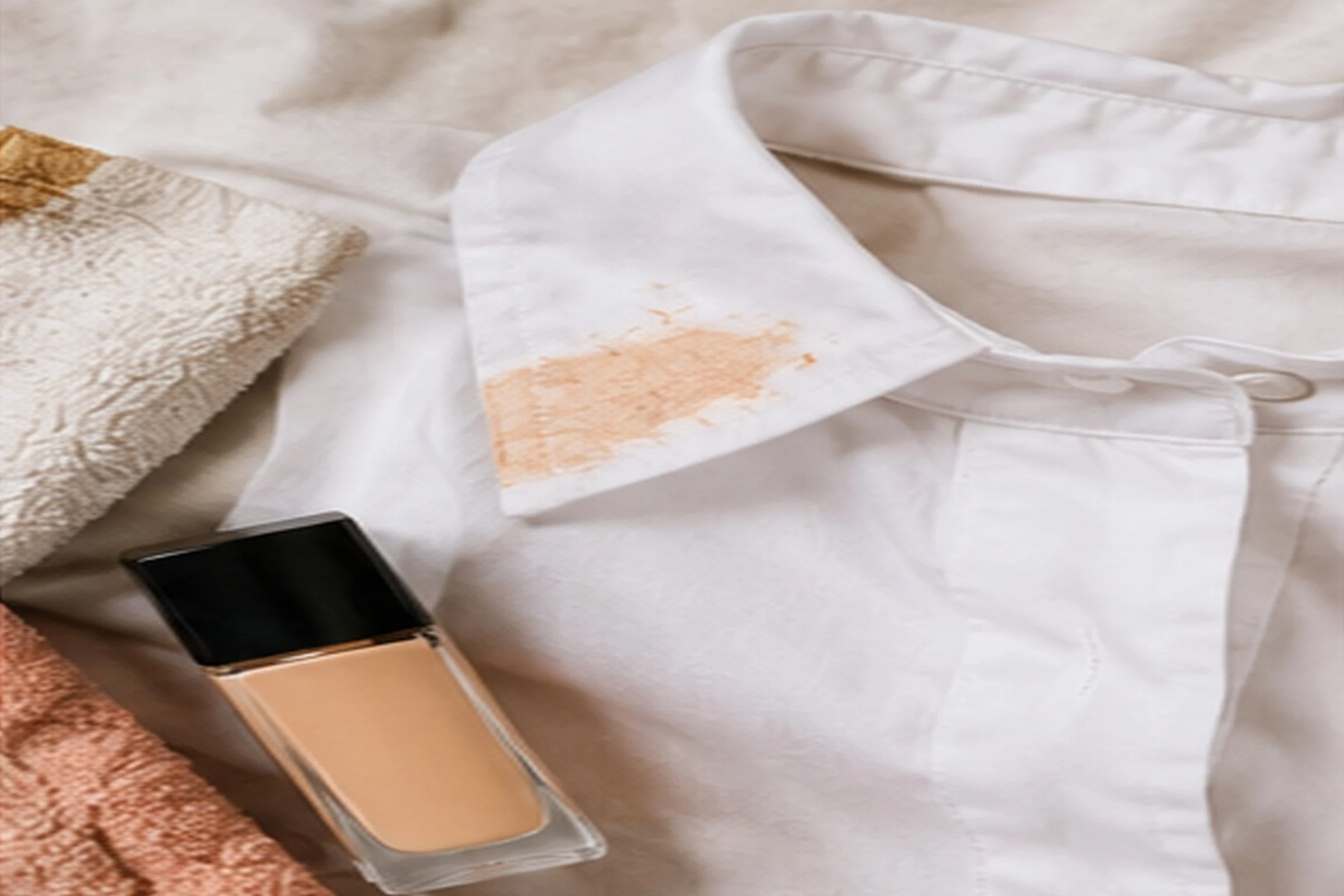
Foundation has a talent for finding collars, cuffs, scarves and the neckline of the top you were saving for later. The good news is that most foundation stains come out, especially if you act quickly and avoid the one mistake that makes them permanent. Here is how to get foundation out of clothes, whether the stain is fresh, dried, or has already been through the wash.
Before you start: check the label
Two rules apply to every method below.
- Read the care label. Silk, wool, acetate, some viscose and anything marked dry clean only need gentler handling, and some should go straight to a professional cleaner. If in doubt, take it to a dry cleaner and point out the stain.
- Patch-test. Try any product on a hidden part of the garment, such as an inside seam, before you use it on the stain. Some detergents and solvents can lift colour or mark delicate fabrics.
Why heat is the enemy
Do not put a foundation-stained garment in a hot wash or a tumble dryer until the stain has gone. Heat helps pigments and oils bond to the fibres, and a stain that has been through a hot dryer is much harder to shift, sometimes impossible. Treat the stain first, wash in cool or lukewarm water as the label allows, and check it has gone before anything is dried with heat.
Know your foundation
Foundations differ, and so do their stains.
- Water-based and lightweight liquid foundations usually lift fairly easily with a little liquid detergent and cool water.
- Oil-heavy, long-wear, cream and stick foundations behave more like a grease stain. They need something that breaks down oil, such as washing-up liquid (dish soap).
- Powder foundation is mostly dry pigment. Shake or brush off as much as possible before anything wet touches it, or you will turn a dusting into a paste.
- Long-wear and transfer-resistant formulas are designed to cling, so expect to repeat the treatment.
If you do not know which type you have, start gently with liquid detergent and move to washing-up liquid if it does not shift.
How to remove a fresh foundation stain
1. Lift off the excess. Scrape off any thick product with the edge of a spoon or a card, or brush away powder. Do not rub: rubbing pushes foundation deeper into the weave and spreads it. 2. Blot from the back. Turn the fabric over and press the stain against a clean cloth or kitchen paper, so the product is pushed out of the fabric rather than further in. 3. Apply a small amount of liquid detergent or, for oily foundation, washing-up liquid. Work it in gently with your fingertip or a soft old toothbrush. 4. Leave it for ten to fifteen minutes so it can break down the oils and pigment. 5. Rinse with cool water from the back of the fabric. 6. Check the stain in good light. Repeat if any colour remains. 7. Wash as usual, at the temperature the care label allows, and air-dry. Only use a dryer once the stain has completely gone.
How to remove a dried foundation stain
A stain that has dried for a few hours or days needs more time, not more force.
1. Scrape away any crust gently. 2. Dampen the area with cool water. 3. Work in liquid detergent or washing-up liquid and leave it for half an hour or so. 4. For a stubborn stain, an enzyme-based laundry stain remover can help. Follow the product’s instructions and check it is suitable for the fabric. 5. Rinse, check, repeat as needed, then wash as usual.
Some people use a little micellar water, the kind sold for removing makeup, on a stubborn stain. It is designed to dissolve makeup, and it can work, but patch-test it first and rinse thoroughly afterwards.
What if the stain has already been washed (or dried)?
A foundation stain that has been through a wash but not a dryer usually still comes out with the dried-stain method above; it may just take two or three rounds.
A stain that has been through a hot dryer is harder. Try the same method with an enzyme stain remover and a longer soak, following the product’s directions. If that fails on a valuable or delicate garment, a professional dry cleaner is your best option. Tell them what the stain is and that it has been dried.
Collars, cuffs and white shirts
Collars collect a mixture of foundation, skin oil and sweat, which is why they discolour slowly over time. Treat the inside of the collar every time you wash a shirt you wear with makeup: a little liquid detergent or washing-up liquid worked in with a soft brush before the wash keeps the build-up from ever taking hold. For white cotton shirts, the care label may allow a warmer wash once the stain has gone, but pre-treat first.
What to avoid
- Hot water or heat before the stain is gone.
- Rubbing hard, which spreads the stain and damages fibres.
- Bleach on coloured fabrics, and on any fabric the label says should not be bleached.
- Strong solvents such as nail polish remover on unknown fabrics. Acetone can dissolve or damage some synthetic fibres, including acetate. Do not use it unless you are sure the fabric can take it.
Preventing foundation stains
- Let your foundation set for a few minutes before getting dressed, or dress first and put on a light scarf or towel around your neck while you do your makeup.
- Use a setting powder or spray if your foundation transfers easily.
- Pull tops over your head with the neck stretched wide, or use a thin scarf over your face when changing in a hurry.
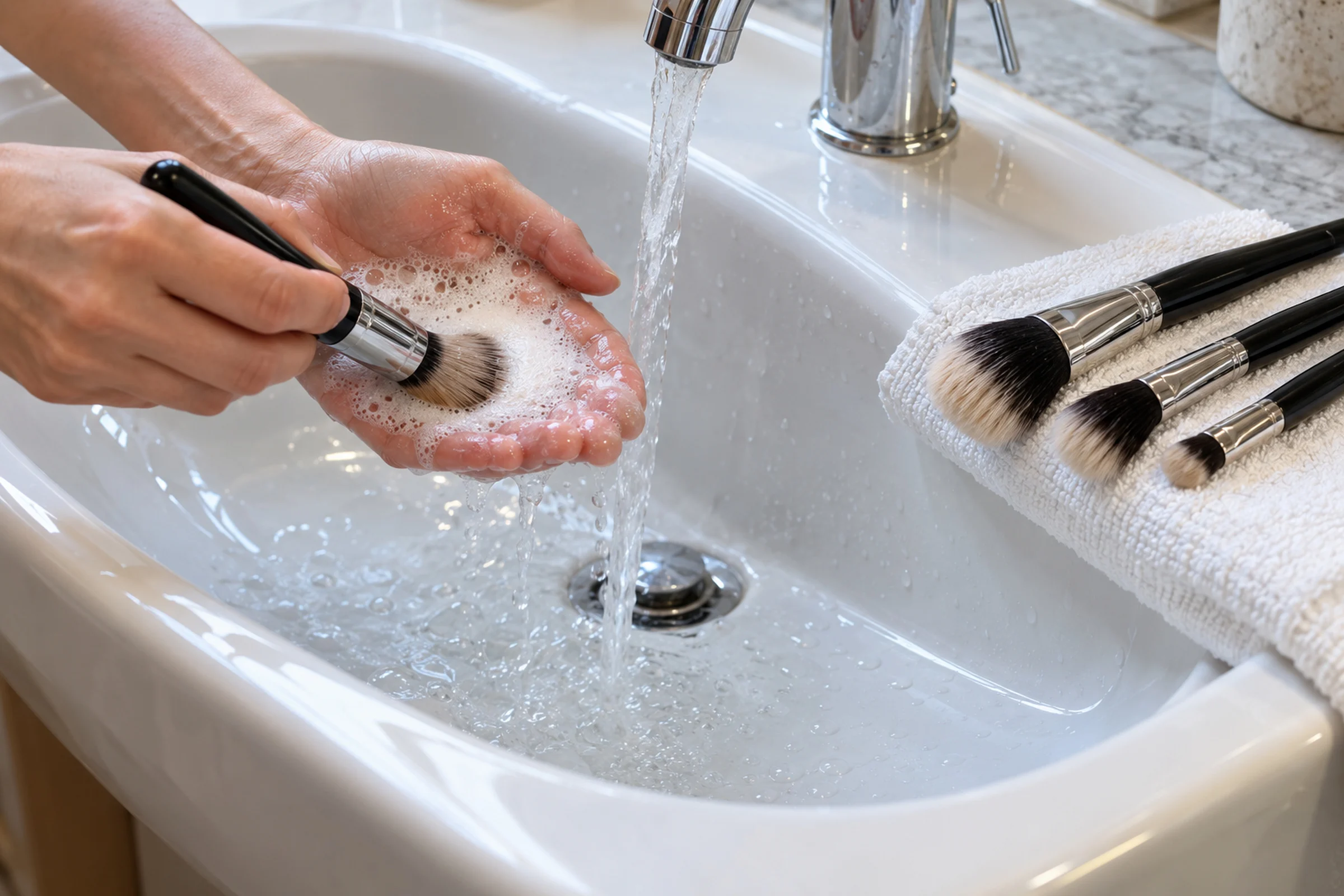
- Keep clean makeup tools: brushes loaded with old product transfer it everywhere. Our guide to cleaning makeup brushes covers how often and how.
The short version
Act quickly, lift off the excess, blot from the back, use liquid detergent or washing-up liquid depending on the foundation, rinse in cool water and repeat until it has gone. Check the care label, patch-test anything new, and keep the garment away from heat until the stain is completely out. Looking after the clothes you love this way is part of the same habit as dealing with pilling: small, regular care that keeps them wearable for years.