You are allowed not to want a fuss on your birthday
Not wanting a party is not sadness, ingratitude or a problem to be solved. A quiet birthday you chose is still a celebration.
Every year, a few weeks before a certain date, a small campaign begins. What are you doing for it? You have to do something. It’s a big one. Don’t be boring. By the time the day arrives, the question is no longer what you would like, but how you intend to account for yourself.
Some people love their birthdays. They plan them for weeks, want the table booked and the candles lit, and would be hurt if nobody noticed. That is a perfectly good way to be. But there is another kind of person who would, given the choice, like the day to pass with a phone call or two, a good dinner and nobody singing. For that person the campaign is exhausting, and the worst of it is the suggestion that something must be wrong with them.
I don’t think anything is wrong with them.
A party with you as the centrepiece
A birthday celebration asks a lot of the person it is for. You are the centre of attention for a whole evening, which many people find uncomfortable in any setting. You are expected to look delighted at the right moments and grateful at the others. Quite often you organise the thing yourself: you choose the restaurant, chase the replies, and absorb the awkwardness when half the table drops out on the day. And then there is the singing, a room of people looking at you while you work out what to do with your face.
For anyone who finds being watched hard, and plenty of women who have spent years being looked at and assessed find it harder than most, none of this is a treat. It is a shift at work, in a nice dress.
Quiet is not the same as sad
The assumption that a person who doesn’t want a fuss must be low, lonely or ungrateful is the most tiring part. Sometimes there is something underneath it: a birthday can land hard in a year of grief, illness or loss, and anyone in that year deserves gentleness, not a party they did not ask for. But mostly the preference is just a preference. It is the same temperament that would rather have a long dinner with two friends than a crowded bar, and that feels most itself at the end of a day rather than in the middle of a room.
Being told the quiet version is “a shame” or “a waste” turns a matter of taste into a flaw of character. It isn’t one. An afternoon that belongs to you can be exactly as deliberate a pleasure as a party, and it is no less a celebration because nobody else is watching.
Not the fuss, or not the number?
One thing is worth separating out. Not wanting a fuss is different from not wanting the number. Plenty of women start quietly skipping their birthdays around the age the culture tells them they have begun to disappear. If what you are avoiding is the figure itself, that is worth noticing, because nobody should hide from their own birthday on account of a date on a form. The day marks another year you got to have. You can keep it small and still keep it.
How to have the birthday you actually want
Most of this comes down to saying it early and saying it plainly, before anybody else’s plans gather speed.
- Tell the people who usually organise things, in advance and warmly: “I’d love to see you, but I don’t want a party. Dinner with you would be perfect.”
- Offer the version you do want, not only a refusal. People who love you want to mark the day; give them a way to do it that suits you.
- Take the day, or an afternoon of it, for yourself if you can: a long walk, a film on your own, a late lunch, the exhibition you keep meaning to see.
- If there will be cake at work, it is fine to say you would rather skip the singing. Most colleagues would rather know.
- Let the messages arrive and answer them at your own pace. A birthday is not a customer service shift.
It can take a year or two to settle. The friend who always throws you a surprise may need telling twice. A boundary is not a rejection, and it helps to say this one with affection: you are turning down the format, not the person.
When it is someone else’s birthday
The other half of this is being a good friend to the person who doesn’t want a fuss. Ask what they would like, and believe the answer. Do not organise a surprise party for someone who has told you, clearly and more than once, that they hate surprises. A card, a call, a small and well-chosen present, an offer of lunch: these land as well as any party, and often better, because they show that you listened.
Keep it, quietly
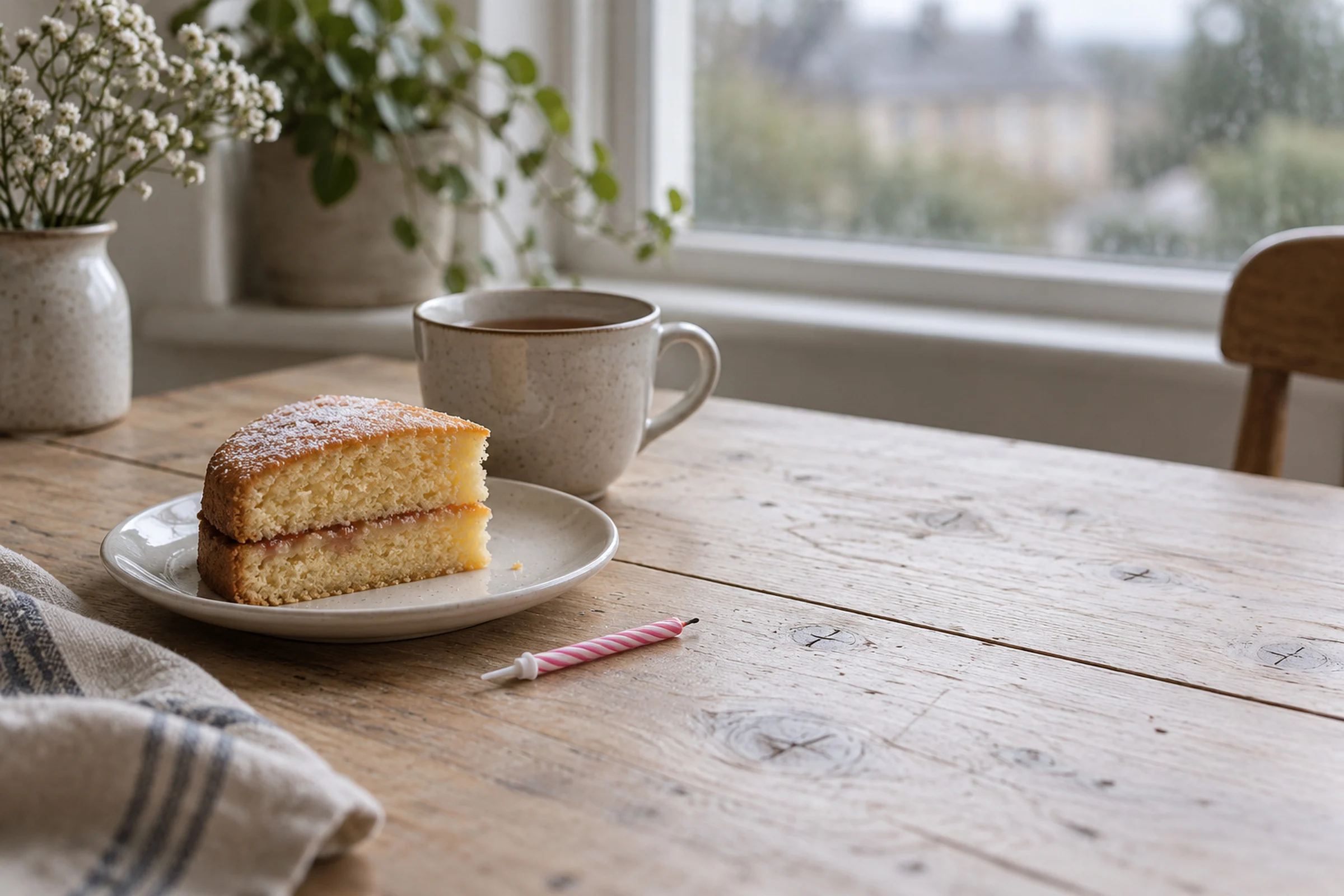
There is a lovely idea inside all the fuss, which is that a person’s existence is worth marking. I believe that completely. I just don’t think it has to be marked loudly. A slice of cake at the kitchen table, eaten slowly on a morning that belongs to you, is still a birthday. Nobody needs to sing for it to count.