Why can’t you smell your own perfume?
Your perfume hasn't vanished. Your brain has stopped reporting it. How smell adaptation works, why others still notice, and how not to overspray.
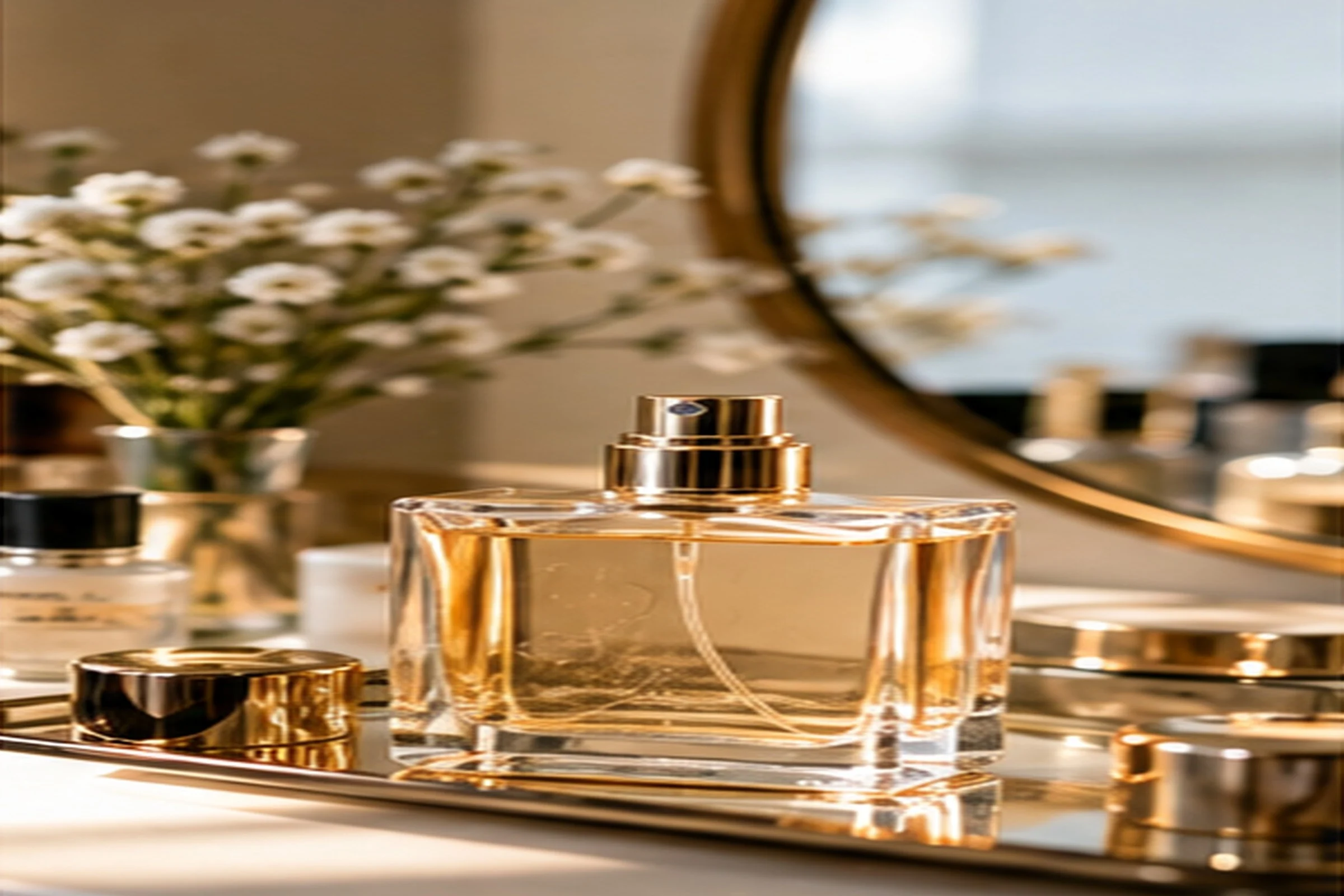
You spray your perfume in the morning, smell it beautifully for a few minutes, and by the time you reach the bus stop it seems to have vanished. So you spray again at lunch. And again before you go out. Meanwhile a colleague mentions that they could smell you coming down the corridor. If you have ever wondered why you can’t smell your own perfume when other people clearly can, the answer is that it is still there and your brain has stopped telling you about it.
Your nose adapts to a steady smell
The scientific term is olfactory adaptation, sometimes called odour fatigue or, informally, nose blindness. When a smell is constant, your smell receptors and the parts of the brain that process their signals gradually respond less to it. The smell has not disappeared from the air. Your nervous system has simply decided it is no longer news.
This is the same mechanism that lets you stop noticing the smell of your own home, the coffee in an office kitchen, or the scent of a friend’s house that strikes you the moment you walk in. The system is built to notice change: new smells, which might mean food, smoke or something spoiled. A smell that has been there for a while, and has done you no harm, fades into the background.
Your own perfume is the perfect candidate for this. It sits on your skin, a few centimetres from your nose, all day. Within a fairly short time, often within minutes rather than hours, most people notice it much less strongly, and some stop noticing it altogether.
Why other people can still smell it
The people around you have not been sitting in your fragrance since breakfast. When they meet you, the smell is new to them, so their noses register it at full strength. That is why a colleague, a partner or a stranger in a lift can comment on a scent you are convinced has worn off.
There is also simple physics. You smell your perfume mostly from the wrists and neck, but other people meet the cloud of fragrance that surrounds you as you move, and the trail you leave behind in a room. They are encountering it fresh, and often more of it, than you are.
Your perfume is changing as it wears
Some of the fading is real, and it is worth separating from adaptation. Perfumes are built in layers that evaporate at different speeds:
- Top notes, often citrus, light florals and fresh, sparkling ingredients, are the most volatile. They are what you smell first and they fade fastest, sometimes within the first half hour.
- Heart notes take over for the next few hours.
- Base notes, such as woods, musks, vanilla and resins, evaporate slowest and can last for many hours.
So the bright, obvious scent you smelled at the moment of spraying genuinely does change. What remains is often softer, closer to the skin and harder for you to notice, but perfectly obvious to someone standing next to you. Perfumes heavy in musks can be especially tricky: some people are less sensitive to certain musk molecules than others, so one person barely smells a fragrance that another finds strong.
The real risk: overspraying
The real danger of nose blindness is that you keep adding more to compensate. Two sprays in the morning become five over the day, and a fragrance that would have been pleasant becomes overwhelming to everyone else in a meeting room, a train carriage or an aeroplane cabin.
A few habits help:
- Decide on your amount before you start and stick to it. For most perfumes, two or three sprays is plenty; for strong ones, one may be enough.
- Ask someone you trust whether they can still smell it before you reapply. It is the most reliable test there is.
- Reapply only to refresh the top notes, and then lightly, if the occasion calls for it.
- Do not judge by your wrists. They are the place you smell most often, so they are the place you adapt to first.
- Think about where you are going. Offices, theatres, restaurants and planes are shared spaces, and a lighter hand is kinder.
Can you stop it happening?
Not entirely, and it is not something to fix: adaptation is your sense of smell working as it should. But you can make it easier to notice your own scent:
- Rotate fragrances. Wearing the same perfume every day for years can make it harder to notice. Switching between two or three makes each one feel fresher to you.
- Step away from it. After time in a different room or outside in fresh air, many people notice their perfume again for a moment when they come back.
- Apply it where you will catch it occasionally, such as the inside of the elbows or on a scarf, rather than only right under your nose.
You may hear that sniffing coffee beans “resets” your nose. Perfume counters often offer them, but the evidence that coffee works better than simply smelling fresh air or plain skin is thin. A break from the scent is the useful part.
Getting more from your perfume
If your fragrance genuinely does fade too fast, the problem may be the perfume, your skin or how you apply it, rather than your nose. Our guide to making perfume last longer covers moisturised skin, where to apply it, and why rubbing your wrists together is a bad idea. And if a perfume you love is sitting unused in a drawer because it feels too special, there is an argument for wearing your good perfume on an ordinary Tuesday.
The short version: your perfume is almost certainly still there. Trust the people around you more than your own nose, spray less than you think you need, and let the fragrance do its work quietly.