How to organise your bookshelves
Alphabetical, by subject, by colour or by size: how to choose a system that matches the way you actually use your books, and keep it working.
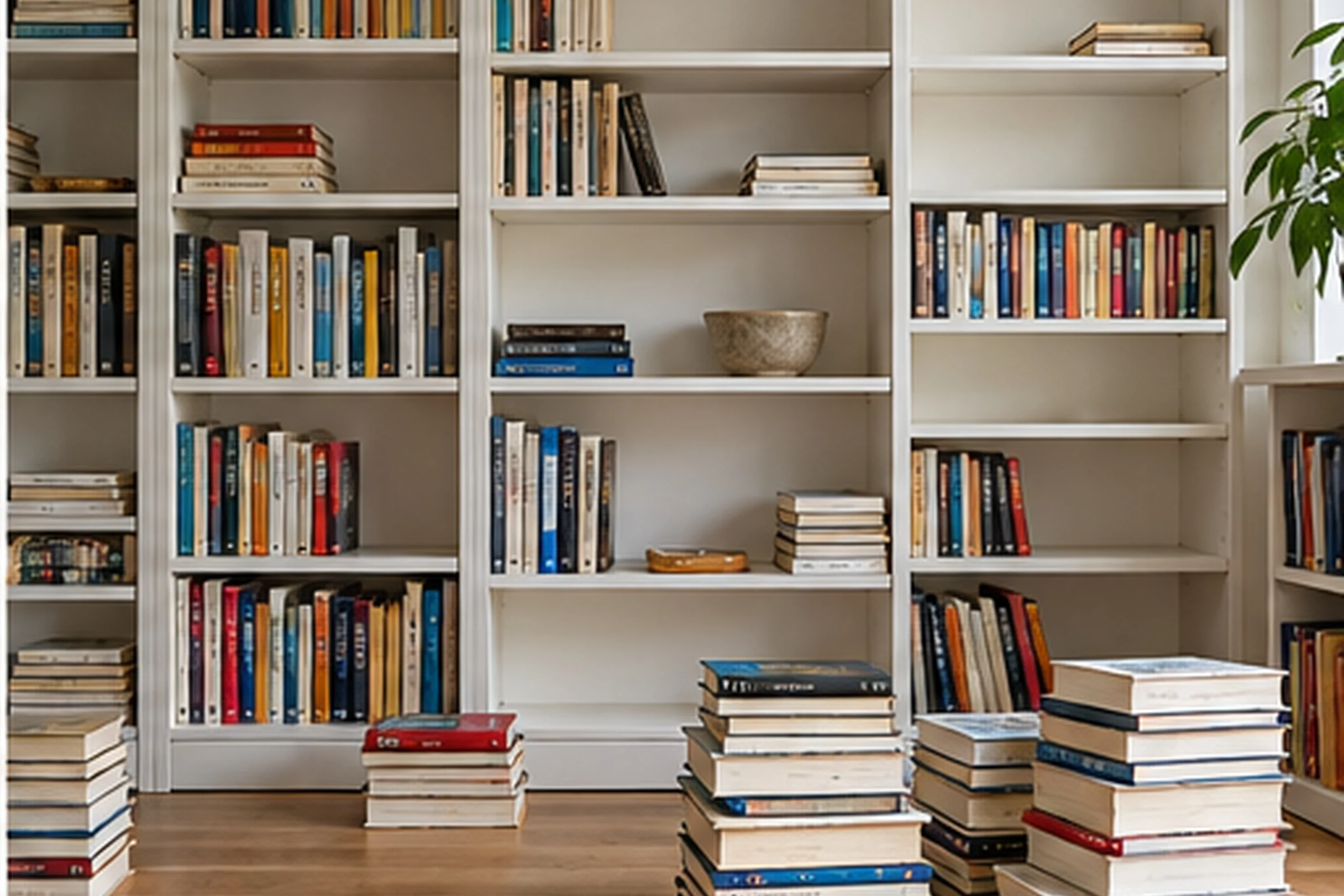
Most bookshelves are not organised so much as accumulated. Books go wherever there is a gap, the new ones lie flat across the tops of the old ones, and eventually finding a particular paperback means standing in front of the shelves with your head tilted sideways, reading spines like a stranger in a shop. If you want to know how to organise bookshelves so they work, the answer starts with one question: what do you actually do with your books?
Start with how you use the collection
A shelf system is a retrieval system. The right one is the one that lets you find a book when you want it, and put it back without thinking. That depends less on the books than on you.
Do you go looking for a specific title, or do you browse? Do you reread, lend, cook from, work from, or mostly keep books because you love having them near? Someone who reaches for reference books every day needs something quite different from someone whose shelves are a record of a reading life. Answer that honestly before you choose a method, and before you take a single book down.
Take everything off first
It is tempting to reorganise a shelf at a time, but you cannot see the shape of a collection while it is still on the walls. Clear one bookcase at a time if a whole room is too much, and stack the books on the floor in rough piles as you go. It will look worse before it looks better. That is normal.
While they are down, dust the shelves and the tops of the books. Then sort.
The main ways to organise books
Alphabetically by author
The librarian’s method, and still the most reliable if you look for specific books. Fiction by surname is easy to keep up, because there is only ever one right place for a book. It suits large collections and households where several people need to find things. Its weakness is that it says nothing about subject, so a cookbook can end up beside a thriller.
By subject or genre
Group books the way a good bookshop does: fiction, history, poetry, cookery, travel, art, whatever your collection actually contains. Within each group you can go alphabetical, or leave it loose if the group is small. This is the most natural system for browsers, and it makes the shelves easier to read at a glance. Keep the categories broad. Fifteen sections for three hundred books means constant arguments with yourself about where things belong.
Read and unread
Some readers keep the books they have not read yet on their own shelf, so the next one is always easy to choose. It works well as a small section alongside a main system, not as the whole system. A shelf of unread books can be a pleasure or a reproach, depending on its length, and only you know which yours would be. If it starts to feel like a list of failures, remember that some books are not meant to be finished.
By colour
Colour-sorted shelves photograph beautifully, and for a small collection of books you know by sight, they can work. For anything larger they tend to fail the only test that matters: you remember a book’s author and title far more often than the colour of its spine, and many spines are white, cream or black. If you love the look, try it on one shelf rather than the whole wall.
By size
Sorting by height makes shelves look calm and lets you adjust shelf heights to fit, which can win back a surprising amount of space. Oversized art and photography books usually need their own low shelf anyway, laid flat or upright. As a complete system, though, size scatters authors and subjects, so it works best as a finishing touch within another method.
Mix methods sensibly
Most well-used shelves are hybrids. Fiction alphabetical, non-fiction by subject, cookbooks by the kitchen, a short run of unread books at eye level, tall books on the bottom shelf. That is not inconsistency. It is a system built around use. The only rule is that you can explain it in one breath, because a system you have to remember is one you will stop following.
Put the books you use where you can reach them
The prime shelves are the ones between waist and eye height. Give them to the books you reach for most: current reading, rereads, reference, the books you lend out. Books you keep for love rather than use can go higher or lower. Sets you never take down can go highest of all.
If you are building a shelf around a book club, the current choice and the next one belong at the front. (If you have been meaning to start one, here is how to start a book club.)
Decide what stays
Reorganising is the natural moment to ask whether every book is still earning its place. Not as a purge, and not to a quota. Just a straight question about each one you hesitate over: would I reread this, lend it, look something up in it, or miss it? Books that were gifts you never wanted, duplicates, outdated guides and novels you abandoned with relief can go to a friend, a secondhand bookshop, a library donation or a book swap.
Keep anything you are unsure about. Books are one of the few possessions where regret about letting go is common, and a few extra on the shelf cost very little.
Leave breathing room
Shelves packed tight look full rather than organised, and they are hard to use. Books jammed in edge to edge are difficult to pull out without damaging the spine, and there is nowhere for new arrivals to go, so they end up lying across the top again. Aim to leave a little space at the end of each shelf. Use bookends where a row would otherwise slump.
A few objects can help a shelf breathe too: a small plant, a photograph, a single stack laid flat to break up a long run of spines. One or two per shelf is plenty.
Beautiful is fine, but findable comes first
It is easy to style shelves for the room rather than the reader: spines turned inwards for a neutral look, books chosen for colour, perfectly symmetrical arrangements that nobody dares disturb. They can look lovely and be almost useless. A bookshelf is at its best when it looks like it belongs to somebody who reads, with gaps where books are out and a few spines softened by use.
Keep it working
Put books back where they came from, not wherever there is room. Leave the new-arrivals space free. Every few months, spend ten minutes straightening and moving any book that has drifted. And if the system stops fitting the way you read, change it. The best way to organise bookshelves is the one you will still be using next year.