How to choose a duvet: tog, filling and size explained
Most of us use one every night and replace it almost never. What the tog, the filling and the size really tell you.
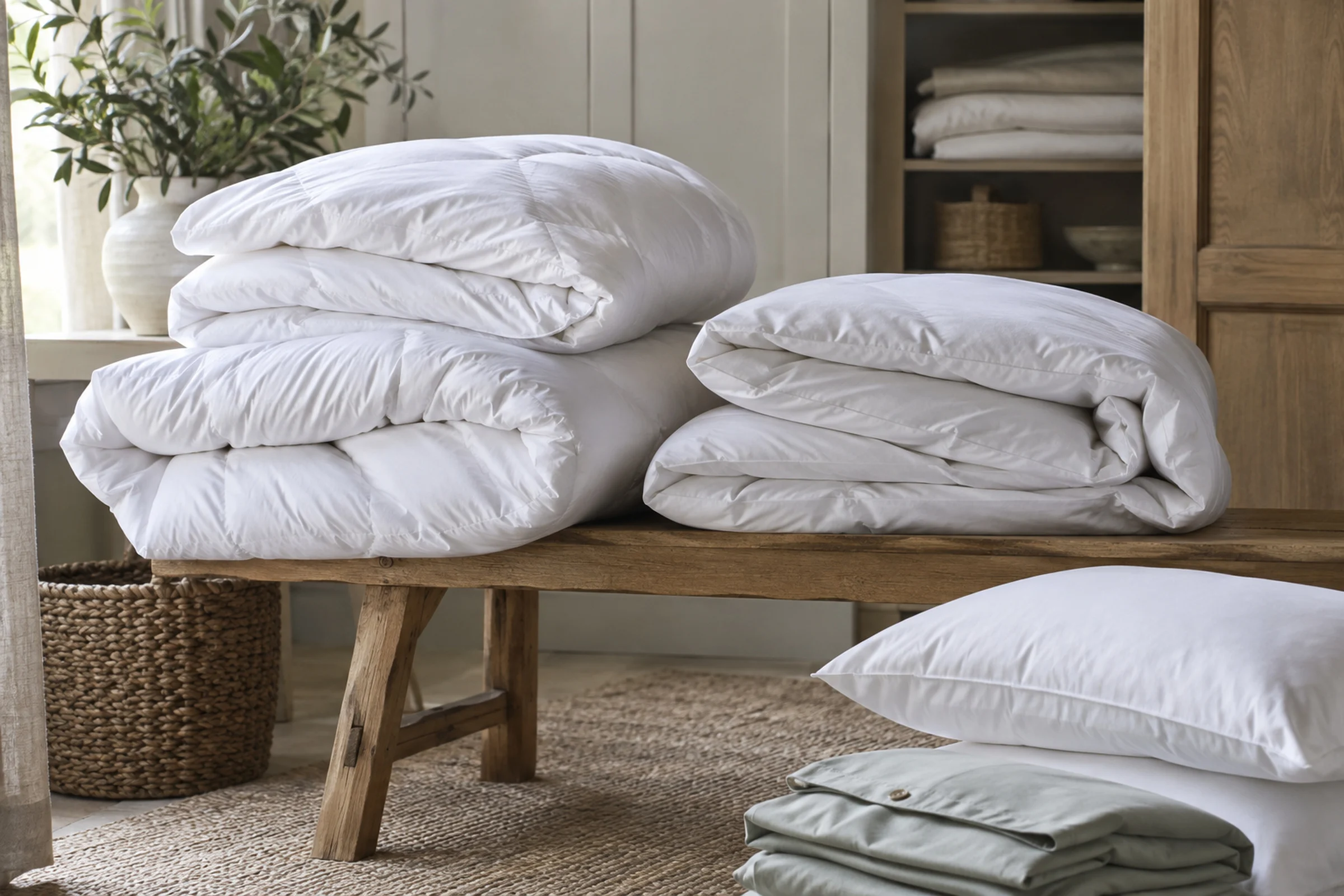
A duvet is one of the few things most of us use every single night and replace almost never, which is probably why so many people are sleeping under the wrong one. The label gives you three pieces of information that matter: the tog, the filling and the size. Here is what each actually tells you, and how to choose.
Tog is warmth, not weight
Tog measures how well a duvet holds in heat: the higher the number, the warmer the duvet. It is the usual rating in the UK and Ireland, and you will see it on many duvets sold in Europe, Australia and elsewhere, running from about 4.5 tog, a light summer weight, to around 15, which is very warm. In North America, duvets and comforters are more often sold by warmth category, such as lightweight, all-season or extra warm, and down fillings by fill power, which measures how much the down lofts. The labels differ; the question they answer is the same.
What tog does not measure is weight or thickness. A 13.5 tog duvet filled with down can be much lighter and thinner than a 13.5 tog synthetic one, because down traps more heat for its weight. If you like to feel held down by your bedding, a synthetic or wool duvet may suit you better than a feather-light down one of the same warmth.
As a rough guide:
- 4.5 tog suits summer, or a bedroom that is always warm.
- 7 to 10.5 tog is a middle weight for spring and autumn, or for people who run hot all year.
- 13.5 tog is a common winter weight where tog is used.
- 15 tog is for very cold rooms, or for people who feel the cold badly.
Sleep specialists generally suggest a cool bedroom, somewhere around 16 to 19°C (60 to 67°F), for good sleep. Choose your warmth for the room you actually have, and the climate you live in. A well-insulated new apartment and an old house with single glazing need different duvets, even in the same January, and a winter duvet in Montreal is not a winter duvet in Madrid.
All-season duvets, and two sleepers who disagree
An all-season duvet is two duvets that fasten together, commonly a 4.5 and a 9 tog, which give you 4.5 for summer, 9 for spring and autumn, and 13.5 buttoned together for winter. It usually costs less than buying three, and it takes up more storage space than one.
If you share a bed with someone who runs hotter or colder than you, there are two good answers. Some makers sell split-tog duvets, with a different warmth on each side. The simpler answer, and the one common across much of northern Europe, is two single duvets on one bed. It looks slightly less like a hotel. It ends the argument.
Fillings, honestly compared
- Down is the soft under-plumage of ducks or geese. It is the lightest filling for its warmth, compresses well and lasts a long time if looked after. It is also the most expensive, and it usually needs a large machine or a professional to wash it.
- Feather and down blends are cheaper and heavier. The more feather, the heavier and less lofty the duvet, and quills can work through the casing over time.
- Wool is heavier and flatter than down, and many people who sleep hot find it more comfortable because it handles moisture well. It is not usually machine washable.
- Synthetic fillings, such as hollowfibre and microfibre, are the cheapest, and most can be washed at home in a large machine. They suit anyone who reacts to feathers, and anyone who wants to wash a duvet often. They tend to flatten sooner than good natural fillings.
- Silk is light, fairly cool and expensive, and is often chosen by people who find other duvets too warm.
There is no single best filling. There is the one that suits how warm you sleep, how much washing you are willing to do and what you want to spend.
What to look for on the label
- The fill percentages. “Duck feather and down” can mean 85% feather and 15% down. A higher share of down means a lighter, loftier duvet at a higher price.
- How it is stitched. Box or baffle construction, where small walls of fabric keep the filling in separate pockets, holds the filling evenly. Sewn-through duvets are cheaper, and the stitched lines can become cold spots.
- The casing. A tightly woven cotton casing keeps filling in and feels better against the skin. Be sceptical of very high thread counts used as a selling point on their own.
- Washing instructions. Check them before you buy, not after. A duvet you cannot wash at home will cost you trips to a self-service laundry or the dry cleaner.
Size up if you share
Duvet sizes are not the same everywhere: a double, queen or king in one country can be a different size in another, and bed sizes differ too. Check the measurements, in centimetres or inches, rather than the name, and look for a duvet a little wider than the bed. If two people share a bed, a duvet one size larger than the bed is one of the cheapest comfort improvements you can make, because it ends the tug of war at three in the morning. A bed should be built around the people who actually sleep in it, not the other way round.
One exception: babies
Safe-sleep guidance, from the Lullaby Trust in the UK to the American Academy of Pediatrics in the US, advises against duvets, pillows and other soft bedding for babies under 12 months. A well-fitting baby sleeping bag is widely recommended instead; follow the safe-sleep guidance where you live on anything else in the cot.
Making it last
Shake the duvet out when you make the bed, and air it on a dry day from time to time. Use a cover, and wash it every week or two, which protects the duvet itself. Follow the care label for the duvet, and dry it completely before putting it back on the bed, because a damp duvet can smell and clump.
A good duvet is not a thrilling thing to buy, which is why it is easy to put off. But you will spend around a third of your life under it. It is worth the same attention you might give to a chair you could not justify, and it is usually much easier to justify.