How to make a rental feel like home without losing your deposit
You can make a rented home unmistakably yours without a single drill hole. What to change, what to ask first, and how to leave it as you found it.
A rented home can feel like somewhere you are staying rather than somewhere you live. Beige walls, a ceiling light that makes every room look like a waiting room, flooring chosen by someone who will never stand on it, and a lease that appears to forbid everything except breathing. It is easy to decide it isn’t worth the effort for a place you might leave in a year.
It is worth it. You live in this apartment or house now, not in the one you might own one day, and a home that feels like yours changes how every evening feels. The trick is to put your effort where it makes the most difference and leaves the least trace.
First, protect the deposit
Before you change anything, do the unglamorous part.
- Read the move-in inspection or inventory closely and add anything it missed: marks on walls, stains, scratches, chipped tiles, a loose handle. Send your additions in writing.
- Photograph every room on the day you move in, with close-ups of any damage, and keep the files somewhere you will still have them in two years.
- Read what your lease says about decorating, nails, paint and furniture, and find out how deposits are handled where you live. The rules on where a deposit is held, what can be deducted and how disagreements are settled vary a great deal from one country, state or city to the next.
- For anything beyond moving your own things around, ask your landlord or property manager first and get the yes in writing. An email is enough.
With that done, you know what you started with and you can prove it.
Light changes everything
If you do only one thing, change the lighting. A single overhead light flattens a room and makes it look smaller and colder than it is.
- Put warmer bulbs in the fittings you have. They cost very little, and you can swap the originals back when you leave.
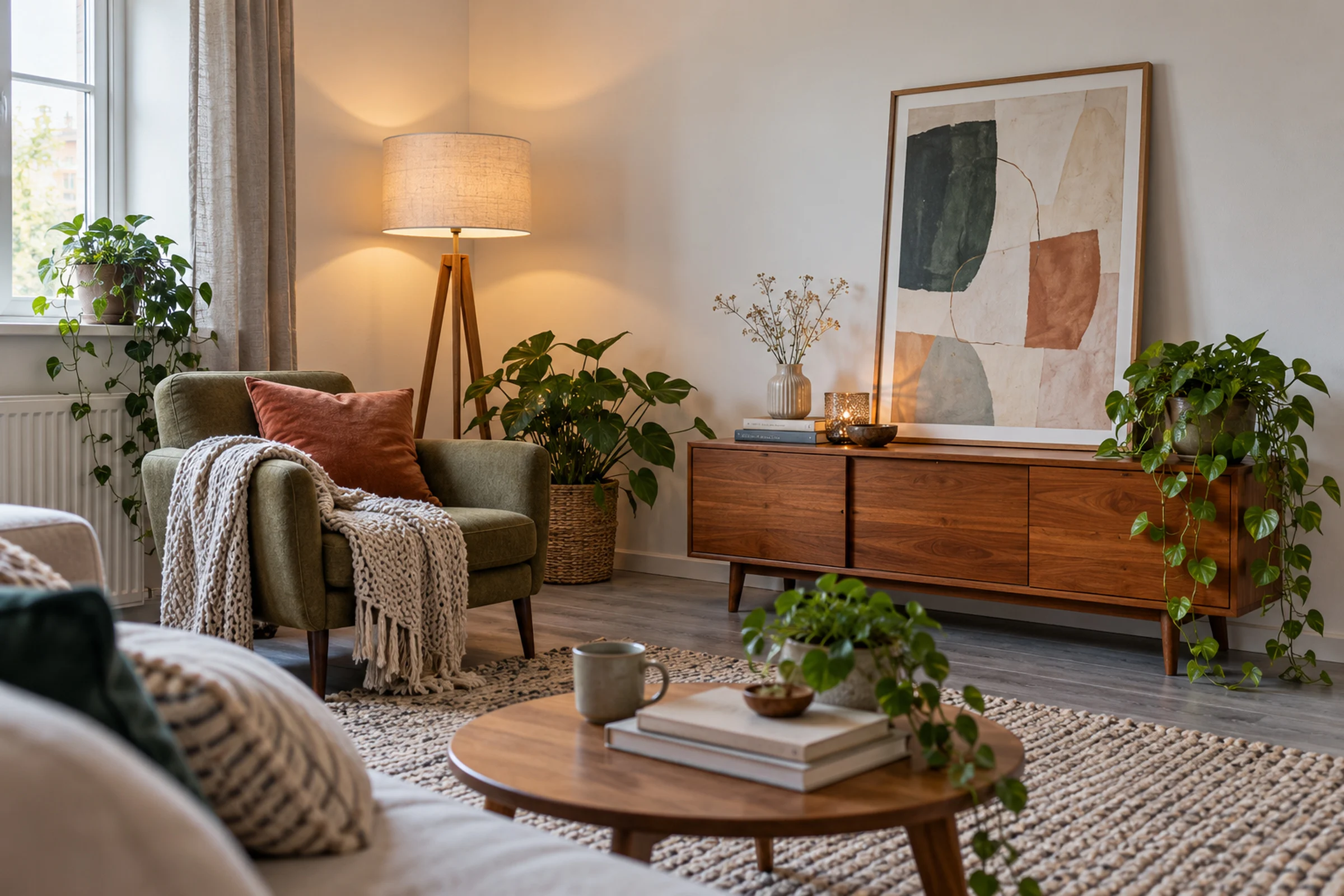
- Give every room you sit in at least two lamps at different heights, say a floor lamp and a table lamp. A room lit from several places looks deliberate.
- Replace a dreary ceiling shade with one you like, and keep the original somewhere safe to put back.
- Plug-in wall lights, which need no wiring, can do the work of fitted ones beside a bed or a sofa.
Soften the floors and the furniture
Rented floors are often the least lovable part of a home: tired carpet, cold laminate, a colour you would never have chosen. A large rug hides a great deal and protects the floor underneath, which your deposit will appreciate. Buy bigger than you think; small rugs make rooms look smaller.
If the place came furnished with things you don’t love, throws and cushions change a sofa or an armchair completely, and a well-made bed changes a bedroom. The right duvet is one of the few things that makes almost as much difference as a new bed, and it comes with you when you go. If you would rather the landlord’s furniture went into storage, ask; many landlords agree.
Art without holes
Walls are where most deposit worries begin. Some landlords are relaxed about a few picture hooks and some leases forbid them outright, so read yours, and ask before you make any hole at all. Without permission, there is still plenty you can do.
- Lean framed pictures on a sideboard, a shelf, a mantelpiece or the floor against a wall. Layered, leaning art looks relaxed and intentional.
- A freestanding shelf or a low bookcase can hold a changing arrangement of frames and objects.
- Removable adhesive hooks and strips will hold light frames, but keep strictly to the weight limits and test one somewhere discreet first: on some paints they lift the finish when they come off.
- A large mirror leaning against a wall brings in light. Make sure it is stable and cannot slide or tip.
Bring in life
Plants are the cheapest way to make a home feel lived in, and they leave with you. Choose ones that suit your light rather than the ones that look best in the shop, stand pots on saucers to protect sills and floors, and group a few together rather than dotting single plants about.
Then let the place fill with the things that are unmistakably yours: books on the shelves, a bowl you love on the table, the blanket you have had for years, photographs of your people. A home is less about furniture than about evidence of a life, and a home that does not ask you to shrink can be rented as easily as owned.
Bigger changes: ask, and put it in writing
Some changes need permission but are often granted: painting a wall, putting up shelves, changing curtains or blinds, swapping a ceiling light fitting (a job for a qualified electrician, not a weekend). Landlords are more likely to say yes if you offer a neutral colour, offer to repaint before you leave, or offer to leave the improvement behind. Whatever you agree, write it down, including whether you have to reverse it before you move out.
When you leave
Put back everything you changed: the original bulbs and shades, the landlord’s furniture, the curtains you took down. Take adhesive hooks off slowly, as the maker’s instructions say, and fill and touch up any holes you had permission to make. Clean thoroughly, then photograph every room again, the same way you did on the first day. If there is a disagreement about the deposit, those two sets of pictures are the best evidence you will have.
A rented home is not a waiting room for your real life. It is where you live now. Make it yours, gently, and leave it as you found it.