What to wear to a funeral
Dark, plain and comfortable is the usual answer, but not the only one. How to dress for a funeral, from the family’s wishes and faith to the weather.
Most people have to work out what to wear to a funeral at short notice and at the worst possible moment. You have lost someone, or someone you love has, and in the middle of it sits a practical problem: an outfit, within days, that is respectful, suits the weather and actually fits.
There is no single dress code for funerals anywhere in the world: religion, culture, region and family all change the answer. But the principles are simpler than they feel, and the most important one is not about clothes at all.
Start with what the family has asked for
Before anything else, read the funeral notice or the message about arrangements again. More and more families now say what they would like: bright colours, the person’s favourite colour, a sports team’s shirt, “no black, please”, or simply “come as you are”. If they have asked, do that. Dressing for a funeral is a way of showing respect to the person who has died and to the people grieving them, and nothing shows it more plainly than doing what they asked.
If the notice says nothing, it is fine to ask someone close to the family, rather than the chief mourners themselves: “Is there anything the family would like people to wear?”
If nothing is said: dark, plain, neat
Without any guidance, and where you know the family follows a broadly Western or Christian custom, the traditional answer still holds: dark, muted colours (black, navy, charcoal, deep grey, dark green or brown), plain fabrics, nothing loud or revealing, and clothes that look as if you took some care.
In practice, for most people, that means one of:
- a dark dress at or below the knee, with a jacket or cardigan;
- dark trousers or a skirt with a plain top and a jacket;
- a dark suit, or dark trousers with a shirt and jacket, with or without a tie.
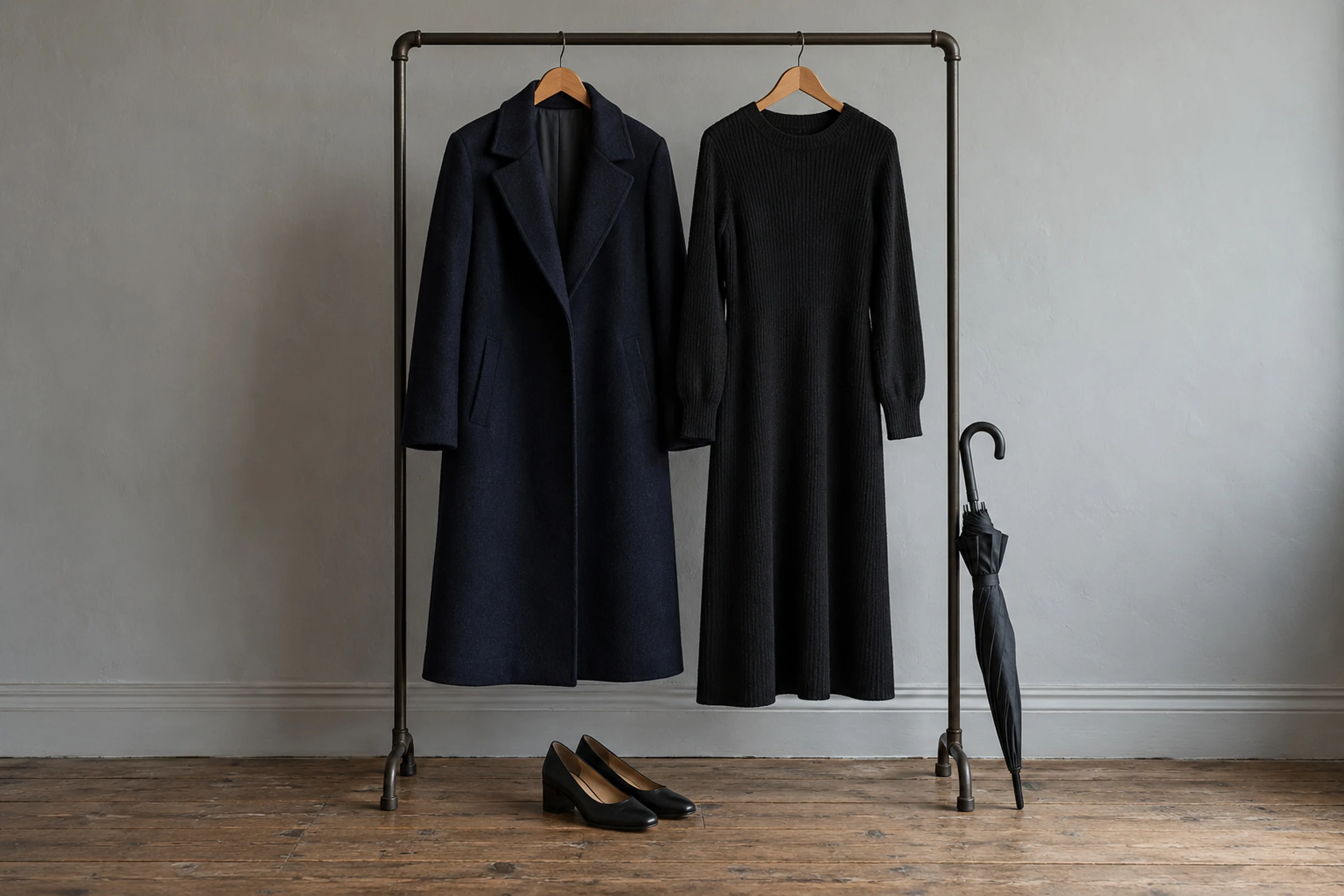
Black is not compulsory. A navy coat, a charcoal dress or a dark green knit is entirely respectful; what matters is that it is quiet. Keep jewellery simple, and leave out anything that would draw the eye: sequins, bright prints, slogans, very high heels, anything you would wear to a party.
You do not need to buy anything new. A well-kept dark outfit you already own is better than a new one that doesn’t fit, and nobody at a funeral is looking at labels.
Faith and family traditions
In many traditions the custom is quite different from the dark-and-plain default, and in some, black is not the colour of mourning at all. If the service belongs to a tradition you don’t know, ask someone from the family or community; people are almost always glad to be asked. A few common examples, which vary between families:
- At many Hindu funerals, mourners wear white or pale colours rather than black.
- At Sikh funerals, white or muted colours are usual, and everyone covers their head and removes their shoes in the gurdwara; head coverings are often provided at the door.
- At Muslim funerals, modest clothing is expected, women usually cover their hair, and shoes come off in the prayer area of a mosque.
- At Jewish funerals, dark and modest clothing is usual, and men are often asked to cover their heads.
- At many Chinese funerals, guests wear dark or muted colours and avoid red, which is associated with celebration.
Wherever shoes come off, wear socks or tights you are happy to be seen in, and shoes that are easy to slip on and off.
Dress for the whole day
A funeral is often more than one place: a service, then a crematorium or a burial, then a gathering afterwards. Dress for all of it.
- Shoes. A burial means standing on grass, often wet, sometimes for a while. Block heels, flat boots or smart flat shoes are far kinder than thin heels that sink into the ground.
- Cold and rain. Funerals go ahead in any weather, and a plain dark coat does more for you than a smart outfit you shiver in. If you live somewhere with real winters and buy only one thing, make it a good dark coat; it will do this job for years, and it is worth knowing what makes a coat worth buying before you need one in a hurry.
- Heat. In hot weather, choose loose, breathable fabrics such as linen or cotton in dark or muted shades, and bring water and something for the sun if the burial is outdoors. Nobody expects a wool suit at a graveside in the heat of the afternoon.
- Umbrella. Plain and dark if you have one. A bright golf umbrella at a graveside is the accessory most people wish they had left in the car.
- Layers. Places of worship and chapels are often cooler than outside; the gathering afterwards is usually warm and crowded.
- Pockets. For tissues, keys and the order of service, so your hands are free.
Finding something that fits, at short notice
This is the part that rarely gets written about. A funeral gives you days, not weeks, and if you are plus-size, petite, tall or between sizes, finding a plain dark outfit that fits in that time can be genuinely hard. Formal wear in the shops often stops at a certain size, or is cut for a body that isn’t yours.
A few things help:
- Start with what you own. Dark trousers or a dark dress you already wear comfortably, with a plain top, a cardigan or jacket and your best coat, is enough.
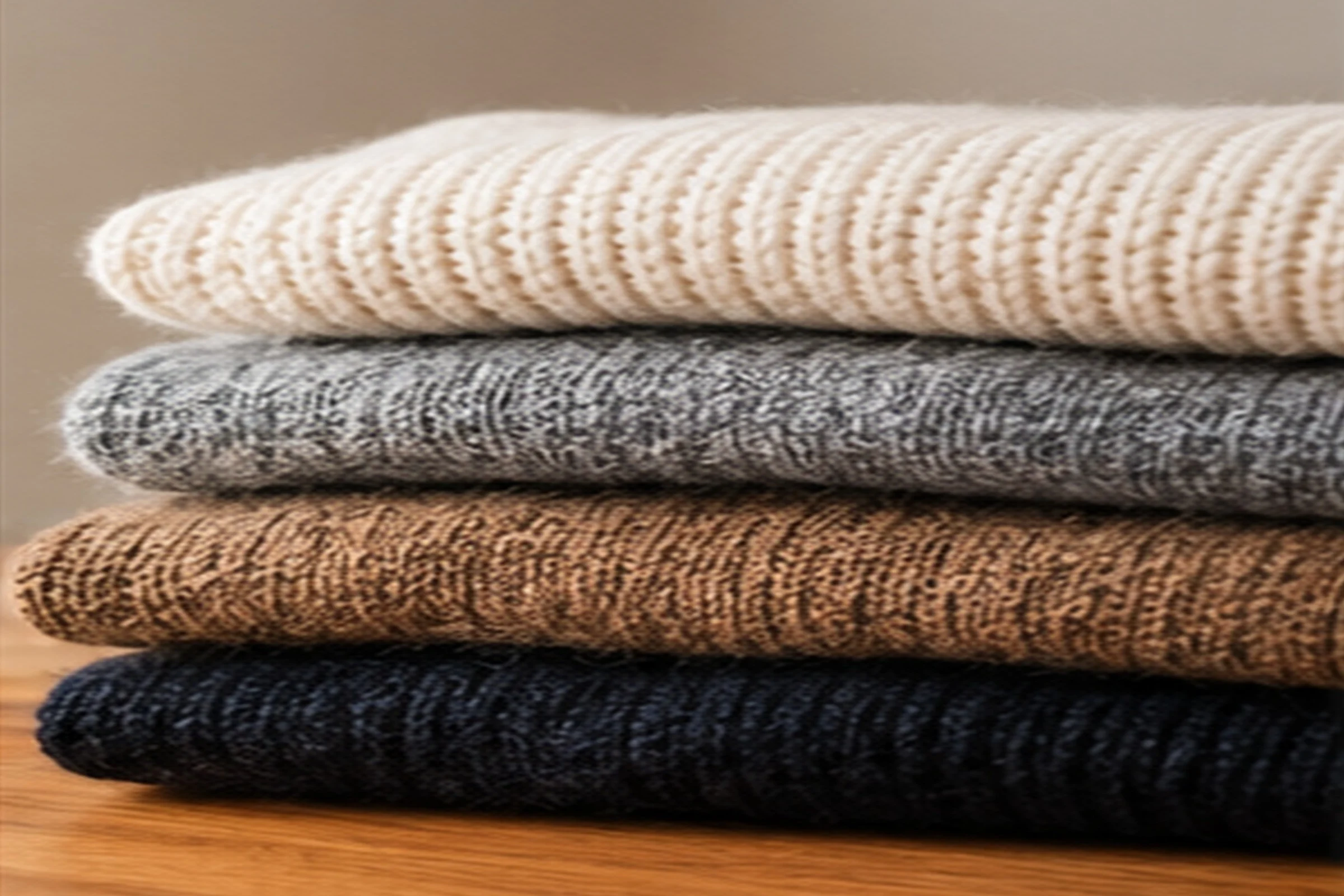
- When time is short, choose knitwear and jersey over structured tailoring. A dark knitted dress forgives a guessed size far better than a fitted suit.
- If you do buy online, check the delivery date before anything else, order two sizes where you can, and send one back.
- Put comfort first. You may stand for a long time, sit on hard seats and hug a great many people. Clothes that pull, pinch or ride up take your attention away from where you want it to be.
Clothes are supposed to fit you, and on a day like this that matters more than any rule about hemlines.
If you get it wrong
You will not get it wrong in any way that matters. Families remember who came, not what they wore. If you turn up in the wrong shade of navy, or find everyone else in the team colours, you are still the person who came to say goodbye, and that is all the day asks of you.