Softness is not laziness
Rest has been quietly recategorised as a moral failure, and comfort as something you earn. I would like to formally decline both of those ideas.

Somewhere along the way, rest stopped being a thing people did and became a thing people justified.
You notice it in the language. Nobody simply sits down any more. They have earned a rest. They are allowing themselves an evening. They are recharging, which frames the human being as a device that is worth charging only because it will be used again tomorrow.
Earned
That is the word doing the damage. It presumes a debt.
If rest must be earned, then rest taken without sufficient prior output is theft, and the person taking it is getting away with something. Which is precisely how a lot of people feel on a Sunday afternoon, and it is a very strange thing to feel about sitting in a chair in your own house.
Rest is not a reward for productivity. It is a condition of being an animal.
Why it lands harder on some of us
I want to be honest about a specific version of this, because I do not think it is talked about much.
When you are a larger woman, resting in public — and sometimes in private — carries a second charge. There is a stereotype standing right there, and you know it, and you can feel yourself confirming it by simply sitting down.
So you overcompensate. You stay busy in a demonstrative way. You mention the walk. You perform effort, not because effort is required, but as ongoing evidence against an accusation nobody has actually made out loud.
That is an exhausting way to spend a decade, and it does not work, because the stereotype was never responsive to evidence in the first place.
Where the accounting came from
I do not think this is only about bodies, though the body version has a particular sting. It is broader, and it arrived from several directions at once.
Work culture, which learned to describe exhaustion as commitment. A general habit of measuring days by output, which is fine for a factory and strange for a life. And a long tradition of treating women’s rest specifically as suspect — the reclining woman as an image of indolence rather than of a person who is tired.
Put those together and sitting down acquires a moral weight it cannot possibly bear. You are not resting; you are failing to be productive, in a culture where productivity has quietly become a synonym for goodness.
What actually happens when you do not rest
It is worth stating the practical case, because the moral one is apparently unpersuasive.
When I do not rest, I am worse at things. Slower, more irritable, more likely to make the kind of mistake that costs an afternoon. I make poorer decisions and defend them more stubbornly. I am less generous with people I love, which is the cost I mind most.
So even on the productivity logic — even accepting the premise I am arguing against — the arithmetic does not work. Rest is not the thing subtracted from output. It is one of the inputs.
I would rather rest because I am a person than because it makes me useful. But if the moral argument is not landing, the practical one is available, and it says the same thing.
Softness as a material fact
Some of this is literal. I like soft things. Wool, boucle, a heavy curtain, a deep cushion, a lamp rather than an overhead light.
For a while I read this preference as an indulgence to be rationed. Now I read it as information about what my nervous system responds to, which seems like a more useful category.
A hard room keeps me alert. A soft room lets me stop. I need both and I had accidentally built only one.
What changed
Practical, small, unglamorous.
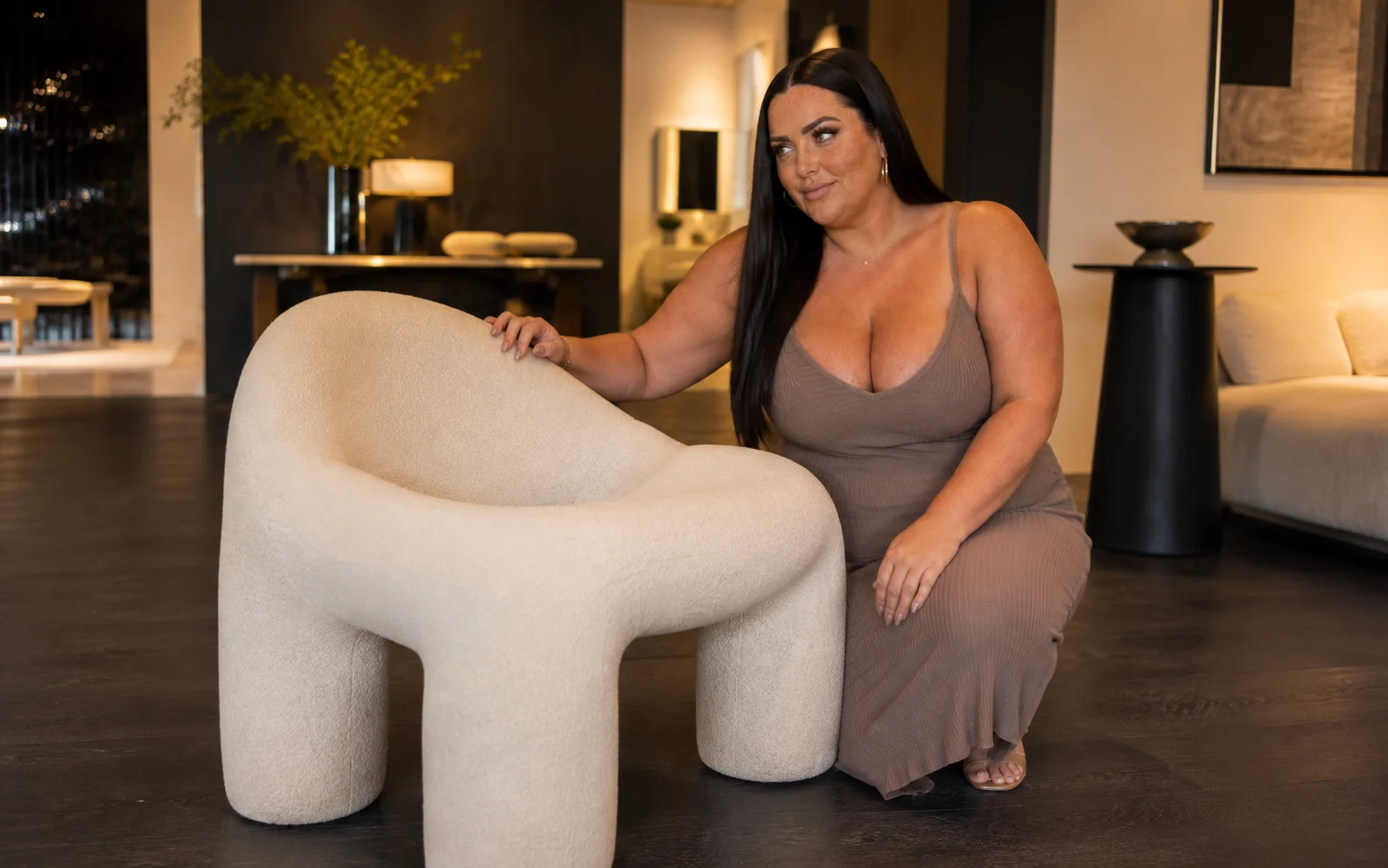
Lamps instead of the ceiling light after dark. A blanket within reach of where I actually sit, not folded decoratively somewhere else. One chair in the house that is unambiguously for doing nothing in — not a work chair, not a chair that also serves a purpose. A chair for sitting.
And the harder one: sitting in it without an accompanying justification. Not because a task is finished. Not as a reward. Just at four in the afternoon on a Wednesday, because I wanted to.
The first few times feel wrong
I want to be honest that this was uncomfortable. The first several times I sat down without having earned it, I felt a low buzz of transgression, and I got up again after ten minutes to do something demonstrably useful.
That faded. It took longer than I expected — a few months rather than a few days — and it faded through repetition, not insight.
You do not think your way out of a belief like this. You sit down repeatedly until the alarm stops going off.
The rooms that do not photograph
Interiors photography has quietly set the standard for what a good room looks like, and it has a bias worth naming: it rewards rooms that look excellent empty.
Hard surfaces, clear floors, nothing within reach. No blanket, because a blanket reads as clutter. No lamp on, because the shoot happened at eleven in the morning. Chairs positioned for the composition rather than for conversation.
These are rooms optimised for being looked at. They are frequently poor at being occupied, and that is not a compromise anyone made — it is what they were for.
The rooms I actually want to be in would photograph badly. There is a blanket on the arm of the chair. There is a lamp on at four in the afternoon. The good chair is angled towards the fire rather than towards the camera. It is not a beautiful photograph and it is a very good room, and I stopped treating those as the same measurement.
Where I have landed
Rest is not the reward for the work. It is part of the same system as the work, and a person who does not rest is not more virtuous, only more tired and slightly worse at everything.
Softness is not laziness. It is not a lapse in standards, or evidence of anything, or a thing you have to be caught up on before you deserve. It is a lamp, a blanket, and a chair, and you are allowed all three today.